c.curionodeThe Nobel Archive

1985 · Peace

Make nuclear war a shared medical concern

IPPNW brought physicians across the Cold War divide together to explain nuclear war’s human consequences.

nuclear war preventionmedical educationinternational cooperationhumanitarian consequences
1985Peace

Visual guide

The prize, pictured

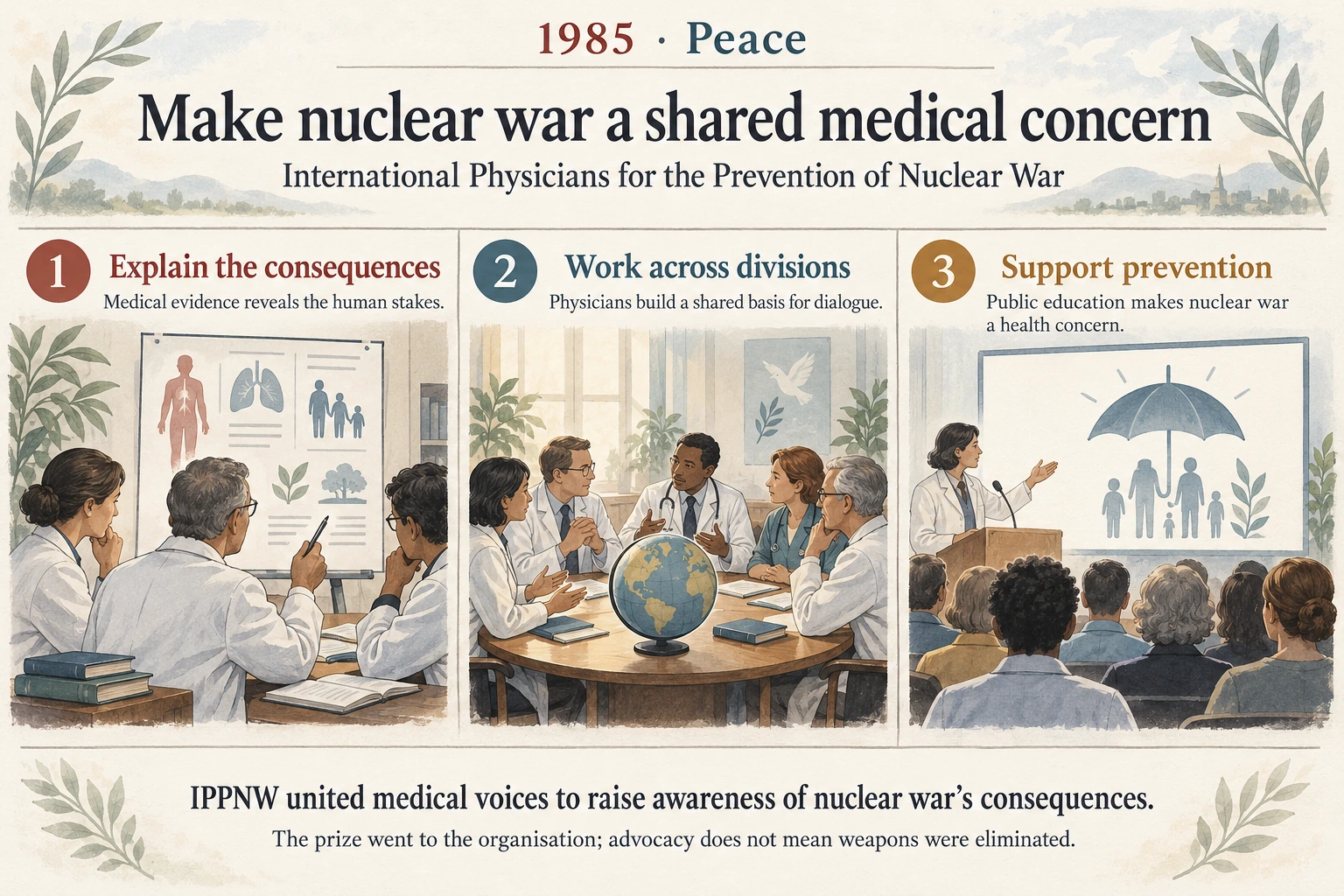
Infographic explaining Make nuclear war a shared medical concern
Original AI-generated infographic. A conceptual overview; the explanations and sources below provide context.
Read the poster text

IPPNW united medical voices to raise awareness of nuclear war’s consequences.

  1. Explain the consequences

    Medical evidence reveals the human stakes.

  2. Work across divisions

    Physicians build a shared basis for dialogue.

  3. Support prevention

    Public education makes nuclear war a health concern.

The prize went to the organisation; advocacy does not mean weapons were eliminated.

01 · The contribution

The idea, in everyday language

Debates about nuclear weapons often focus on strategy and military power. IPPNW asked what nuclear war would mean for bodies, health services and communities. Its physicians drew on evidence about blast, burns and radiation, including research by Japanese colleagues, to explain catastrophic consequences and the limits of medical response.

Founded through Soviet–American cooperation in 1980, the federation organised congresses and public education across national divisions. Shared medical responsibilities offered a basis for dialogue despite political disagreements. The Nobel Committee recognised the organisation’s authoritative information and contribution to public awareness, rather than awarding the founders as individuals.

Why it matters

IPPNW helped make the humanitarian consequences of nuclear weapons part of public discussion. International medical cooperation showed that professional responsibilities could support dialogue across hostile blocs. The full Peace Prize went to the federation as one organisation.
02 · The recipients

Who brought the idea to life?

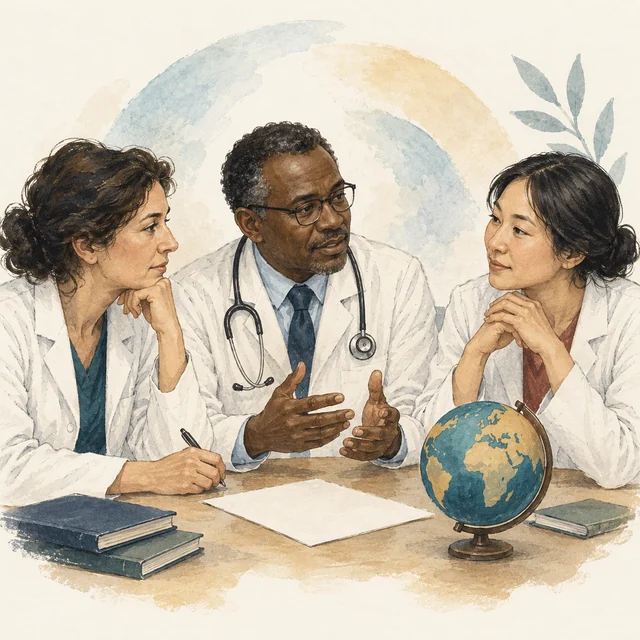
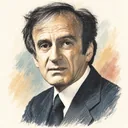
Symbolic illustration representing International Physicians for the Prevention of Nuclear War

International Physicians for the Prevention of Nuclear War

Prize share · 1

The organisation used scientific and medical education to build public understanding of the catastrophic consequences of nuclear war. Cooperation across the Cold War divide gave physicians a shared basis for prevention and dialogue. IPPNW received the full Peace Prize as one organisation; Lown and Chazov accepted it on its behalf. Its advocacy did not establish that nuclear weapons had been eliminated or that every political position of its members was endorsed by the Nobel Committee.

Read the biography ↗

03 · Years in the making

The path here

  1. 1980

    Six Soviet and American physicians establish IPPNW at a meeting in Geneva.

  2. 1981

    World congresses begin, linking national medical groups.

  3. 1984

    IPPNW receives the UNESCO Peace Education Prize.

  4. 1985

    The Nobel Peace Prize goes to IPPNW; Lown and Chazov accept on its behalf.

04 · Read further

From the original sources

Original explanations by Curionode, based on the official records below. Biographical details and affiliations refer to the award year.

  1. Official announcement nobelprize.org
  2. IPPNW mission and founding history ippnw.org
  3. Nobel organisation history: IPPNW nobelprize.org