c.curionodeThe Nobel Archive

1983 · Peace

Organising without giving up negotiation

Wałęsa’s leadership in Solidarity joined workers’ rights to independent civic organisation. The 1983 Prize honoured a nonviolent struggle still facing repression.

SolidarityWorkers’ rightsNonviolent negotiation
1983Peace

Visual guide

The prize, pictured

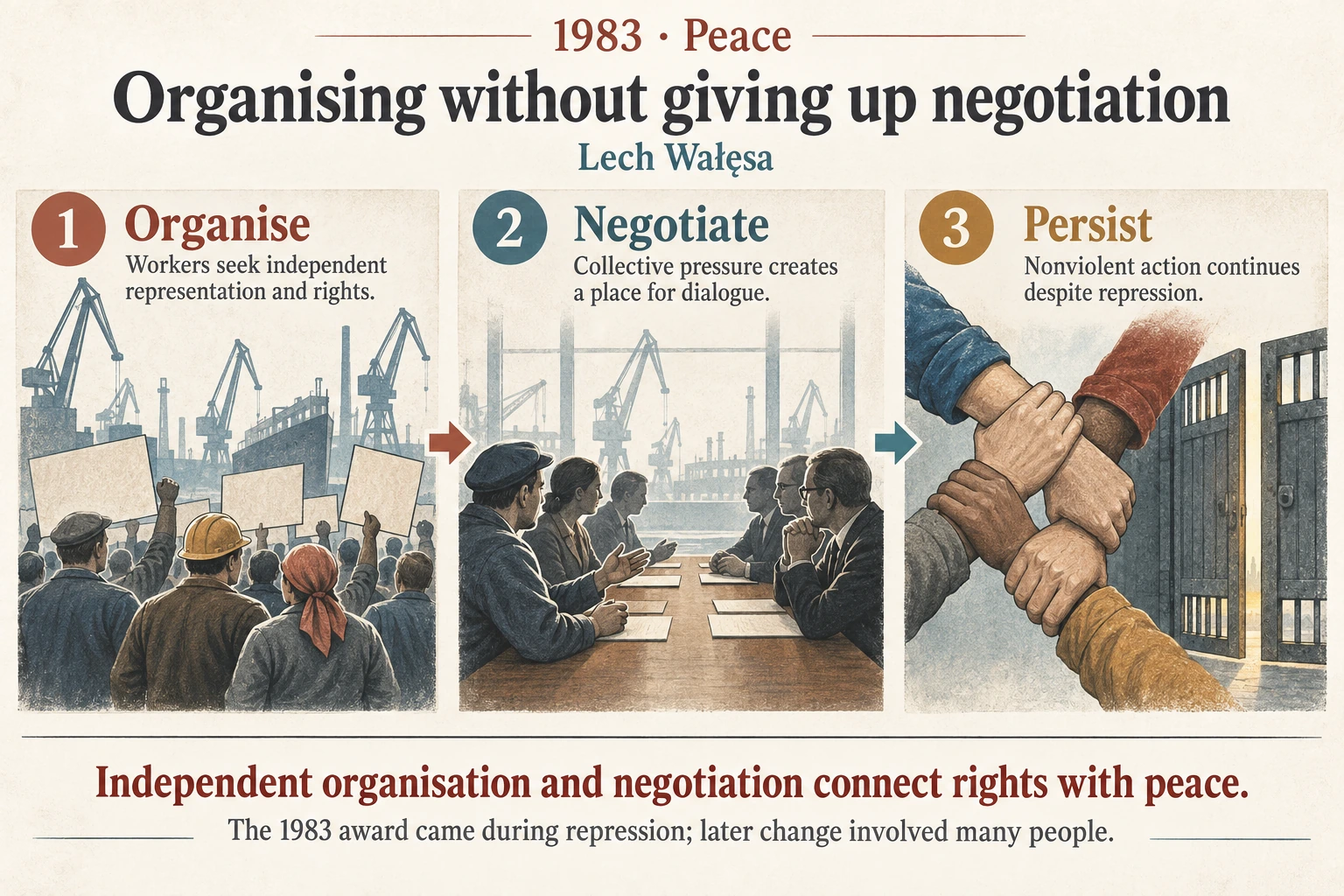
Infographic explaining Organising without giving up negotiation
Original AI-generated infographic. A conceptual overview; the explanations and sources below provide context.
Read the poster text

Independent organisation and negotiation connect rights with peace.

  1. Organise

    Workers seek independent representation and rights.

  2. Negotiate

    Collective pressure creates a place for dialogue.

  3. Persist

    Nonviolent action continues despite repression.

The 1983 award came during repression; later change involved many people.

01 · The contribution

The idea, in everyday language

The August 1980 shipyard strike became part of a much wider wave of action in Poland. Workers demanded rights, including independent representation, and Wałęsa helped negotiate the Gdańsk Agreement. Solidarity brought together a mass membership and many organisers; its strength did not come from one person acting alone.

Martial law in December 1981 crushed open activity and interned leaders. Wałęsa was released in November 1982, yet surveillance and restrictions continued. The Nobel Committee recognised his leadership and commitment to negotiation in that setting. Unable to attend in Oslo, he was represented by his wife Danuta, who read his acceptance speech.

Why it matters

The award affirmed freedom of organisation and the connection between rights and peace. Renewed talks led to later change, including the 1989 Round Table and elections with freely contested Senate seats and only 35 percent of Sejm seats openly contested. These later developments should not be projected backward as achievements already secured in 1983.
02 · The people

Who brought the idea to life?

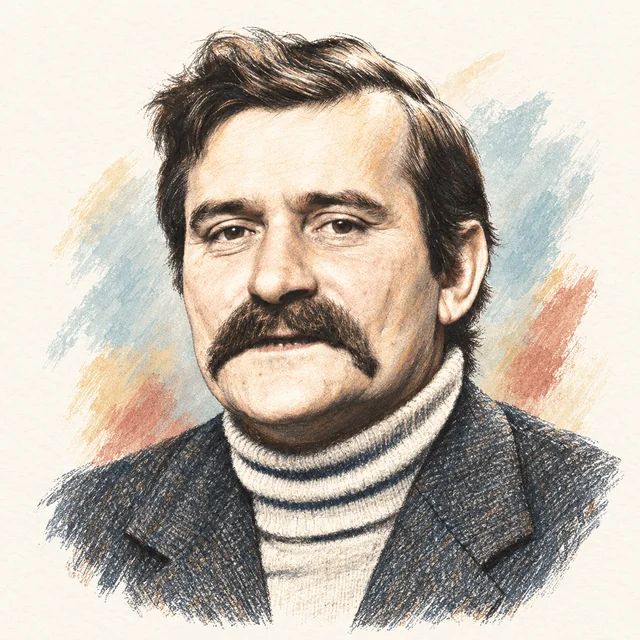
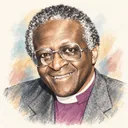
Illustrated portrait of Lech Wałęsa

Lech Wałęsa

Prize share · 1

Wałęsa received the full Peace Prize for leadership in the nonviolent struggle for independent organisation and workers’ rights. Negotiation and collective solidarity, involving many activists and supporters, were central. He was the individual recipient; Solidarity was not the named laureate. The 1983 award did not mean political freedom had already been achieved or endorse every decision in his later presidency.

Read the biography ↗

03 · Years in the making

The path here

  1. 1967

    Wałęsa begins work as a Gdańsk shipyard electrician.

  2. 1980

    Strikes and the Gdańsk Agreement enable independent union organisation.

  3. 1981

    Martial law brings internment and suppression.

  4. 1982

    He is released in November, still under surveillance.

  5. 1983

    The Peace Prize recognises leadership in the nonviolent struggle.

  6. 1989

    Negotiations and partly free parliamentary elections mark a later transition.

04 · Read further

From the original sources

Original explanations by Curionode, based on the official records below. Biographical details and affiliations refer to the award year.

  1. Official announcement nobelprize.org
  2. Wałęsa’s acceptance, read by Danuta nobelprize.org
  3. Polish national archive: 1989 elections gdansk.ipn.gov.pl