c.curionodeThe Nobel Archive

1982 · Peace

Making disarmament a negotiated commitment

Myrdal and García Robles worked to move disarmament from an aspiration towards negotiated obligations, informed debate and practical institutions.

DisarmamentTlatelolcoNuclear-weapon-free zones
1982Peace

Visual guide

The prize, pictured

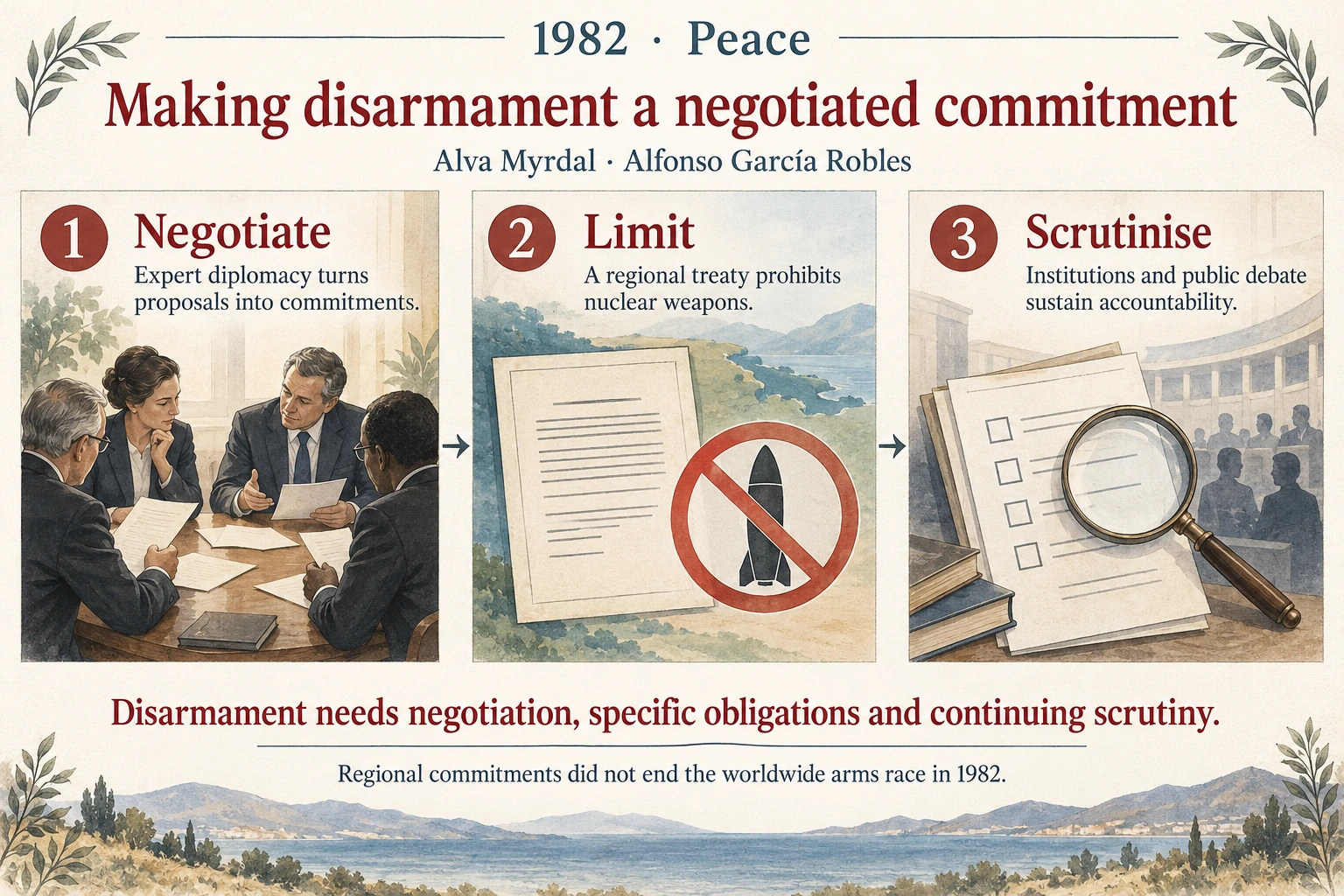
Infographic explaining Making disarmament a negotiated commitment
Original AI-generated infographic. A conceptual overview; the explanations and sources below provide context.
Read the poster text

Disarmament needs negotiation, specific obligations and continuing scrutiny.

  1. Negotiate

    Expert diplomacy turns proposals into commitments.

  2. Limit

    A regional treaty prohibits nuclear weapons.

  3. Scrutinise

    Institutions and public debate sustain accountability.

Regional commitments did not end the worldwide arms race in 1982.

01 · The contribution

The idea, in everyday language

Myrdal represented Sweden in Geneva’s disarmament negotiations from 1962 and later served as the minister responsible for disarmament. She used technical knowledge and public argument to challenge the superpowers’ arms race. Her work connected diplomacy with scrutiny of the gap between promises and actual reductions.

García Robles helped negotiate the Treaty of Tlatelolco after the Cuban missile crisis. Opened for signature on 14 February 1967, it prohibited nuclear weapons in Latin America and the Caribbean while preserving peaceful uses of nuclear energy. His later UN work included coordinating the 1978 disarmament special session’s Final Document. These were related but distinct contributions, recognised with equal shares.

Why it matters

Their work showed how non-aligned diplomacy, regional agreements and informed public discussion could create pressure for restraint. Tlatelolco developed an institutional framework through OPANAL and safeguards arrangements. The prize recognised persistent negotiation and advocacy during an ongoing arms race, rather than a declaration that nuclear danger had disappeared.
02 · The people

Who brought the idea to life?

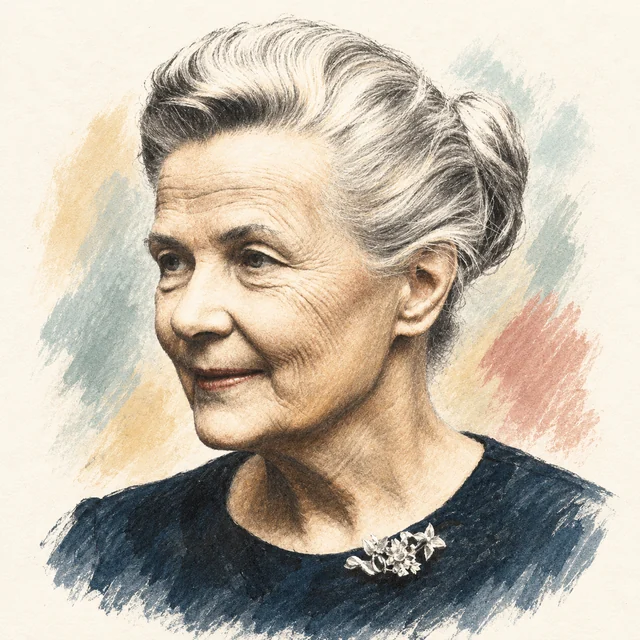
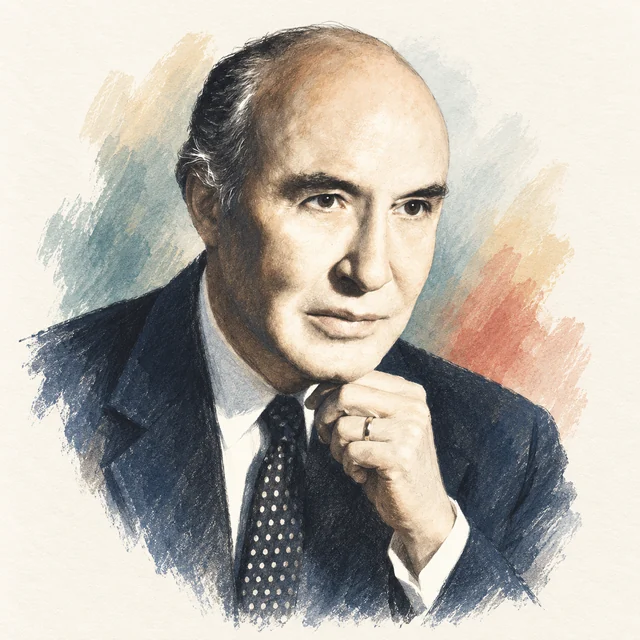
Illustrated portrait of Alva Myrdal

Alva Myrdal

Prize share · 1/2

Myrdal pressed for substantive disarmament through expert diplomacy and public scrutiny. Representing non-aligned Sweden, she challenged the superpowers and advocated nuclear-weapon-free zones. She received one half of the Peace Prize. Her contribution should not be confused with García Robles’s Latin American treaty negotiations or with a claim that the arms race had ended.

Read the biography ↗
Illustrated portrait of Alfonso García Robles

Alfonso García Robles

Prize share · 1/2

García Robles helped turn a regional disarmament proposal into negotiated treaty obligations and continued work within the UN. He received one half of the Peace Prize, alongside Alva Myrdal. Tlatelolco was a nuclear-weapon-free-zone agreement, not a ban on every nuclear technology, and not the achievement of worldwide nuclear disarmament.

Read the biography ↗

03 · Years in the making

The path here

  1. 1962

    Myrdal begins representing Sweden at Geneva disarmament negotiations.

  2. 1967

    Tlatelolco opens for signature; Myrdal joins Sweden’s cabinet.

  3. 1969

    The Treaty of Tlatelolco enters into force.

  4. 1978

    García Robles helps coordinate the UN special session’s Final Document.

  5. 1982

    The Peace Prize recognises both individuals, with equal shares.

  6. 2002

    The treaty later applies to all 33 Latin American and Caribbean states.

04 · Read further

From the original sources

Original explanations by Curionode, based on the official records below. Biographical details and affiliations refer to the award year.

  1. Official announcement nobelprize.org
  2. OPANAL: Tlatelolco obligations and chronology opanal.org