01 · The contribution
The idea, in everyday language
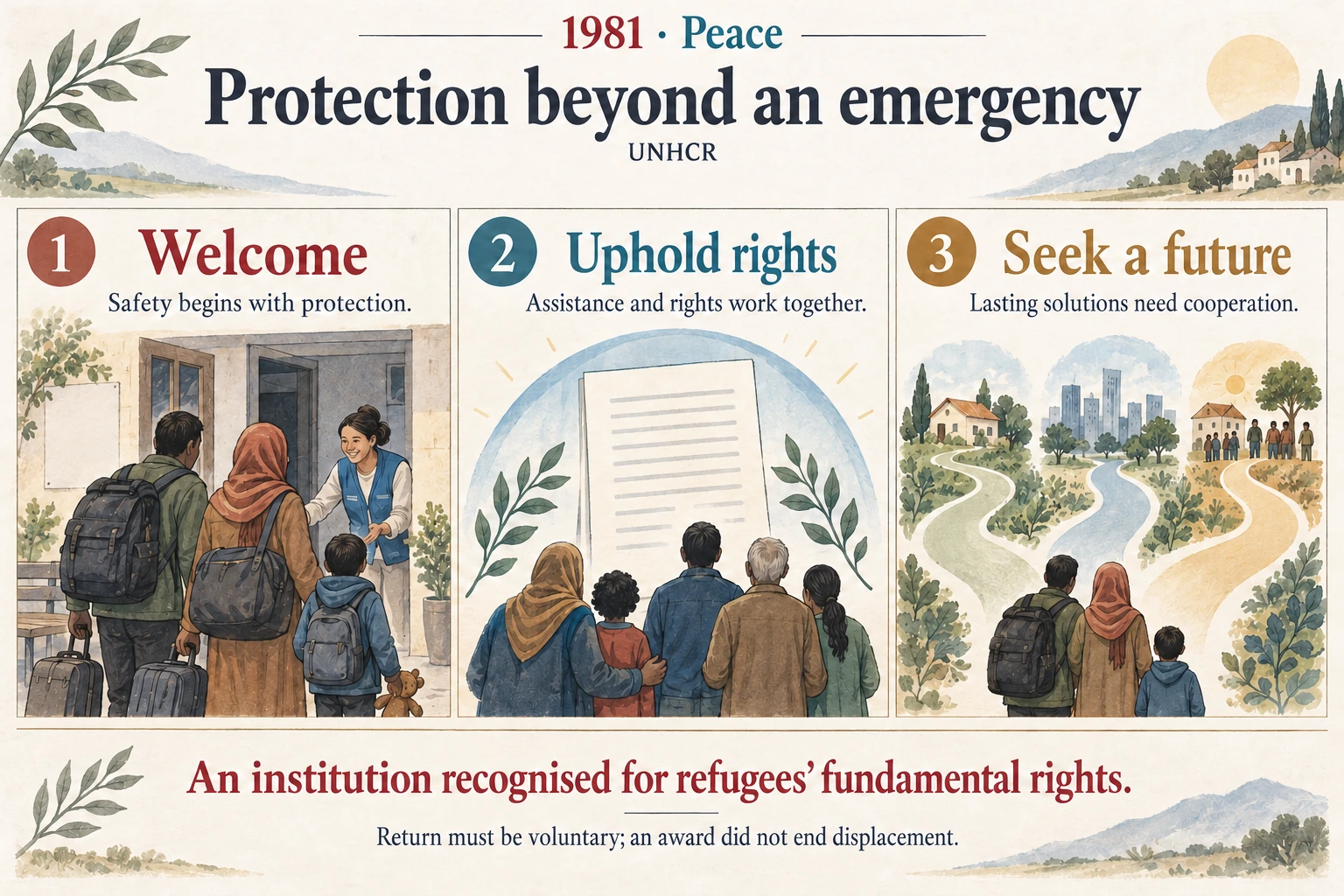
People forced to leave their country can lose the practical protection ordinarily provided by their state. UNHCR was created to help secure international protection and seek lasting solutions. Its work connected the legal recognition of refugees’ rights with practical cooperation: access to safety, assistance, and support for rebuilding lives. The 1981 award recognised the institution, not a particular high commissioner.
The office began with postwar European refugees, but displacement in Africa, Asia and Latin America expanded its responsibilities. The 1951 Convention and 1967 Protocol were important foundations; host countries, other UN bodies and voluntary organizations were indispensable partners. Lasting solutions could involve voluntary return, integration in a host country or resettlement elsewhere, depending on safety, available opportunities and cooperation.
Why it matters
The Nobel Committee linked refugee protection with peace, continuing a tradition associated with Fridtjof Nansen and UNHCR’s first award in 1954. The 1981 recognition supported work across a wider international setting, including responses to displacement in Southeast Asia. It highlighted the difference between charity alone and efforts grounded in rights and shared responsibilities. Governments’ decisions remained essential to putting those principles into practice.