A life in context
The person behind the prize
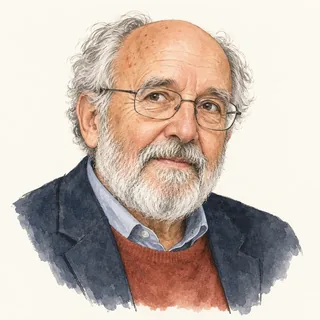
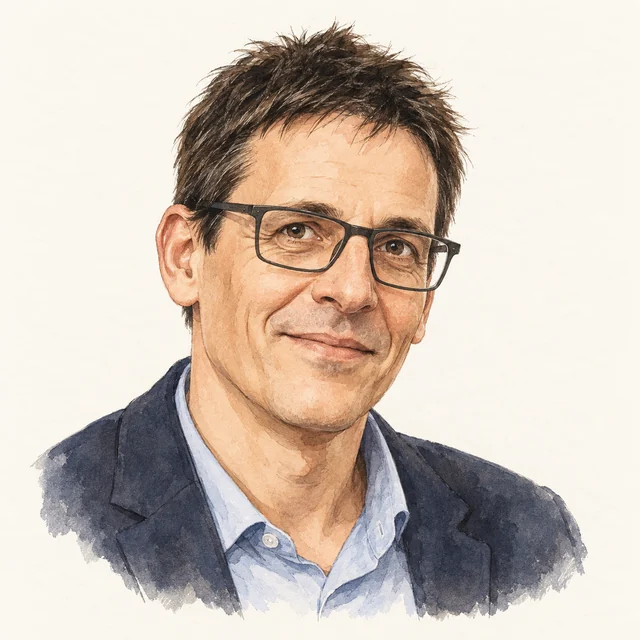
Queloz trained at the University of Geneva, completing his doctorate in 1995 under Michel Mayor. His work required both careful observations and tools for extracting tiny velocity changes from stellar spectra. At the award he held professorships in Geneva and Cambridge. The discovery made during his doctoral research helped open a new field of planetary exploration.
The contribution
He and Mayor detected the repeated stellar wobble associated with 51 Pegasi b. Measuring the star’s motion, rather than directly photographing the planet, revealed a giant planet unexpectedly close to a Sun-like star.
The idea in plain language
Peebles helped connect the universe’s early hot state to evidence we can measure today. The faint cosmic microwave background is a cooled remnant of an early stage when light began travelling freely. Its patterns, together with the distribution of galaxies, can test models of matter, gravity and cosmic evolution. His theoretical work helped make those comparisons possible.
Read the full award story ↗