A life in context
The person behind the prize
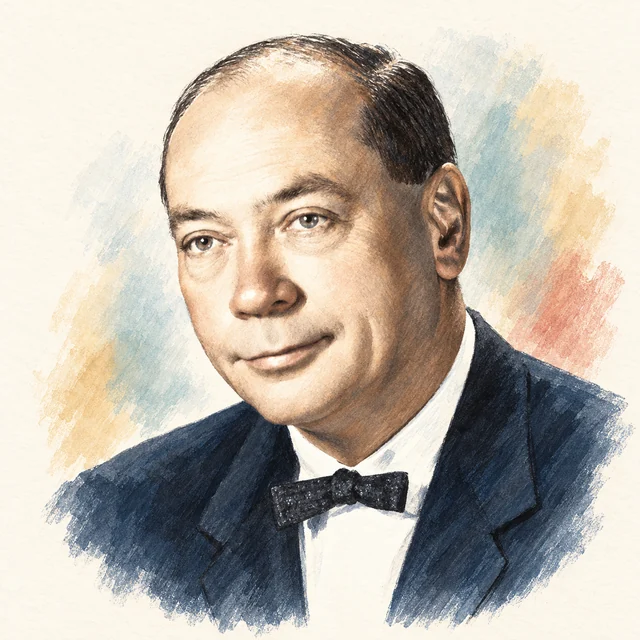
Sutherland graduated from Washburn in 1937 and received a Washington University medical degree in 1942. His early academic work spanned pharmacology and biochemistry in St Louis. He became professor and department director at Western Reserve in 1953, moving to Vanderbilt as professor of physiology in 1963. Investigating hormone effects on glycogen metabolism, he distinguished a signal outside a cell from a messenger operating inside it. Cyclic AMP provided the crucial intracellular link. Sutherland also investigated the enzyme system that forms it and proposed a wider role in hormone action around 1960. Work on microorganisms showed that its regulatory importance extended beyond animal hormones. The 1971 prize recognised hormone mechanisms and the second messenger principle. Later research by other scientists clarified receptors, G-protein transduction and protein-kinase cascades; those later discoveries should not all be assigned to Sutherland. His award-year institutional affiliation was Vanderbilt.
The contribution
Sutherland discovered cyclic AMP’s role as an intracellular second messenger in hormone action. He received the entire Medicine Prize.
The idea in plain language
Investigating adrenaline’s effect on glycogen metabolism, Sutherland distinguished the extracellular hormone signal from a soluble intracellular mediator. The membrane-associated adenylate cyclase system forms cyclic AMP, or cAMP. The hormone can initiate this response through a membrane receptor without entering the cell.
Read the full award story ↗

