c.curionodeThe Nobel Archive

1971 · Physiology or Medicine

How a hormone message reaches inside a cell

A hormone outside a cell can change processes inside it. Sutherland identified cyclic AMP as an intracellular second messenger, helping explain this connection.

HormonesCyclic AMPSecond messengers
1971Physiology or Medicine

Visual guide

The prize, pictured

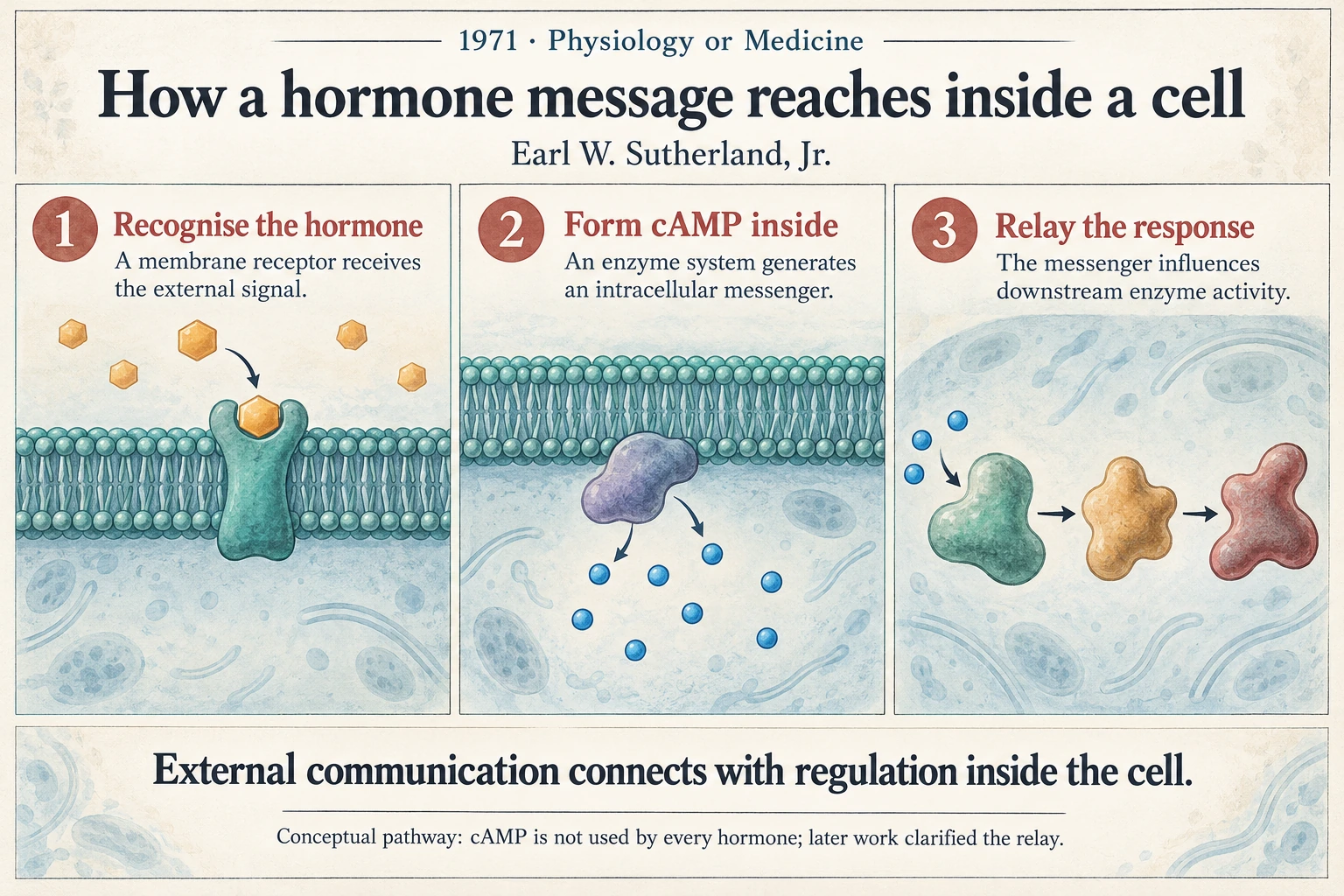
Infographic explaining How a hormone message reaches inside a cell
Original AI-generated infographic. A conceptual overview; the explanations and sources below provide context.
Read the poster text

External communication connects with regulation inside the cell.

  1. Recognise the hormone

    A membrane receptor receives the external signal.

  2. Form cAMP inside

    An enzyme system generates an intracellular messenger.

  3. Relay the response

    The messenger influences downstream enzyme activity.

Conceptual pathway: cAMP is not used by every hormone; later work clarified the relay.

01 · The discovery

The idea, in everyday language

Investigating adrenaline’s effect on glycogen metabolism, Sutherland distinguished the extracellular hormone signal from a soluble intracellular mediator. The membrane-associated adenylate cyclase system forms cyclic AMP, or cAMP. The hormone can initiate this response through a membrane receptor without entering the cell.

Cyclic AMP relays the message to intracellular machinery. In the later clarified glycogen pathway, it acts through a protein kinase and further enzyme activation, rather than directly cutting glycogen itself. Sutherland proposed a broader second-messenger role around 1960; subsequent work established that many hormone responses use this principle.

Why it matters

The discovery connected communication between cells with regulation within a cell. It helped make hormone action a biochemical sequence that could be investigated, and cAMP’s roles in microorganisms extended its importance beyond animal hormones.
02 · The people

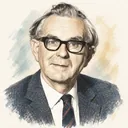
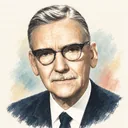
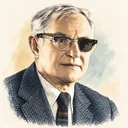
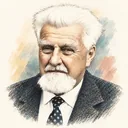
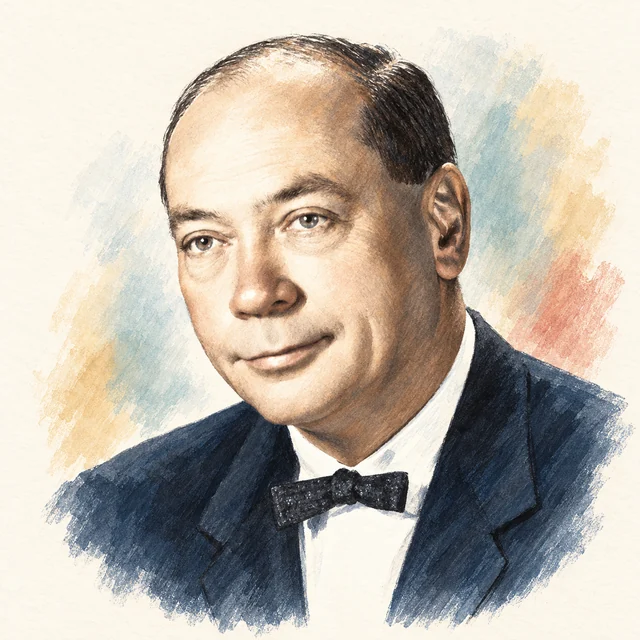
Who brought the idea to life?

03 · Years in the making

The path here

  1. 1937

    Sutherland graduates from Washburn.

  2. 1942

    He receives a medical degree in St Louis.

  3. 1953

    He heads pharmacology at Western Reserve.

  4. 1960

    By around this time, he proposes a wider cAMP messenger role.

  5. 1963

    He moves to Vanderbilt.

  6. 1971

    He receives the Medicine Prize.

04 · Read further

From the original sources

Original explanations by Curionode, based on the official records below. Biographical details and affiliations refer to the award year.

  1. Official announcement nobelprize.org
  2. Award ceremony speech nobelprize.org
  3. Protein phosphorylation background nobelprize.org
  4. Signal transduction background nobelprize.org
  5. Official biography: Earl W. Sutherland, Jr. nobelprize.org

More in Physiology or Medicine

Browse this subject ↗