A life in context
The person behind the prize
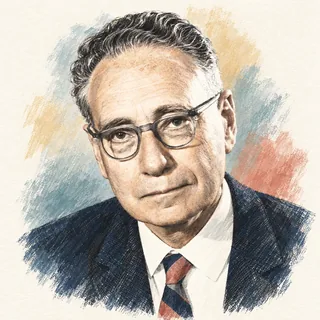
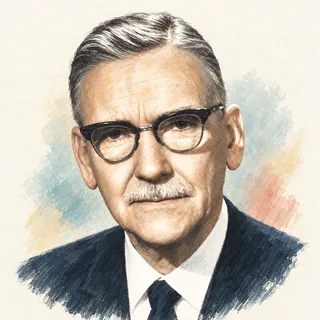
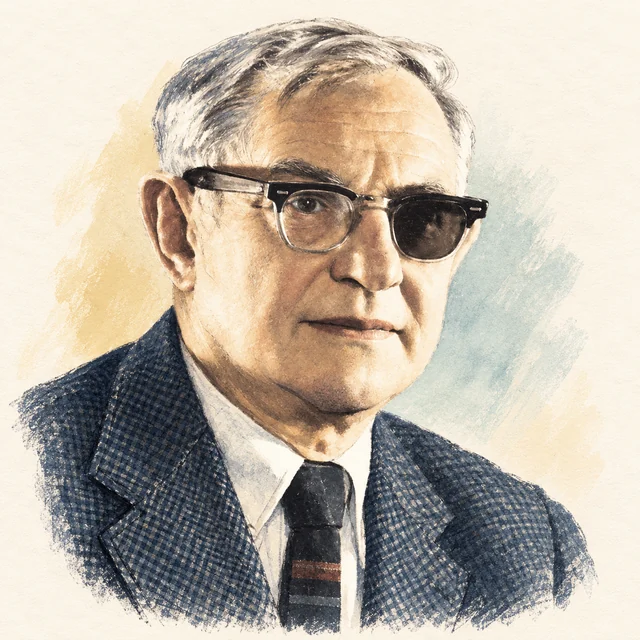
Axelrod graduated from City College in 1933 and earned a New York University master’s degree in 1941. Years as a laboratory chemist preceded his George Washington University doctorate in 1955. He joined the National Institutes of Health in 1949, later leading pharmacology research at the National Institute of Mental Health. His work examined the fate of noradrenaline after release. Studies of enzymatic methylation and, especially, reuptake into nerve terminals explained important routes by which transmitter action can be limited. Reuptake is a regulated cellular process; it does not mean a whole vesicle travels across the synapse and returns. These investigations complemented von Euler’s transmitter storage and Katz’s release work, with the scientists making distinct contributions. The prize recognised fundamental chemical communication and its relevance to neuropharmacology. It did not identify one transmitter as a complete explanation of mental life. His official award-year affiliation was NIH in Bethesda.
The contribution
Axelrod investigated noradrenaline’s inactivation, particularly reuptake into nerve terminals and enzymatic processing. He received one third of the Medicine Prize.
The idea in plain language
Von Euler identified noradrenaline as the transmitter of adrenergic nerves and, with colleagues including Hillarp, investigated its storage in small nerve granules. Katz studied a different transmitter, acetylcholine, at the nerve–muscle junction. Small electrical responses supported the idea that release occurs in discrete quanta containing many molecules.
Read the full award story ↗