c.curionodeThe Nobel Archive

1972 · Physiology or Medicine

Revealing the chemical architecture of antibodies

Antibodies recognise particular targets, but their large molecular size once made structure difficult to investigate. Edelman and Porter used different ways of separating the molecules into informative parts.

Antibody structureImmunochemistryHeavy and light chains
1972Physiology or Medicine

Visual guide

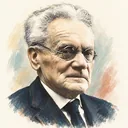
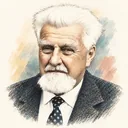
The prize, pictured

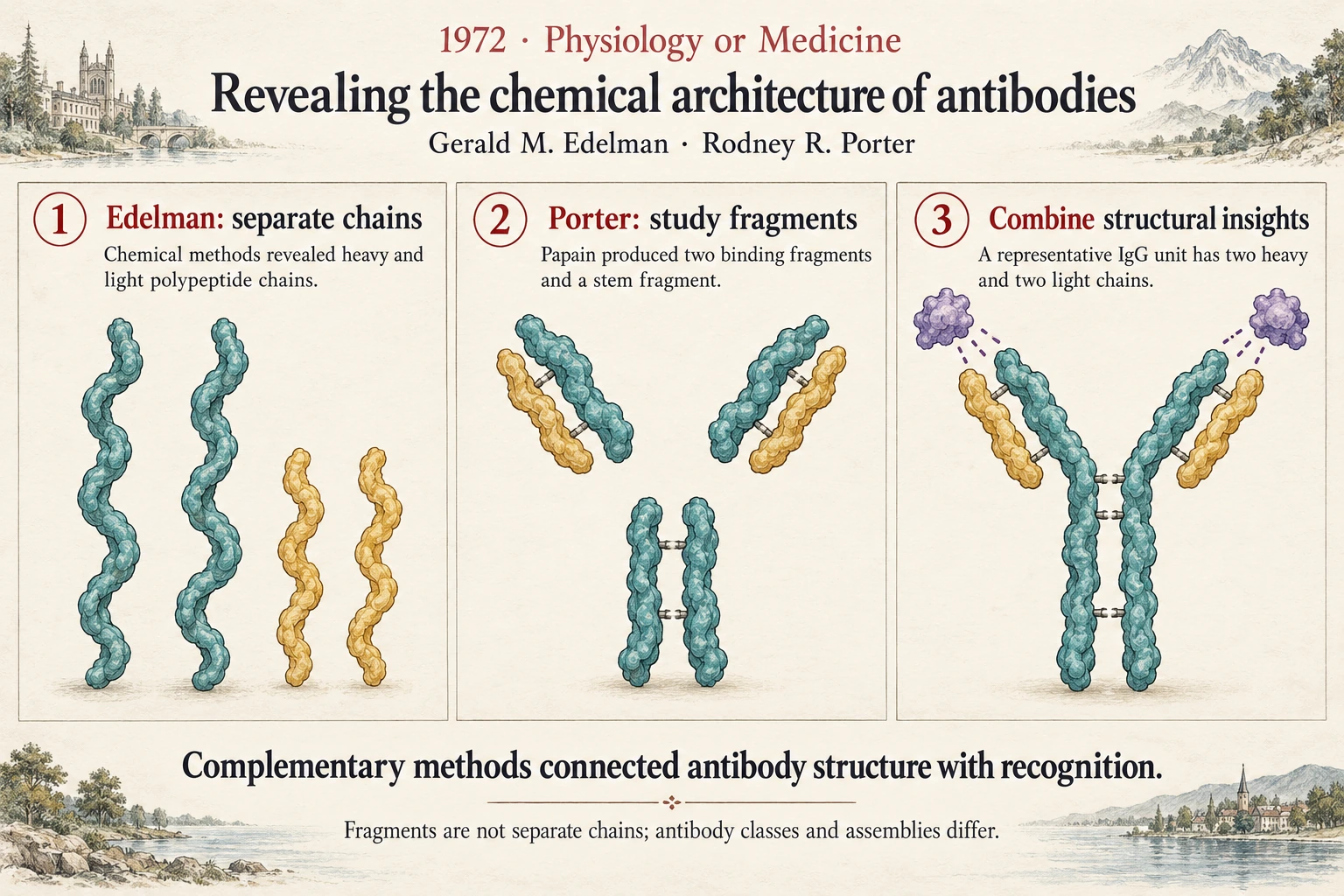
Infographic explaining Revealing the chemical architecture of antibodies
Original AI-generated infographic. A conceptual overview; the explanations and sources below provide context.
Read the poster text

Complementary methods connected antibody structure with recognition.

  1. Edelman: separate chains

    Chemical methods revealed heavy and light polypeptide chains.

  2. Porter: study fragments

    Papain produced two binding fragments and a stem fragment.

  3. Combine structural insights

    A representative IgG unit has two heavy and two light chains.

Fragments are not separate chains; antibody classes and assemblies differ.

01 · The discovery

The idea, in everyday language

Edelman broke disulfide links and separated polypeptide chains. Porter used the enzyme papain to split a common antibody into three fragments: two retained antigen-binding capacity and one did not. Chain separation and fragment separation answer different questions and should not be treated as identical operations.

The work supported a model with two heavy and two light chains. In a representative IgG antibody, each arm combines a light chain with part of a heavy chain; their tips cooperate in antigen recognition. The remaining heavy-chain regions form the stem and connect recognition with other immune functions. Studies beginning in 1959 led to further structural clarification over several years.

Why it matters

The discoveries established a chemical foundation for immunology and encouraged research relevant to diagnosis and therapy. They helped link specificity with molecular structure, while later research expanded the understanding of antibody diversity and immune mechanisms.
02 · The people

Who brought the idea to life?

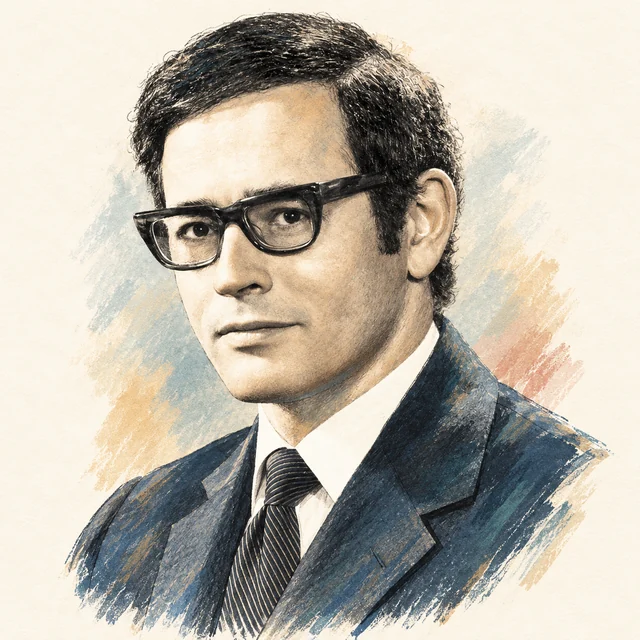
Illustrated portrait of Gerald M. Edelman

Gerald M. Edelman

Prize share · 1/2

Edelman separated antibody polypeptide chains and investigated their chemical architecture, contributing to the structural model. He received half the Medicine Prize.

Read the biography ↗
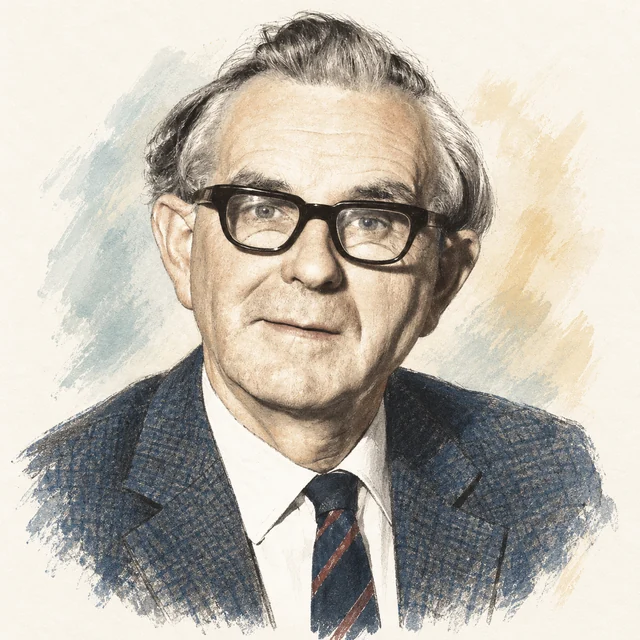
Illustrated portrait of Rodney R. Porter

Rodney R. Porter

Prize share · 1/2

Porter used enzymatic fragmentation to distinguish antibody binding regions and helped establish the heavy- and light-chain model. He received half the Medicine Prize.

Read the biography ↗

03 · Years in the making

The path here

  1. 1948

    Porter began investigating antibodies after his Cambridge doctorate.

  2. 1958–1959

    Papain fragmentation and independent chain-separation studies advanced.

  3. 1962

    Porter proposed the peptide-chain structural model.

  4. 1972

    Edelman and Porter shared the Medicine Prize equally.

04 · Read further

From the original sources

Original explanations by Curionode, based on the official records below. Biographical details and affiliations refer to the award year.

  1. Official announcement nobelprize.org
  2. Official biography: Gerald M. Edelman nobelprize.org
  3. Official biography: Rodney R. Porter nobelprize.org

More in Physiology or Medicine

Browse this subject ↗