A life in context
The person behind the prize
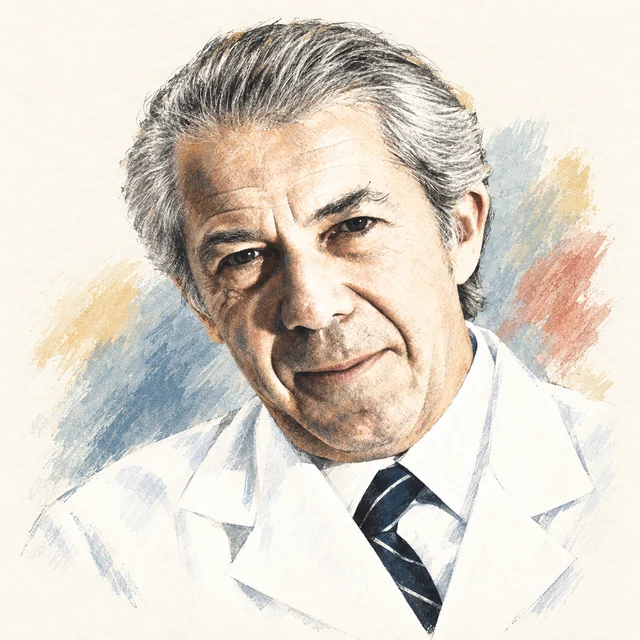
De Duve was born in England to Belgian parents who had taken refuge there during the First World War. Raised in Antwerp, he entered medical school at Louvain in 1934 and graduated in 1941. Interest in insulin led him toward biochemistry, followed by training with Hugo Theorell and the Coris. Returning to Louvain, he built a research group studying enzymes in liver tissue. An unexpected change in the measured activity of acid phosphatase redirected the investigation: the enzyme appeared enclosed in particles that preparation could disrupt. Biochemical fractionation led to the identification and naming of lysosomes in 1955, and later to work on peroxisomes. From 1962 he divided his research between Louvain and Rockefeller. His approach showed how an organelle could be discovered through its chemistry as well as its visible shape.
The contribution
De Duve used biochemical analysis and cell fractionation to identify lysosomes and investigate peroxisomes, clarifying specialised cellular functions. He received one third of the Medicine Prize.
The idea in plain language
Claude developed cell fractionation: cells are disrupted and their components separated through centrifugation, producing fractions that can be examined chemically. Sedimentation depends on size, density and shape, so a fraction is not automatically one pure organelle. Electron microscopy provided detailed structural information. Comparing the chemistry of fractions with their microscopic appearance helped connect components with particular cellular activities.
Read the full award story ↗