A life in context
The person behind the prize
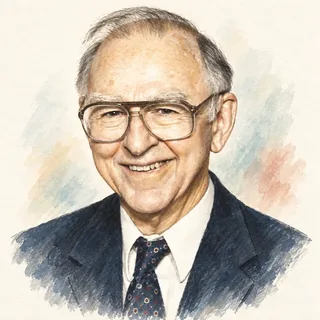
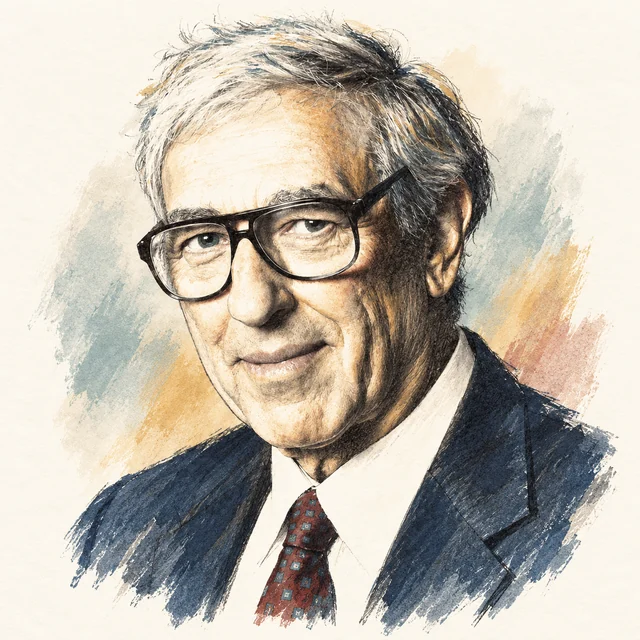
Born in Shanghai, Fischer attended school in Switzerland and studied chemistry and biology in Geneva. Music remained an important part of his life alongside research on enzymes and carbohydrates. A move to the United States brought him to the new medical school in Seattle, where he and Krebs began closely shared experiments on muscle glycogen phosphorylase. His later work continued to investigate enzymes that regulate protein phosphorylation.
The contribution
Fischer and Krebs showed that a protein’s activity could be regulated by attaching and removing phosphate groups. Their mid-1950s experiments on muscle phosphorylase established the opposing roles of a kinase and a phosphatase. The covalent modification can change protein function without making a new protein. Effects vary with the protein and site; adding phosphate is not an instruction that always switches every protein on. Fischer and Krebs each received half the prize.
The idea in plain language
Cells need to change what their proteins do quickly, without rebuilding every molecule. Fischer and Krebs studied glycogen phosphorylase in muscle, an enzyme involved in using stored carbohydrate. In the mid-1950s, they showed that a kinase could transfer a phosphate group from ATP onto the protein, changing its activity.
Read the full award story ↗