A life in context
The person behind the prize
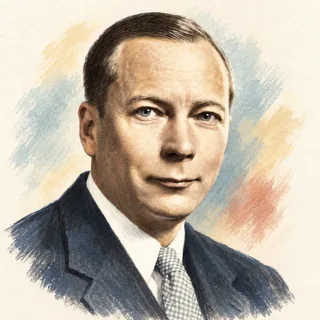
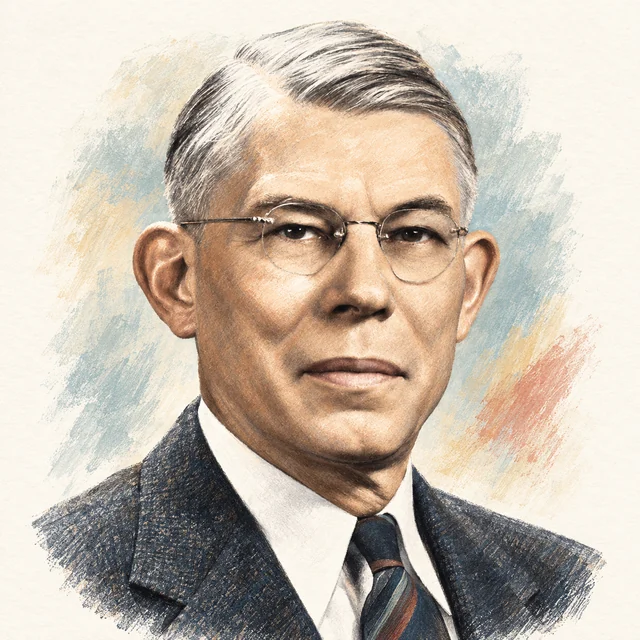
Doisy studied at the University of Illinois, receiving his bachelor’s degree in 1914 and master’s in 1916, and completed his Harvard doctorate in 1920. After work at Washington University School of Medicine, he became professor of biochemistry at Saint Louis University in 1923 and department director in 1924. His research included hormones as well as vitamins, with particular attention to isolating biologically active substances and determining their chemical nature. Vitamin K posed such a problem: identifying a dietary activity was different from obtaining a sufficiently pure substance to establish its chemistry. In 1939 Doisy and his collaborators prepared crystalline forms of vitamin K, determined chemical structure and achieved synthesis. Other teams also contributed to purification and synthesis; the work was not performed by Doisy alone. His collaborators included Thayer, MacCorquodale, McKee and Binkley. He received one half of the 1943 Medicine Prize for the chemical nature of vitamin K, complementing Dam’s discovery of the nutritional factor. The award was reserved and announced in November 1944. The department’s renaming in his honour in 1955 came later.
The contribution
Doisy and colleagues established the chemical nature of vitamin K through purification, structural work and synthesis. Doisy received one half of the Medicine Prize.
The idea in plain language
Why could blood fail to clot normally even when the known nutrients seemed accounted for? Dam’s studies beginning in 1929 revealed abnormal bleeding under particular dietary conditions. Continued investigation, including work with Schønheyder in 1934, pointed to a previously unrecognised nutritional factor. Dam called it vitamin K.
Read the full award story ↗