A life in context
The person behind the prize
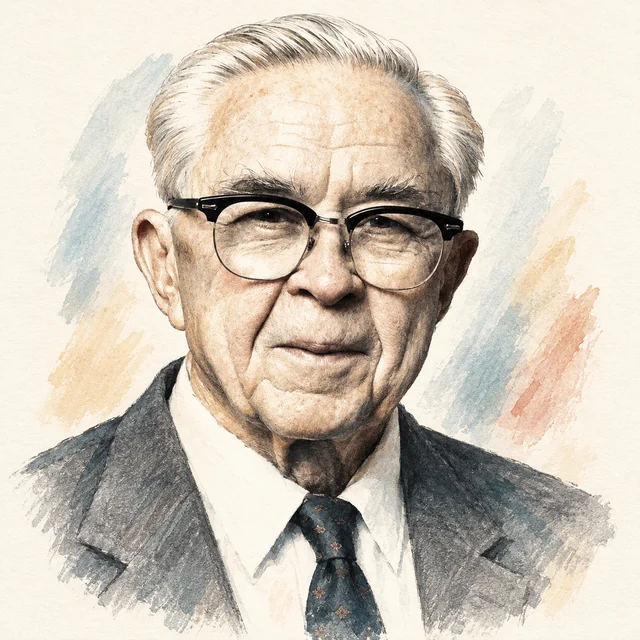
Lewis studied at Minnesota and completed his doctorate at Caltech in 1942. Wartime service as a meteorologist and oceanographer preceded his return to Caltech’s faculty. Over decades he used fruit-fly genetics to investigate why one part of an animal develops differently from another. Mutants with an extra pair of wings offered a powerful clue: a body region could take on the identity of a different region.
The contribution
Lewis analysed the bithorax gene complex, which helps specify identities along the fruit fly’s body axis. He showed relationships between the order of genes and the body regions they affect, and proposed how their overlapping activities produce segment identities. His 1978 synthesis guided later molecular work on homeotic genes. The discovery complements Nüsslein-Volhard and Wieschaus’s work on establishing the embryo’s segment pattern.
The idea in plain language
An embryo does not become a patterned animal merely by growing larger. Regions must be established, repeated units arranged and different structures assigned to particular positions. Nüsslein-Volhard and Wieschaus systematically searched for fruit-fly mutations that disrupted early segmentation. Their screen distinguished defects affecting broad regions, alternating segments and the organisation within individual segments, revealing different levels of genetic control.
Read the full award story ↗