A life in context
The person behind the prize
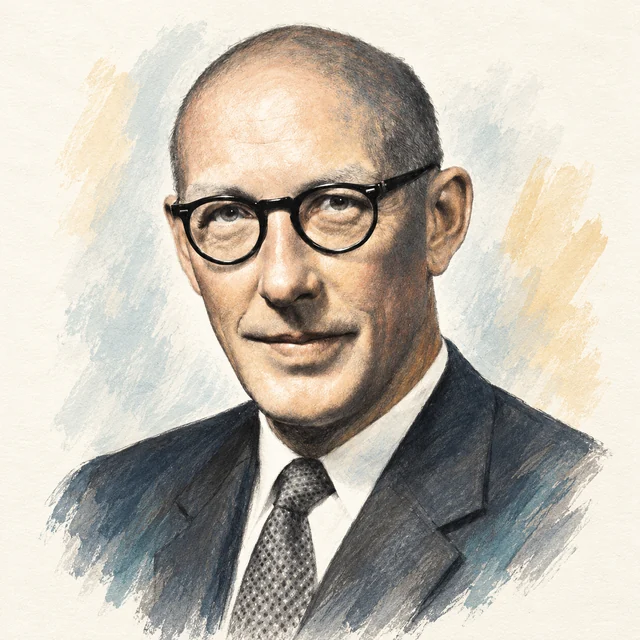
Tatum’s studies in Chicago and Wisconsin led to degrees in chemistry in 1931, microbiology in 1932 and a biochemistry doctorate in 1934. His early work concerned microbial nutrition and metabolism; research in Utrecht preceded his arrival at Stanford in 1937. He brought chemical expertise to his collaboration with Beadle, first on fruit-fly pigments and then on Neurospora. Their studies related nutritional requirements to inherited changes affecting biochemical pathways. At Yale from 1945, he worked with Lederberg, whose 1946 experiments with him established genetic recombination in bacteria. He returned to Stanford in 1948 and became a professor at the Rockefeller Institute in 1957, his affiliation at the award. The 1958 prize gave him one quarter for the biochemical action of genes, alongside Beadle’s quarter and Lederberg’s half. His work connected genetics and chemistry across model organisms, rather than explaining every form of inheritance or an immediate clinical treatment.
The contribution
Tatum supplied biochemical methods and interpretation to the gene-action studies with Beadle. He received one quarter of the Medicine Prize; his collaboration with Lederberg also helped establish bacterial recombination.
The idea in plain language
Inherited characteristics were familiar, but it was difficult to connect a particular gene with a definite chemical event. Bacteria also seemed to reproduce only by division, leaving the possibility of genetic exchange uncertain.
Read the full award story ↗