A life in context
The person behind the prize
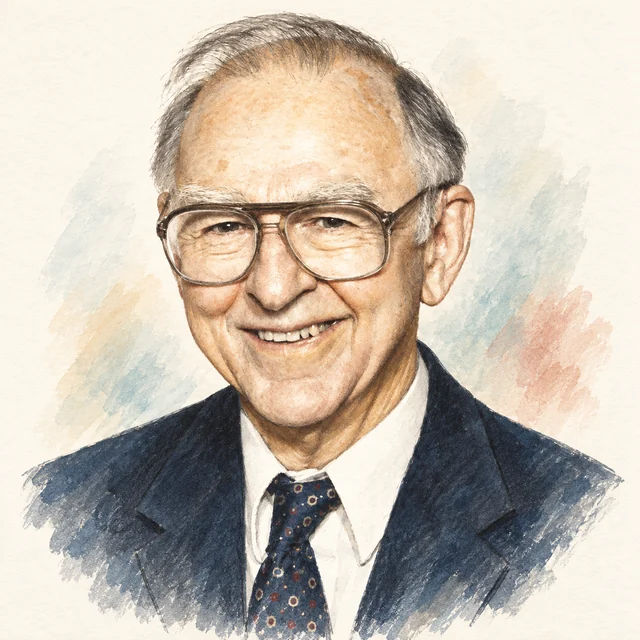
Krebs studied at Illinois before medical training at Washington University in St. Louis and wartime service in the US Navy. Research with Carl and Gerty Cori drew him from clinical medicine into biochemistry. He moved to Seattle in 1948 and later worked with Fischer on how muscle enzymes are regulated. After helping establish a department at Davis, he returned to Seattle, combining research with teaching and academic leadership.
The contribution
Krebs shared the discovery of reversible protein phosphorylation and later investigated how cyclic AMP controls a protein kinase. Kinases and phosphatases can form regulated chains that amplify signals and adjust cellular processes. This connected a biochemical modification to the organisation of cellular responses. His discovery is distinct from the Krebs citric-acid cycle, associated with Hans Krebs, and phosphorylation is one regulatory mechanism among many.
The idea in plain language
Cells need to change what their proteins do quickly, without rebuilding every molecule. Fischer and Krebs studied glycogen phosphorylase in muscle, an enzyme involved in using stored carbohydrate. In the mid-1950s, they showed that a kinase could transfer a phosphate group from ATP onto the protein, changing its activity.
Read the full award story ↗