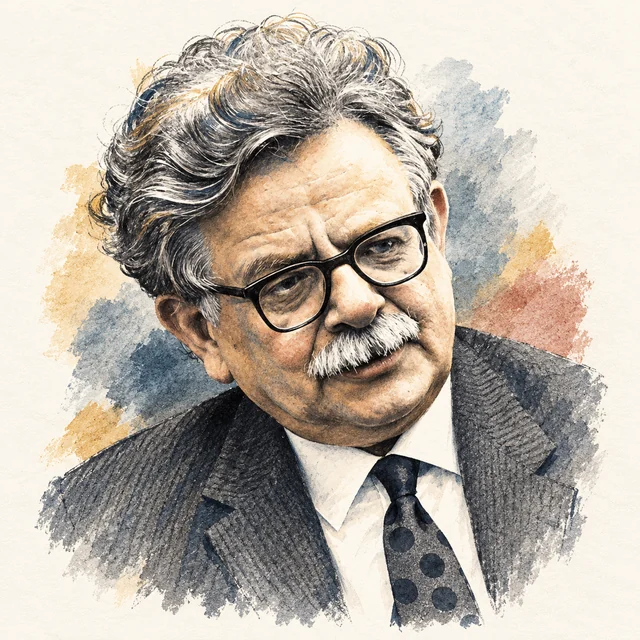
A life in context
The person behind the prize
Canetti was born into a Sephardic Jewish family whose home language was Ladino. Childhood moves took him to Manchester, Vienna, Zurich and Frankfurt; his mother taught him German after his father’s death in 1912. He earned a chemistry doctorate in Vienna in 1929 while developing literary interests shaped by Karl Kraus and the spectacle of crowds. His novel Die Blendung appeared in 1935 and later became known in English as Auto-da-Fé. He left Austria in 1938 and settled in London. Crowds and Power followed in 1960, alongside plays, notebooks, essays and travel writing. The Tongue Set Free (1977) and The Torch in My Ear (1980) made language and memory central to his autobiographical work; the next memoir volume appeared only after the award.
The contribution
Canetti used several literary forms to examine language, crowds, power and the vulnerability of individuals. He received the full Literature Prize for a body of work, rather than only one novel or a scientifically validated theory of crowd behaviour. His multilingual experience informed German-language writing that combined imaginative observation with intellectual inquiry.
The idea in plain language
Canetti’s multilingual childhood made language both an intimate inheritance and something learned through upheaval. His German-language novel Die Blendung (1935), later translated as Auto-da-Fé, follows a scholar whose command of books fails to give him command of life. Satire and sharply drawn voices expose isolation, obsession and the failure to understand other people.
Read the full award story ↗

