01 · The contribution
The idea, in everyday language
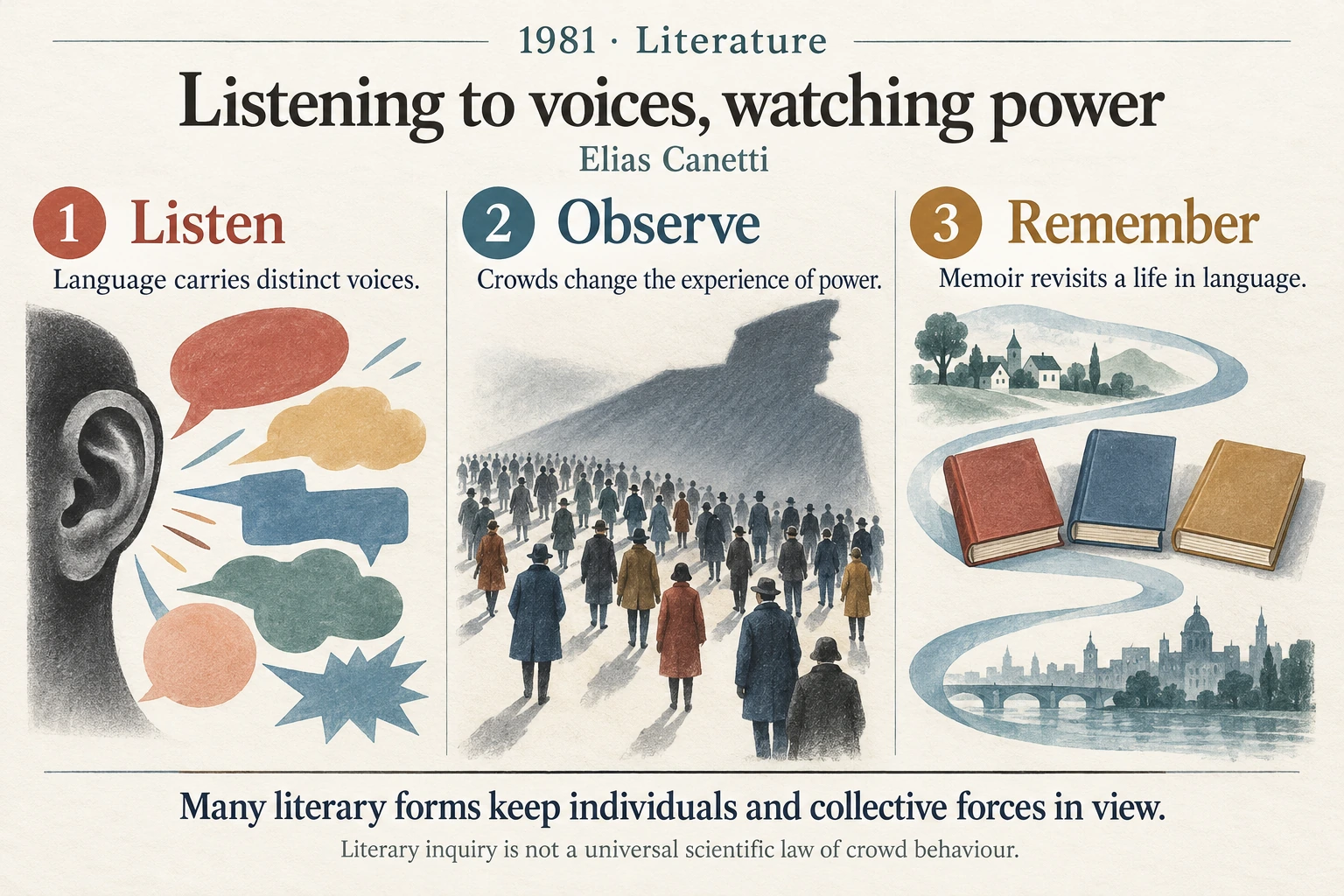
Canetti’s multilingual childhood made language both an intimate inheritance and something learned through upheaval. His German-language novel Die Blendung (1935), later translated as Auto-da-Fé, follows a scholar whose command of books fails to give him command of life. Satire and sharply drawn voices expose isolation, obsession and the failure to understand other people.
Crowds and Power (1960) approaches collective behaviour through wide-ranging literary and intellectual inquiry. Plays, character sketches and notebooks offer other forms of observation; The Voices of Marrakesh (1968) attends to the sounds and encounters of a city. The memoirs The Tongue Set Free (1977) and The Torch in My Ear (1980) reconstruct how languages, people and remembered scenes formed a writer. The prize recognised this breadth rather than a single genre.
Why it matters
His writing brought together imaginative invention, attention to speech and sustained inquiry into power, fear and survival. Moving among forms allowed an idea to appear as a fictional voice, an essayistic observation or a remembered encounter. Exile and several languages informed his perspective, while German remained his principal literary language. The Nobel award honoured a body of work marked by this variety and intellectual intensity.