A life in context
The person behind the prize
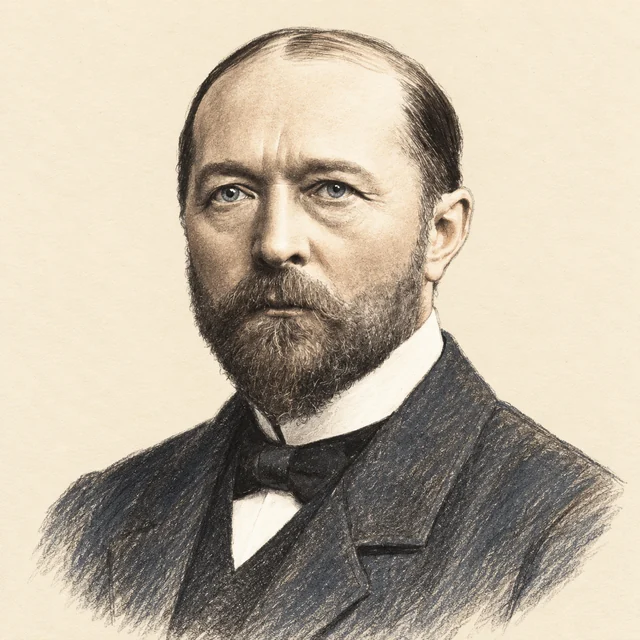
Emil Adolf von Behring was born at Hansdorf in Prussia and entered the military medical college in Berlin in 1874. He qualified in medicine and worked as an army doctor before research in bacteriology became the centre of his career. At Robert Koch’s institute in Berlin, he investigated how the body could resist the harmful products of bacteria. Diphtheria was particularly feared because it killed many children, and identifying its bacterium did not by itself provide an effective treatment. Research by Émile Roux and Alexandre Yersin had established the importance of the toxin produced by the organism. In 1890 Behring and Shibasaburo Kitasato reported work showing that protective activity in blood serum could be transferred from an immunised animal to another animal. Erich Wernicke also contributed to the development of diphtheria serum therapy. The central idea was that serum could contain substances capable of neutralising a particular toxin. In modern language these antitoxins are antibodies, and transferring them provides passive protection. That differs from teaching the recipient’s own immune system to make a lasting response through vaccination. It also differs from simply killing the bacteria: an antitoxin targets their harmful product. Turning experimental findings into dependable treatment required sufficient supplies, reliable potency and clinical evaluation. Paul Ehrlich contributed to standardisation, while industrial manufacturers became important to production. Marburg’s historical account records a manufacturing agreement with the Hoechst works in 1894, well before the 1900 introduction suggested by an older Nobel facts text. Behring held a post in Halle in 1894 and moved to Marburg in 1895. His Marburg laboratory and later business show the close relationship between university research and pharmaceutical production. The Behringwerk partnership was established in 1904; a different company form followed in 1914, rather than all activity beginning in that later year. In 1901 Behring received the entire first Physiology or Medicine Prize for serum therapy, especially its application against diphtheria. Kitasato’s essential collaboration should remain visible even though he did not share that award. Behring also investigated tuberculosis, but that work should not be presented as the discovery of a successful general cure. He died in Marburg in 1917. His contribution helped establish a way of using specific immune products as medicines, while production, safety and the limits of passive protection remained important questions.
The contribution
Behring helped develop serum therapy, especially antitoxin treatment against diphtheria. The full 1901 prize recognised a major therapeutic advance arising from work with Kitasato and other collaborators, rather than a lone discovery or an active vaccine.
The idea in plain language
Diphtheria bacteria can cause harm through a toxin. Behring and Kitasato showed that protective activity could be transferred in serum from an immunised animal; further work developed this principle into diphtheria therapy.
Read the full award story ↗

