c.curionodeThe Nobel Archive

1901 · Physiology or Medicine

Use antitoxin serum against diphtheria

Behring helped turn protective activity in blood serum into treatment, especially against diphtheria. The advance depended on collaborators and on making effective serum reliably available.

Serum therapyAntitoxinsPassive immunity
1901Physiology or Medicine

Visual guide

The prize, pictured

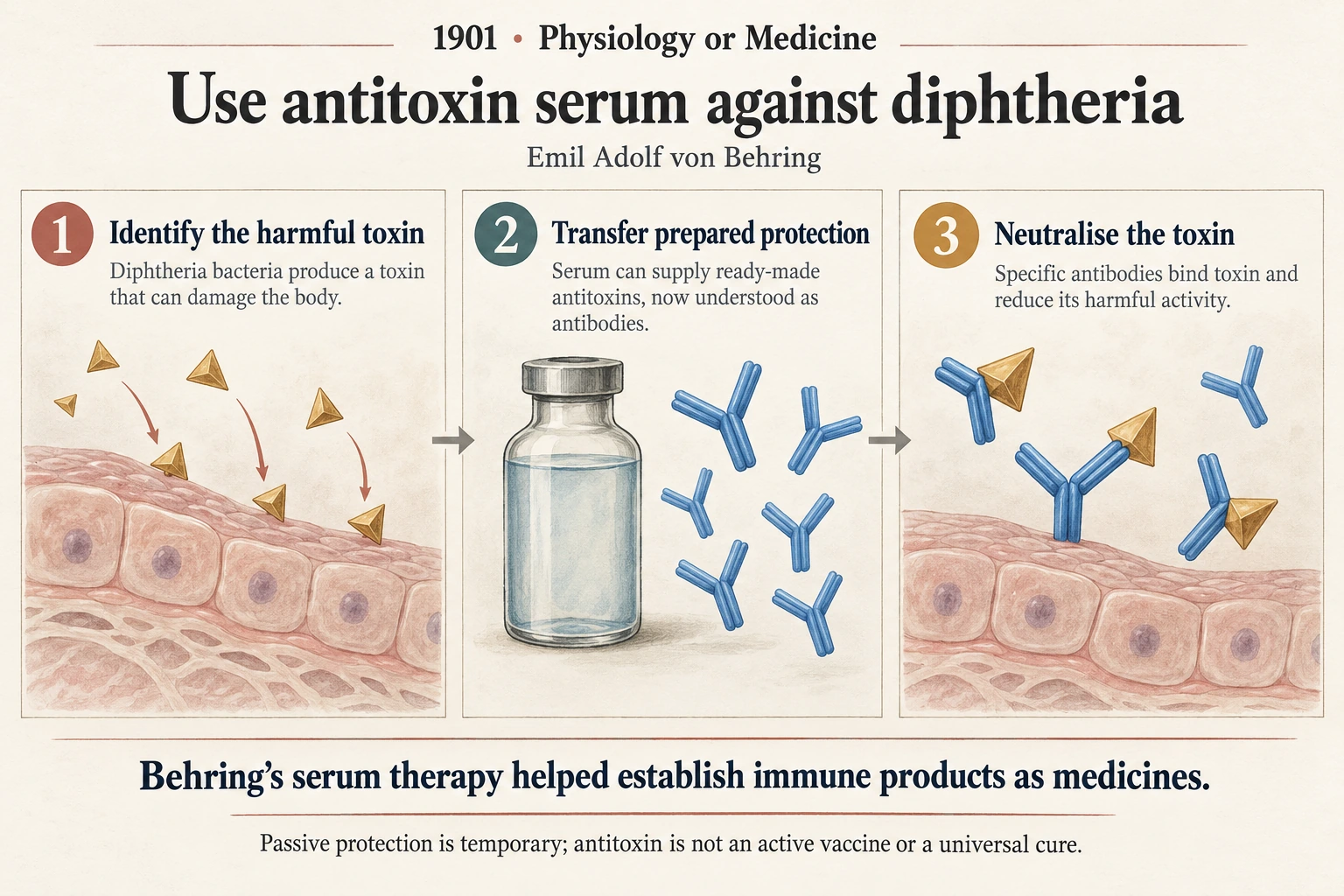
Infographic explaining Use antitoxin serum against diphtheria
Original AI-generated infographic. A conceptual overview; the explanations and sources below provide context.
Read the poster text

Behring’s serum therapy helped establish immune products as medicines.

  1. Identify the harmful toxin

    Diphtheria bacteria produce a toxin that can damage the body.

  2. Transfer prepared protection

    Serum can supply ready-made antitoxins, now understood as antibodies.

  3. Neutralise the toxin

    Specific antibodies bind toxin and reduce its harmful activity.

Passive protection is temporary; antitoxin is not an active vaccine or a universal cure.

01 · The discovery

The idea, in everyday language

Diphtheria bacteria can cause harm through a toxin. Behring and Kitasato showed that protective activity could be transferred in serum from an immunised animal; further work developed this principle into diphtheria therapy.

Antitoxins, understood today as antibodies, can bind and neutralise a specific toxin. Transferring ready-made antibodies provides passive protection rather than asking the recipient’s own immune system to build a lasting response.

Why it matters

Serum therapy changed the prospects for a dangerous childhood disease and helped establish immune products as medicines. Its practical success also depended on clinical work, production and potency standards, with contributions from Kitasato, Wernicke, Ehrlich and others.
02 · The people

Who brought the idea to life?

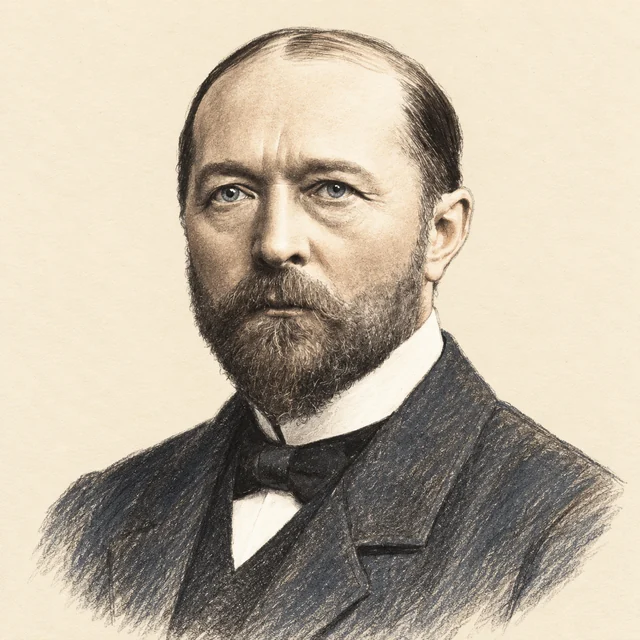
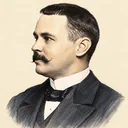
Illustrated portrait of Emil Adolf von Behring

Emil Adolf von Behring

Prize share · 1

Behring helped develop serum therapy, especially antitoxin treatment against diphtheria. The full 1901 prize recognised a major therapeutic advance arising from work with Kitasato and other collaborators, rather than a lone discovery or an active vaccine.

Read the biography ↗

03 · Years in the making

The path here

  1. 1854

    Behring is born at Hansdorf.

  2. 1874

    He enters medical training in Berlin.

  3. 1890

    Behring and Kitasato report transferable protective activity in serum.

  4. 1894

    He works in Halle; a manufacturing agreement supports diphtheria-serum production.

  5. 1895

    He moves to Marburg.

  6. 1901

    He receives the full first Physiology or Medicine Prize.

  7. 1904 / 1914

    The Behringwerk partnership is founded; a later company form follows.

  8. 1917

    He dies in Marburg.

04 · Read further

From the original sources

Original explanations by Curionode, based on the official records below. Biographical details and affiliations refer to the award year.

  1. Official award summary nobelprize.org
  2. Award ceremony speech nobelprize.org
  3. University of Marburg: Behring’s serum therapy uni-marburg.de
  4. University of Marburg: Behring’s laboratory and company uni-marburg.de

More in Physiology or Medicine

Browse this subject ↗