A life in context
The person behind the prize
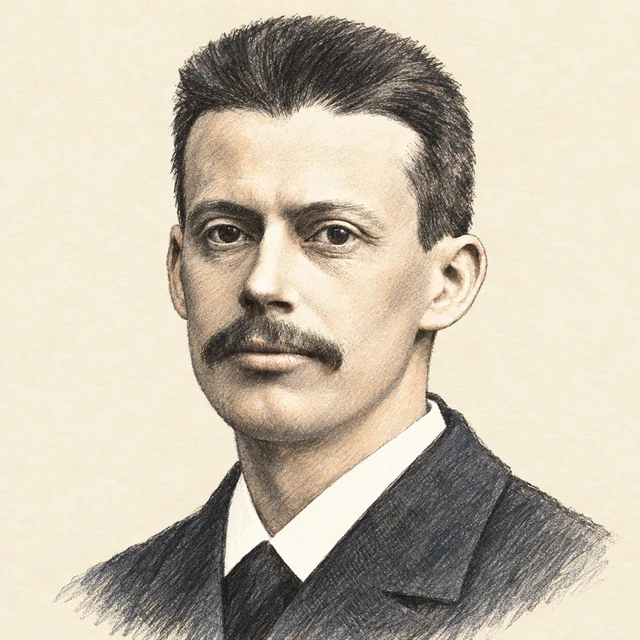
Niels Ryberg Finsen was born in Tórshavn in the Faroe Islands. He attended school in Denmark and Reykjavík before beginning medical studies at Copenhagen in 1882. After qualifying in 1890 he worked as a prosector in anatomy, leaving that post in 1893 to concentrate on the effects of light on living tissue. Chronic illness increasingly restricted his own activity, but his research developed through laboratory observation, apparatus design and clinical collaboration. Different parts of the spectrum do not act identically: investigations of light needed attention to wavelength and to the distinction between physiological effects and therapeutic benefit. In 1893 Finsen proposed red-light conditions for smallpox patients. That work should be distinguished from the concentrated-light treatment of lupus vulgaris, a form of tuberculosis affecting the skin, which he introduced in 1895. Lupus vulgaris is not the autoimmune condition commonly called lupus today. Finsen’s method developed the use of concentrated light, particularly its shorter-wavelength components, against diseased tissue. It built on earlier research into light and microorganisms rather than being the first observation that light could inhibit bacteria. A medical light institute was established in Copenhagen in 1896, bringing together doctors, nurses and technical workers. Finsen became a professor in 1898. The 1903 Physiology or Medicine Prize recognised his contribution to treating diseases, especially lupus vulgaris, with concentrated light. Illness prevented him from attending the ceremony, and the Danish representative Count Sponneck received the award for him. The presentation speech described clinical cases in the language of its period; those reports should not be treated as modern controlled trials or a guarantee that the treatment was harmless. Finsen died in 1904. His work helped establish a systematic study of light in medicine, but it is a historical achievement, not advice to expose skin conditions to ultraviolet light or to reproduce early apparatus.
The contribution
Finsen developed concentrated-light treatment, especially for lupus vulgaris, which is skin tuberculosis. The full Medicine Prize recognised this historical therapeutic contribution; it was not a claim that light safely treats every skin disease.
The idea in plain language
Light is not a single uniform influence: wavelength and exposure conditions matter. Building on earlier work on light and microorganisms, Finsen investigated shorter-wavelength effects and developed apparatus for concentrating light on diseased skin.
Read the full award story ↗

