c.curionodeThe Nobel Archive

1903 · Physiology or Medicine

Study light as a targeted historical treatment

Finsen investigated how different parts of light affect living tissue and developed concentrated-light treatment, especially for lupus vulgaris, a form of skin tuberculosis.

LightSkin tuberculosisHistory of medicine
1903Physiology or Medicine

Visual guide

The prize, pictured

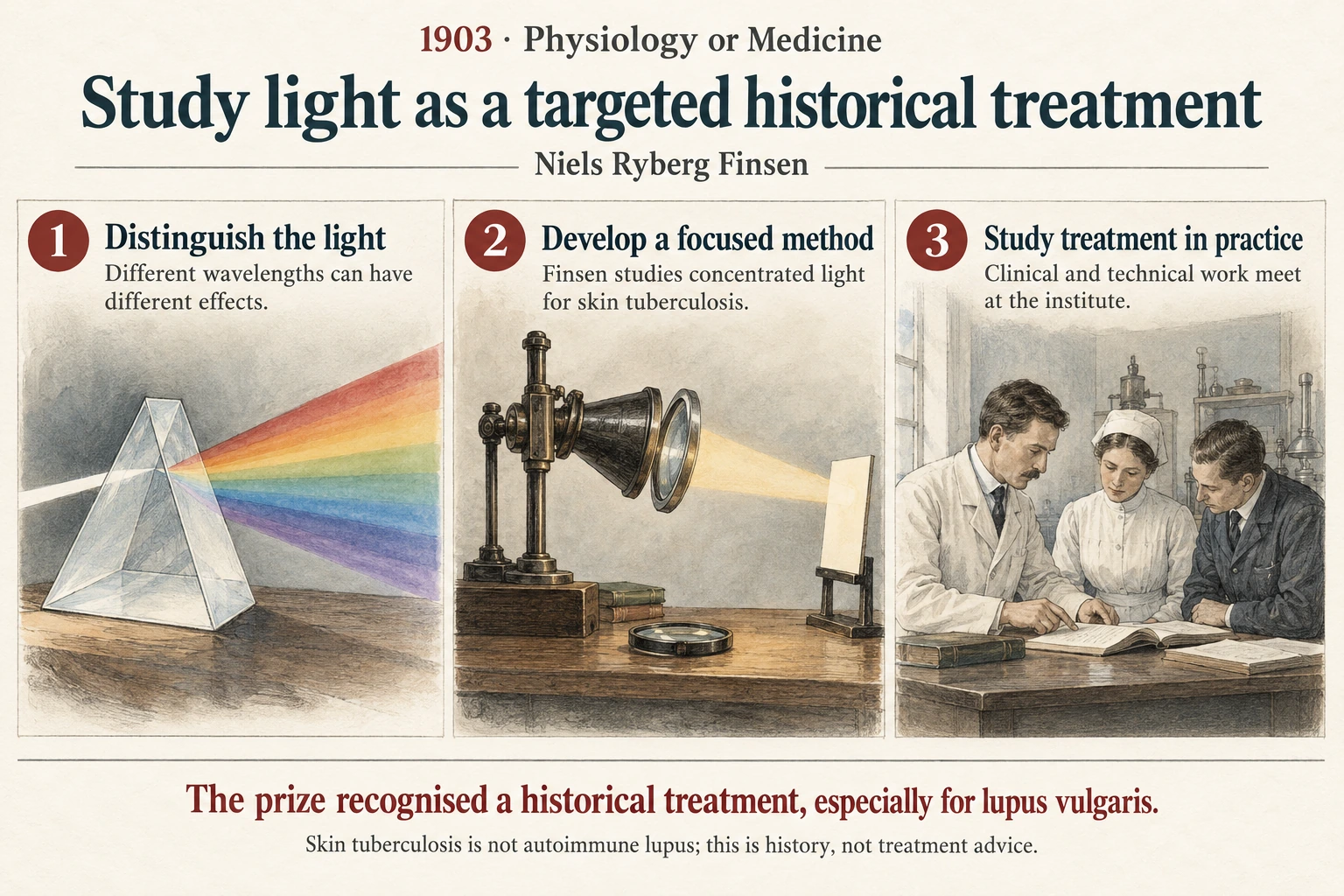
Infographic explaining Study light as a targeted historical treatment
Original AI-generated infographic. A conceptual overview; the explanations and sources below provide context.
Read the poster text

The prize recognised a historical treatment, especially for lupus vulgaris.

  1. Distinguish the light

    Different wavelengths can have different effects.

  2. Develop a focused method

    Finsen studies concentrated light for skin tuberculosis.

  3. Study treatment in practice

    Clinical and technical work meet at the institute.

Skin tuberculosis is not autoimmune lupus; this is history, not treatment advice.

01 · The discovery

The idea, in everyday language

Light is not a single uniform influence: wavelength and exposure conditions matter. Building on earlier work on light and microorganisms, Finsen investigated shorter-wavelength effects and developed apparatus for concentrating light on diseased skin.

Clinical work at the institute established in 1896 joined medical observation with technical development and nursing care. The 1903 prize recognised this contribution to treatment, especially lupus vulgaris. His earlier red-light work on smallpox concerned a different condition and approach.

Why it matters

Finsen helped make the effects of light a systematic subject of medical research. The institutional work connected laboratory questions, apparatus and clinical observation, contributing to the historical development of phototherapy.
02 · The people

Who brought the idea to life?

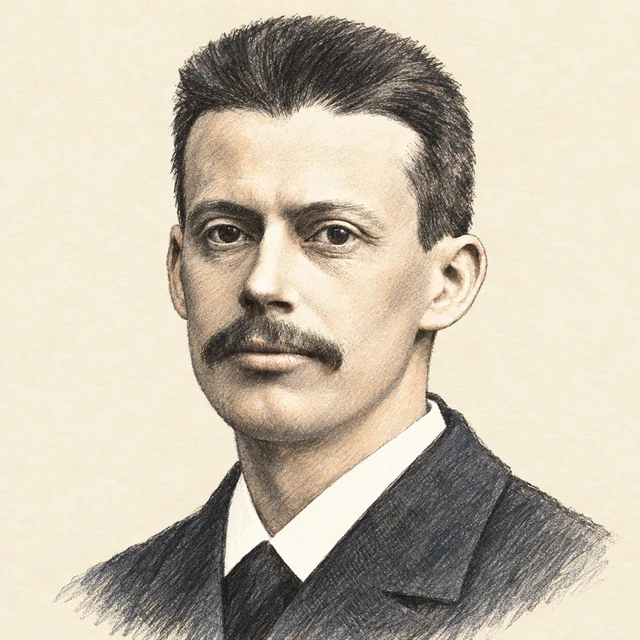
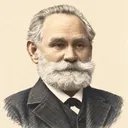
Illustrated portrait of Niels Ryberg Finsen

Niels Ryberg Finsen

Prize share · 1

Finsen developed concentrated-light treatment, especially for lupus vulgaris, which is skin tuberculosis. The full Medicine Prize recognised this historical therapeutic contribution; it was not a claim that light safely treats every skin disease.

Read the biography ↗

03 · Years in the making

The path here

  1. 1860

    Finsen is born in Tórshavn.

  2. 1882

    He begins medical studies at Copenhagen.

  3. 1890

    He qualifies in medicine.

  4. 1893

    He publishes work on red light and smallpox.

  5. 1895

    He introduces concentrated-light treatment for skin tuberculosis.

  6. 1896

    A medical light institute is established in Copenhagen.

  7. 1903

    He receives the full Medicine Prize, represented at the ceremony because of illness.

  8. 1904

    He dies in Copenhagen.

04 · Read further

From the original sources

Original explanations by Curionode, based on the official records below. Biographical details and affiliations refer to the award year.

  1. Official award summary nobelprize.org
  2. Award ceremony speech nobelprize.org
  3. Medicinsk Museion: historical note on Finsen’s institute museion.ku.dk

More in Physiology or Medicine

Browse this subject ↗