A life in context
The person behind the prize
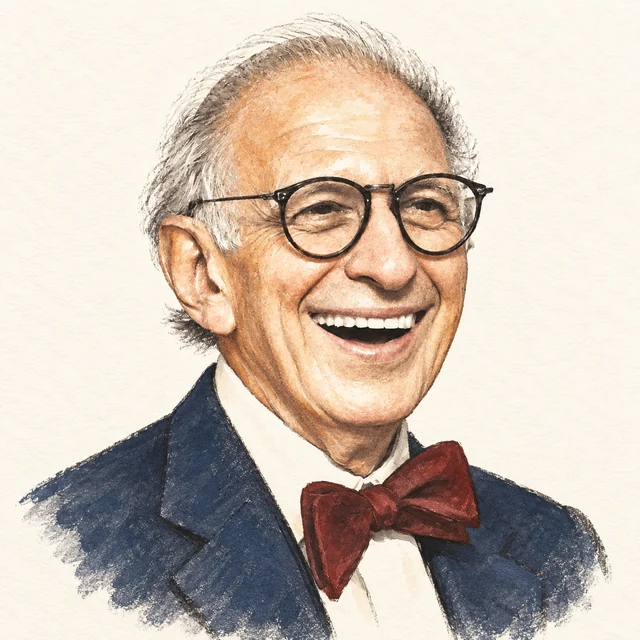
Kandel escaped Nazi-ruled Vienna with his family in 1939 and grew up in New York. He studied history and literature at Harvard before medical training at New York University and a turn toward the biological basis of the mind. He joined Columbia in 1974. To make learning experimentally accessible, he studied a simple protective reflex in the sea slug Aplysia, whose large nerve cells could be investigated individually.
The contribution
Kandel and collaborators linked learning in Aplysia to changes in the strength of connections between neurons. Short-term changes could involve modification of existing proteins, while longer-lasting changes required new protein synthesis and could involve structural alterations at synapses. This connected behaviour with cellular and molecular mechanisms. Aplysia supplied a tractable model of basic learning processes, not a complete explanation of every kind of human memory.
The idea in plain language
Neurons communicate through electrical activity and chemical signals at synapses. Carlsson established that dopamine is itself an important transmitter, with a major role in movement. Greengard explored what happens after a transmitter reaches a receptor: intracellular reactions can change proteins by adding or removing phosphate groups, altering the way a neuron responds.
Read the full award story ↗