A life in context
The person behind the prize
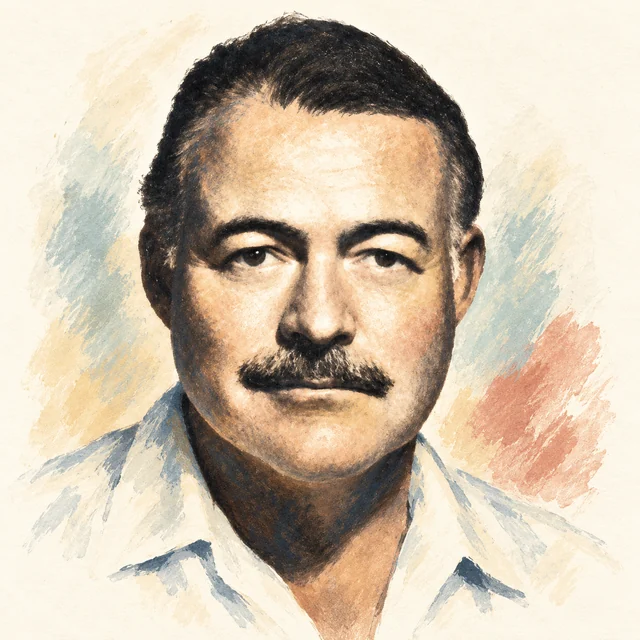
Hemingway began newspaper work in Kansas City at seventeen. He served as a volunteer ambulance driver in Italy during the First World War, was wounded, and later returned to journalism. In the 1920s he lived among expatriate writers in Paris while developing fiction from a wider range of experience than direct autobiography alone. The Sun Also Rises appeared in 1926, Men Without Women in 1927 and A Farewell to Arms in 1929. Reporting on the Spanish Civil War helped shape the background to For Whom the Bell Tolls in 1940. His short fiction and novels developed economical prose, precise dialogue and understatement, leaving readers to infer much of the emotional significance. The Old Man and the Sea appeared in 1952 and was singled out in the 1954 prize motivation, alongside his influence on contemporary style. He received the full prize but could not attend for health reasons. Later posthumous books, including A Moveable Feast and Islands in the Stream, should be distinguished from publications available in 1954.
The contribution
Hemingway developed influential narrative prose through economy, dialogue and understatement; The Old Man and the Sea was specifically recognised in the award motivation. He received the full Literature Prize.
The idea in plain language
How can a story convey emotional pressure without explaining every feeling? Hemingway developed prose in which concrete observations, dialogue and pauses invite the reader to infer significance. Journalistic training contributed to his discipline, but the fiction transforms experience rather than functioning as a literal record of his own life.
Read the full award story ↗

