A life in context
The person behind the prize
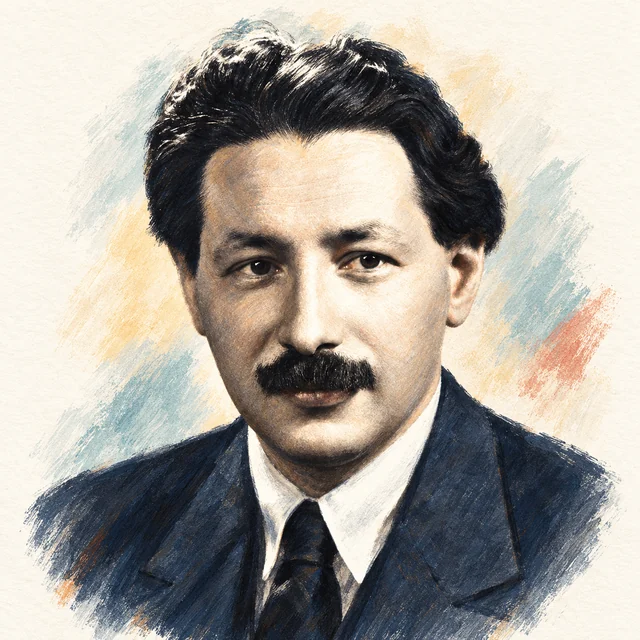
Chain studied chemistry in Berlin and graduated in 1930, then pursued enzyme research at the Charité Hospital. After the Nazis came to power in 1933 he emigrated to Britain. He first worked in Cambridge under Frederick Gowland Hopkins and moved to Oxford in 1935, becoming a demonstrator and lecturer in chemical pathology in 1936. His biochemical interests included enzymes and naturally produced antibacterial substances. With Howard Florey he helped turn renewed investigation of Fleming’s penicillin into a sustained research programme. The difficulty was not merely seeing an effect: unstable material had to be concentrated and characterised without losing its activity, and its usefulness in the living body had to be investigated. The Oxford programme relied on many collaborators, including Abraham and Heatley, rather than two people working alone. Chain received one third of the 1945 Medicine Prize. His appointments in Rome in 1948 and at Imperial College in 1961 were later stages of his career.
The contribution
Chain helped develop the biochemical investigation and preparation of penicillin at Oxford, contributing to evidence of its therapeutic action. He received one third of the Medicine Prize.
The idea in plain language
In 1928 Fleming investigated a mould contaminant associated with inhibited bacterial growth and named the active substance penicillin. The observation suggested an antibacterial resource, but the substance was unstable and difficult to prepare. Seeing an effect near a mould was different from establishing a dependable medicine.
Read the full award story ↗