A life in context
The person behind the prize
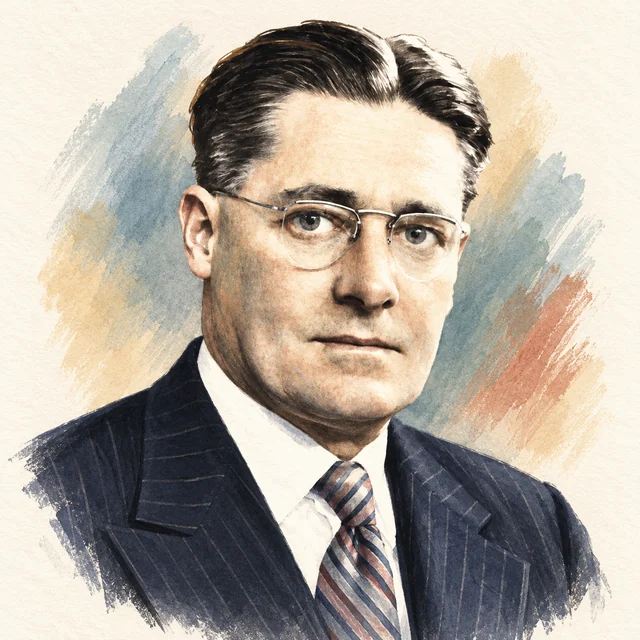
Florey trained in medicine at Adelaide, graduating in 1921, then studied at Oxford on a Rhodes Scholarship and completed his Cambridge doctorate in 1927. He became professor of pathology at Sheffield in 1931 and at Oxford in 1935. His research on the body’s defences against infection led into a collaboration with Ernst Chain on naturally occurring antibacterial substances. Their Oxford team took up penicillin and addressed connected problems in biochemistry, testing and supply. Animal studies reported in 1940 were followed by published studies of treatment in people in 1941; early shortages showed why a promising substance was not yet a readily available medicine. Florey helped engage American researchers and institutions in the production effort. This work depended on a wider team and on manufacturing developments beyond the three named laureates. Knighted in 1944, he received one third of the 1945 Medicine Prize. His Royal Society presidency beginning in 1960 was much later.
The contribution
Florey led Oxford research connecting penicillin preparation with experimental and clinical investigation, and helped expand the effort to make usable supplies. He received one third of the Medicine Prize.
The idea in plain language
In 1928 Fleming investigated a mould contaminant associated with inhibited bacterial growth and named the active substance penicillin. The observation suggested an antibacterial resource, but the substance was unstable and difficult to prepare. Seeing an effect near a mould was different from establishing a dependable medicine.
Read the full award story ↗