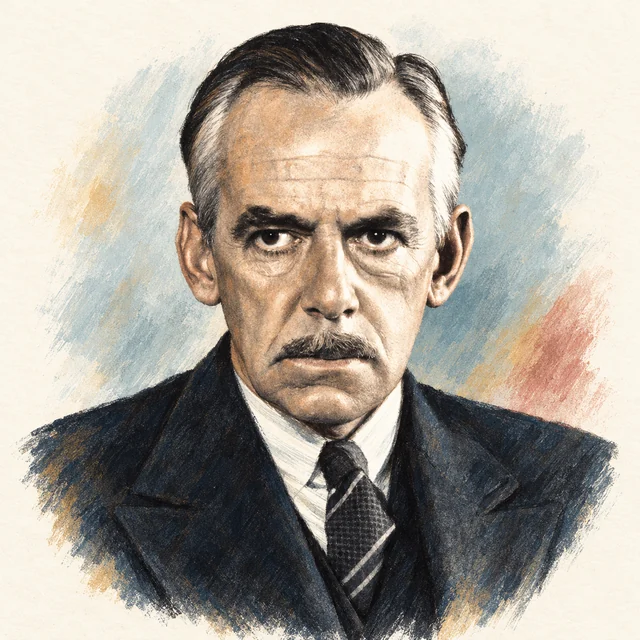
A life in context
The person behind the prize
O’Neill grew up around the touring theatre of his actor father, James O’Neill. An unfinished year at Princeton was followed by travel, seafaring and insecure jobs; a stay in a tuberculosis sanatorium helped turn him towards writing. He studied briefly in George Pierce Baker’s playwriting course at Harvard. In 1916 the Provincetown Players staged his one-act Bound East for Cardiff. Beyond the Horizon reached Broadway in 1920, and plays including The Hairy Ape, Strange Interlude and Mourning Becomes Electra expanded his experiments with voice, stage form and tragic conflict. The 1936 Literature Prize recognised a body of dramatic writing already established by that year, rather than one particular play. His best-known later works belong to a different period: The Iceman Cometh appeared in 1946, while Long Day’s Journey into Night was published and first performed posthumously in 1956. They should not be treated as works available to the 1936 Academy.
The contribution
O’Neill received the full Literature Prize for the energy, candour and emotional force of his dramatic writing and its distinctive treatment of tragedy. The award concerns his writing as a whole, not a scientific theory about human behaviour.
The idea in plain language
A character’s public words can conceal a different inner life. O’Neill made that tension a resource for the stage. His early sea plays drew on hard, insecure lives; later works shifted between realism and more stylised forms. The Hairy Ape turned a worker’s search for belonging into a harsh theatrical confrontation. Strange Interlude let the audience hear thoughts that other characters on stage could not hear. These devices gave private conflict a public dramatic form rather than merely reporting it.
Read the full award story ↗

