A life in context
The person behind the prize
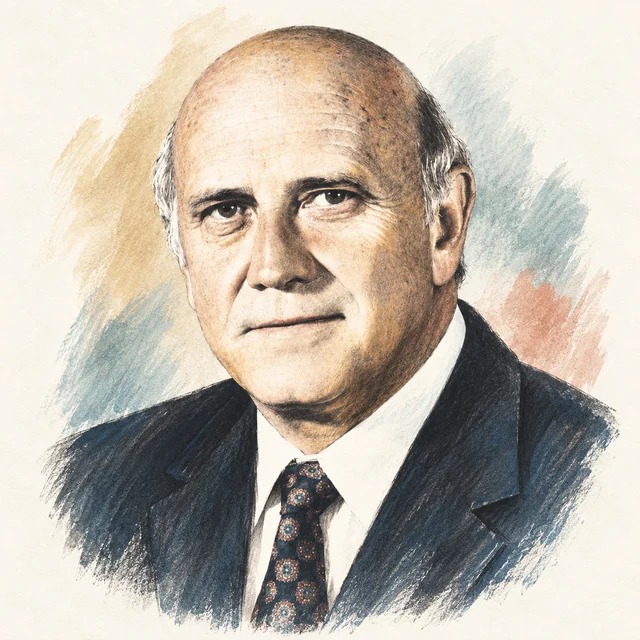
De Klerk trained as a lawyer before entering National Party politics and holding several government ministries. His earlier career supported the institutions of white minority rule, including segregated education. As state president from 1989, he changed course, lifted bans on opposition organisations and released Mandela in 1990. His government then negotiated the constitutional transition. His earlier record remains part of the history of the award.
The contribution
De Klerk supplied decisions and negotiating authority from the government side of a transition away from apartheid. He shared the prize equally with Mandela for ending the regime peacefully and laying democratic foundations. This recognised particular changes and negotiations rather than absolving his earlier support for apartheid or implying that the transition was free of violence. Constitutional agreement and implementation required a much wider political process.
The idea in plain language
Apartheid was a system of enforced racial separation and white minority rule, not simply a disagreement between cultures. Mandela and de Klerk approached its end from profoundly different positions: Mandela led a liberation movement after decades of imprisonment; de Klerk led a government whose institutions had upheld the system. Negotiations sought a political order with equal voting rights.
Read the full award story ↗