A life in context
The person behind the prize
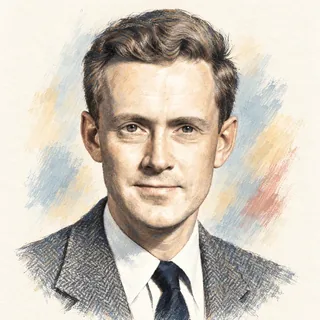
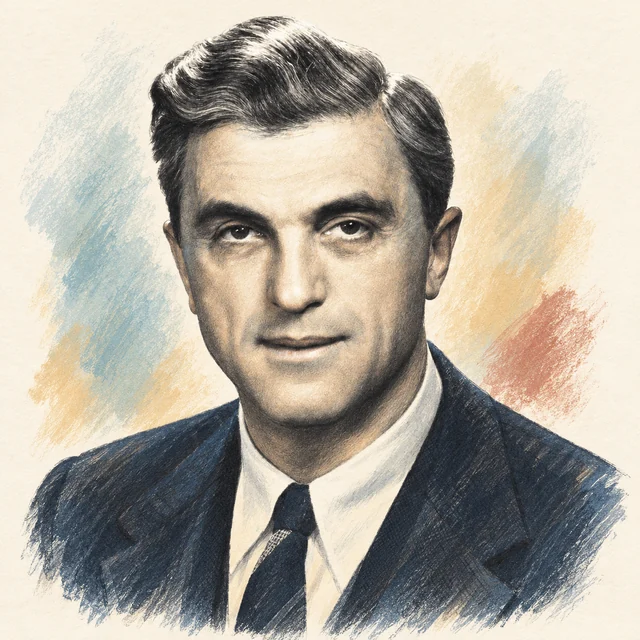
Bloch began engineering studies at Zurich’s Federal Institute of Technology in 1924, then changed to physics. He completed a doctorate with Heisenberg at Leipzig in 1928, studying electrons in crystals and metallic conduction. Leaving Germany after the Nazi rise to power in 1933, he joined Stanford in 1934. His theoretical background broadened into experiments on neutron magnetism, including work with Luis Alvarez. Wartime research took him to Los Alamos and to radar work at Harvard. Back at Stanford in 1945, he developed nuclear induction with William Hansen and Martin Packard. Their work, published in 1946, was independent of the resonance-absorption experiments of Purcell and his collaborators. Stanford was Bloch’s affiliation for his half of the 1952 Physics Prize. His service as CERN’s first Director General in 1954–1955 and his later endowed chair belong to subsequent history. The award recognised magnetic measurement methods, not an already completed medical imaging system.
The contribution
Bloch developed nuclear induction, detecting the electromagnetic response of nuclear magnetisation, with Hansen and Packard. He received one half of the Physics Prize.
The idea in plain language
Many atomic nuclei have a magnetic moment. In an applied magnetic field, radio waves at a suitable resonance frequency can change their quantum spin states. Detecting this very weak response in an ordinary sample required methods beyond the earlier molecular-beam approach associated with Rabi.
Read the full award story ↗