A life in context
The person behind the prize
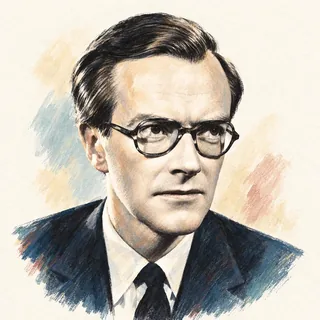
Crick earned a physics degree at University College London in 1937. War interrupted his first doctorate research; he worked for the Admiralty on mines. Turning to biology in 1947, he joined Perutz’s Cambridge MRC unit in 1949. With Cochran and Vand he developed helix-diffraction theory. He met Watson in 1951, and their complementary double-helix proposal appeared in April 1953. Experimental results from Wilkins, Franklin, Gosling and colleagues, chemical constraints and other research were essential. Crick received his Cambridge doctorate on protein diffraction in 1954, after the DNA proposal. Work with Brenner and others subsequently addressed protein synthesis and the genetic code. The MRC laboratory was his 1962 affiliation; the prize did not recognise later institutional appointments or explain every feature of heredity.
The contribution
Crick and Watson proposed DNA’s complementary double helix and its copying implications, building on experimental and chemical evidence. He received one third.
The idea in plain language
DNA was implicated in heredity, but its arrangement and the way information could be preserved needed explanation. Experimental diffraction, chemical composition and model building supplied different constraints on a plausible structure.
Read the full award story ↗