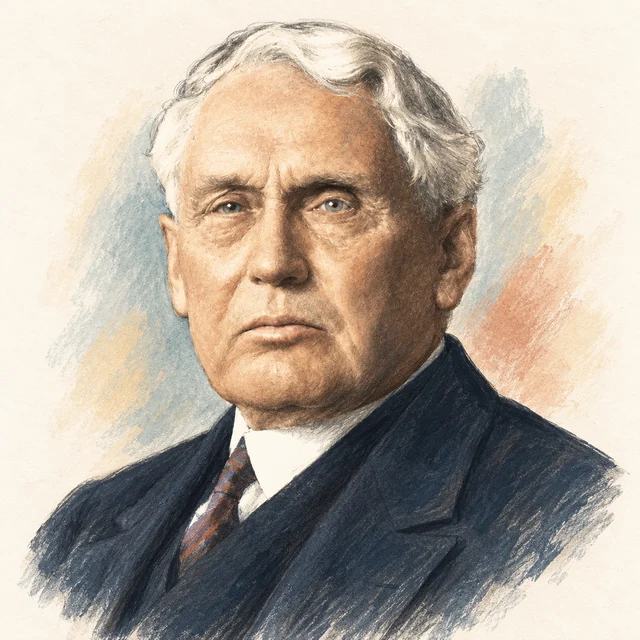
A life in context
The person behind the prize
Kellogg grew up with limited formal schooling and qualified as a lawyer in 1877. Work in Minnesota led to a national reputation in antitrust litigation. Elected to the United States Senate in 1916, he served from 1917 to 1923, then became ambassador to Britain and Secretary of State from 1925 to 1929. French foreign minister Aristide Briand’s proposed bilateral peace agreement became, through negotiations including Kellogg’s multilateral counterproposal, the pact signed in Paris on 27 August 1928. It renounced war as an instrument of national policy and called for peaceful settlement of disputes. Kellogg’s contribution belonged to a wider movement involving Briand, peace advocates and many governments. His record in office also included United States armed intervention in Nicaragua; the prize should not imply a career free of coercive foreign policy. The 1929 Peace Prize was reserved and awarded to him in 1930, separately from Nathan Söderblom’s 1930 prize. Kellogg later served on the Permanent Court of International Justice and died in St. Paul in 1937.
The contribution
Kellogg received the full 1929 Peace Prize, awarded in 1930, for his crucial role in bringing about the Briand–Kellogg Pact. He helped turn a bilateral proposal into a multilateral renunciation of war.
The idea in plain language
After the First World War, advocates sought ways to prevent another catastrophe. French foreign minister Aristide Briand proposed a bilateral agreement with the United States. Kellogg helped redirect the negotiations toward a multilateral agreement open to more states. Peace advocates including Nicholas Murray Butler and James T. Shotwell also contributed to the movement.
Read the full award story ↗

