c.curionodeThe Nobel Archive

1929 · Peace

A multilateral pledge to renounce war

Kellogg helped turn Briand’s bilateral proposal into a wider pact renouncing war as an instrument of national policy. His full 1929 Peace Prize was awarded in 1930.

Briand–Kellogg PactDiplomacyRenunciation of war1929 prize awarded in 1930
1929Peace

Visual guide

The prize, pictured

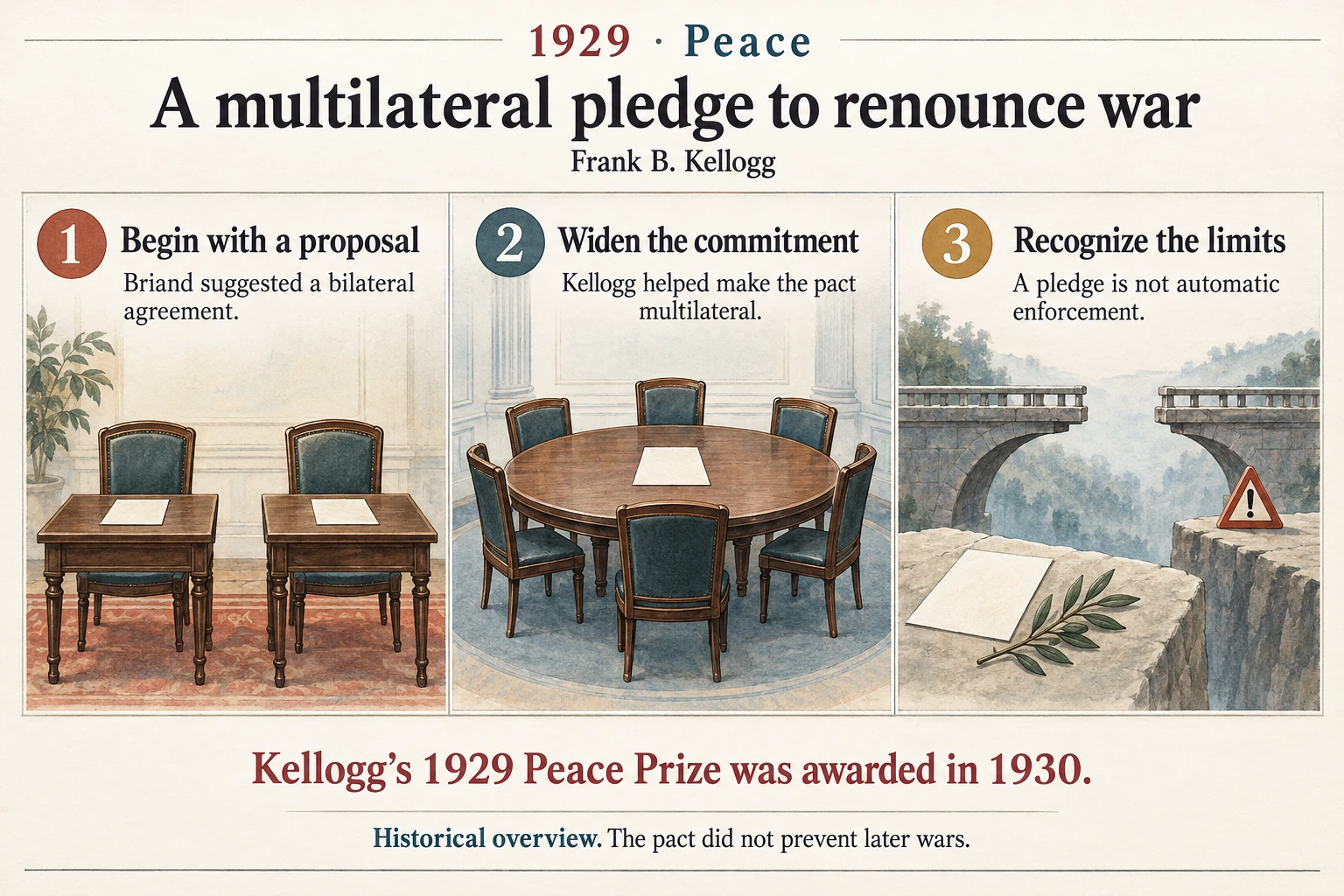
Infographic explaining A multilateral pledge to renounce war
Original AI-generated infographic. A conceptual overview; the explanations and sources below provide context.
Read the poster text

Kellogg’s 1929 Peace Prize was awarded in 1930.

  1. Begin with a proposal

    Briand suggested a bilateral agreement.

  2. Widen the commitment

    Kellogg helped make the pact multilateral.

  3. Recognize the limits

    A pledge is not automatic enforcement.

Historical overview. The pact did not prevent later wars.

01 · The contribution

The idea, in everyday language

After the First World War, advocates sought ways to prevent another catastrophe. French foreign minister Aristide Briand proposed a bilateral agreement with the United States. Kellogg helped redirect the negotiations toward a multilateral agreement open to more states. Peace advocates including Nicholas Murray Butler and James T. Shotwell also contributed to the movement.

The pact signed in Paris on 27 August 1928 renounced war as an instrument of national policy and called for peaceful settlement of disputes. Its reach as a public international commitment mattered, but signatures were not the same as effective enforcement. Interpretations of self-defence and the lack of reliable sanctions left serious limits.

Why it matters

The pact became a prominent expression of the interwar effort to make aggressive war unacceptable. Kellogg’s recognition belonged to a collective diplomatic and civic movement. Later aggression, including Japan’s invasion of Manchuria in 1931, showed how far the pledge remained from a dependable system for preventing war.
02 · The people

Who brought the idea to life?

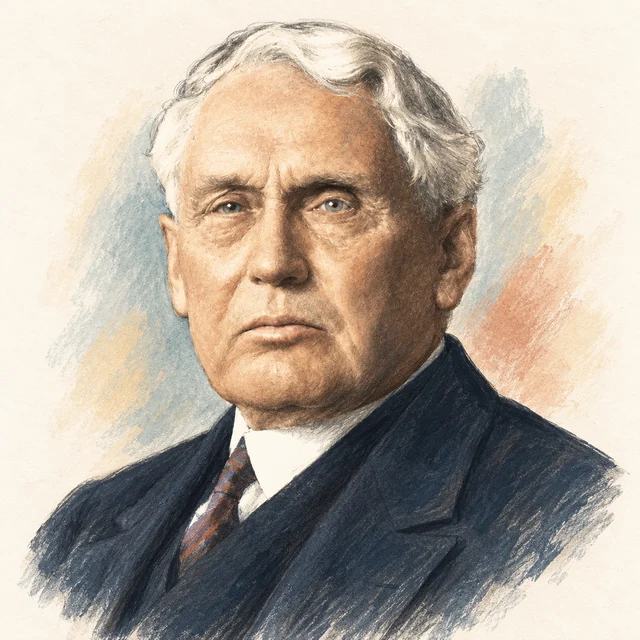
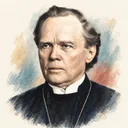
Illustrated portrait of Frank B. Kellogg

Frank B. Kellogg

Prize share · 1

Kellogg received the full 1929 Peace Prize, awarded in 1930, for his crucial role in bringing about the Briand–Kellogg Pact. He helped turn a bilateral proposal into a multilateral renunciation of war.

Read the biography ↗

03 · Years in the making

The path here

  1. 1927

    Briand proposes a bilateral agreement; negotiations turn toward a multilateral pact.

  2. 1928

    The pact is signed in Paris on 27 August.

  3. 1930

    Kellogg receives the reserved full Peace Prize for 1929.

04 · Read further

From the original sources

Original explanations by Curionode, based on the official records below. Biographical details and affiliations refer to the award year.

  1. Official award summary nobelprize.org
  2. Award ceremony speech nobelprize.org
  3. U.S. State Department: the Kellogg–Briand Pact history.state.gov