01 · The contribution
The idea, in everyday language
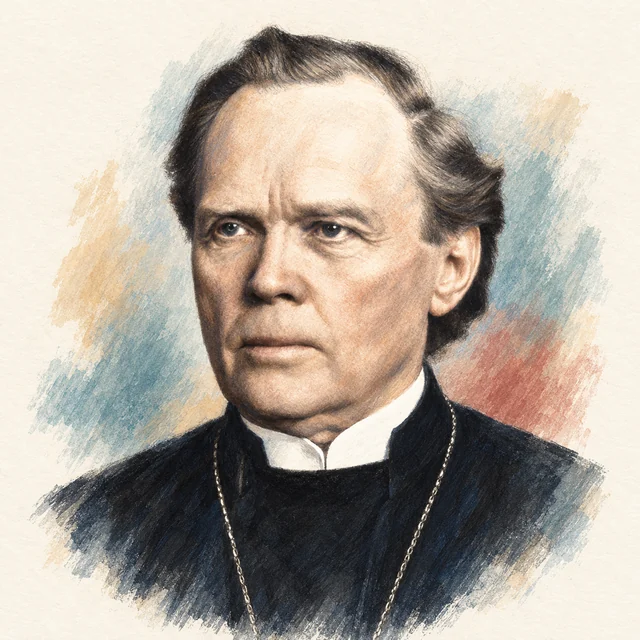
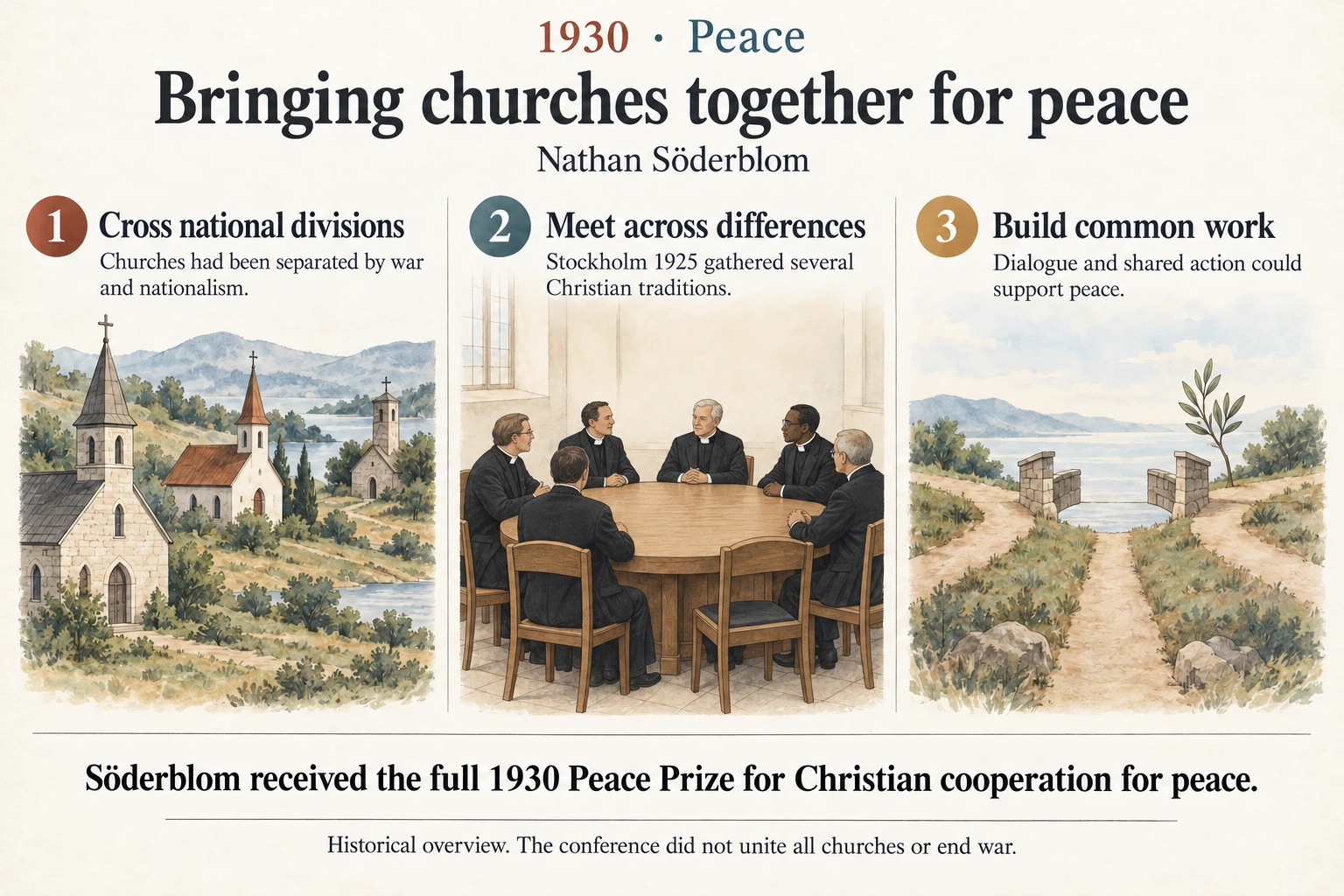
The First World War revealed how churches could become aligned with opposing national causes. Söderblom sought cooperation that would challenge those divisions and connect religious commitment with practical work for peace. As archbishop of Uppsala and a scholar with international contacts, he helped make a large common meeting possible.
The 1925 Conference on Life and Work in Stockholm brought Anglican, Protestant and Orthodox representatives together. The Roman Catholic Church was not represented. The purpose was not simply to erase differences in doctrine, but to find grounds for common action on social and international problems. This was Christian ecumenical cooperation, not a union of all religions.
Why it matters
The conference strengthened organized ecumenical cooperation and the place of peace and social responsibility within it. The Life and Work movement was one of the streams that later contributed to the World Council of Churches, founded in 1948. Söderblom had died in 1931, so this later institution was part of a developing legacy, not an organization he personally founded.