A life in context
The person behind the prize
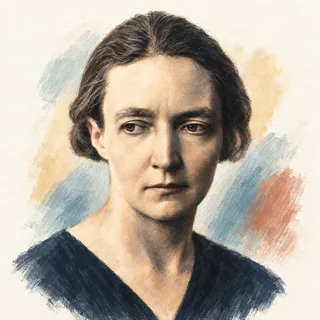
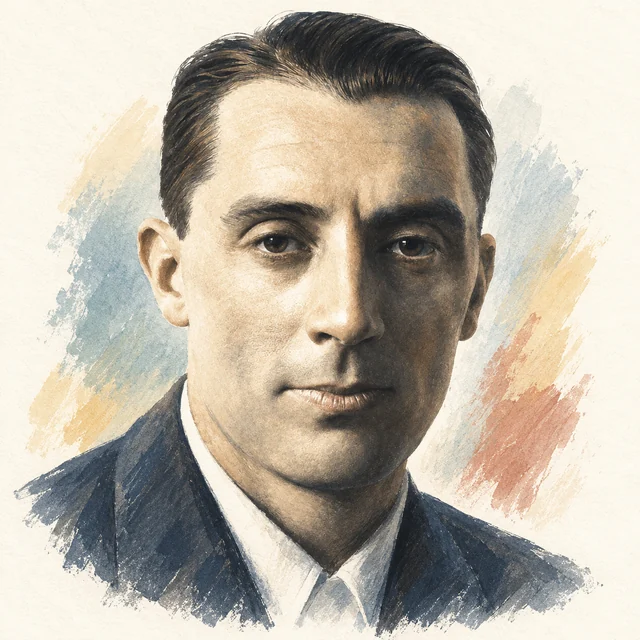
Joliot trained at the Paris school of industrial physics and chemistry and became an assistant to Marie Curie at the Radium Institute in 1925. There he met Irène Curie, whom he married in 1926. He received his doctorate in 1930 for work on the electrochemistry of radioactive substances. Their collaboration investigated radiation and nuclear transformations. In 1934 they found that irradiated aluminium continued to emit radiation after the source of alpha particles had been removed. Further work identified radioactive phosphorus: the bombardment had created a radioactive isotope, rather than merely causing an effect while the source remained present. Joliot and Irène Joliot-Curie received equal halves of the 1935 Chemistry Prize for this shared discovery. In 1937 he became professor at the Collège de France. Later research concerned nuclear chain reactions, and his subsequent public roles included scientific leadership and peace campaigning. Those later activities are separate from the artificial-radioactivity work recognised in 1935.
The contribution
Joliot received half the Chemistry Prize, shared equally with Irène Joliot-Curie, for the synthesis of new radioactive substances. Their experiments established radioactivity that persisted after the inducing bombardment stopped.
The idea in plain language
Radioactivity had been encountered in naturally occurring substances, while earlier bombardment experiments had already transformed some nuclei. The new question was whether an experiment could produce a substance that would itself remain radioactive. In 1934 the Joliot-Curies found that aluminium exposed to alpha particles continued to emit positrons after the source was removed. The activity then declined with time, as radioactive decay would predict. Related observations were made with boron and magnesium.
Read the full award story ↗