c.curionodeThe Nobel Archive

1935 · Chemistry

Making radioactivity that outlasts the bombardment

Irène Joliot-Curie and Frédéric Joliot produced radioactive isotopes by changing atomic nuclei. The radiation continued after the inducing source was removed.

Artificial radioactivityRadioactive isotopesIrène Joliot-CurieFrédéric Joliot
1935Chemistry

Visual guide

The prize, pictured

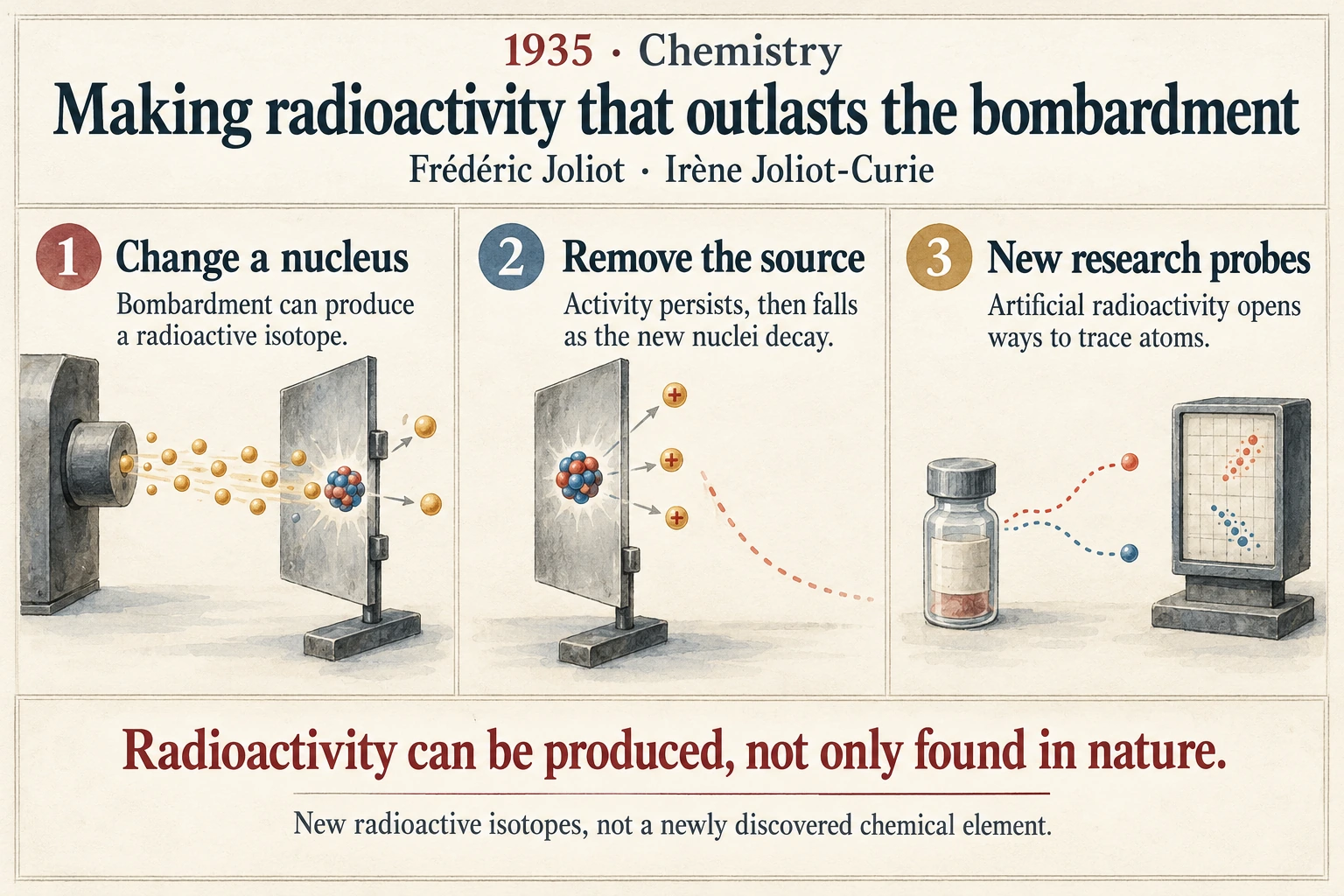
Infographic explaining Making radioactivity that outlasts the bombardment
Original AI-generated infographic. A conceptual overview; the explanations and sources below provide context.
Read the poster text

Radioactivity can be produced, not only found in nature.

  1. Change a nucleus

    Bombardment can produce a radioactive isotope.

  2. Remove the source

    Activity persists, then falls as the new nuclei decay.

  3. New research probes

    Artificial radioactivity opens ways to trace atoms.

New radioactive isotopes, not a newly discovered chemical element.

01 · The discovery

The idea, in everyday language

Radioactivity had been encountered in naturally occurring substances, while earlier bombardment experiments had already transformed some nuclei. The new question was whether an experiment could produce a substance that would itself remain radioactive. In 1934 the Joliot-Curies found that aluminium exposed to alpha particles continued to emit positrons after the source was removed. The activity then declined with time, as radioactive decay would predict. Related observations were made with boron and magnesium.

Chemical tests were crucial: the activity from irradiated aluminium followed a phosphorus product. The bombardment had created a radioactive isotope of phosphorus, whose nucleus subsequently decayed. Phosphorus was already a known chemical element; the novelty was an artificially produced radioactive form. The 1935 Chemistry Prize recognised this shared discovery in equal halves. It connected experimental nuclear transformation with chemical identification, and opened a route to new radioactive tracers.

Why it matters

Artificial radioactivity widened the range of isotopes available for research. Radiation can make a small amount of labelled material detectable, allowing atoms to be followed through a process. The 1935 ceremony discussed possible future physiological and medical uses; that prospect should be separated from later applications and from the original experiment.
02 · The people

Who brought the idea to life?

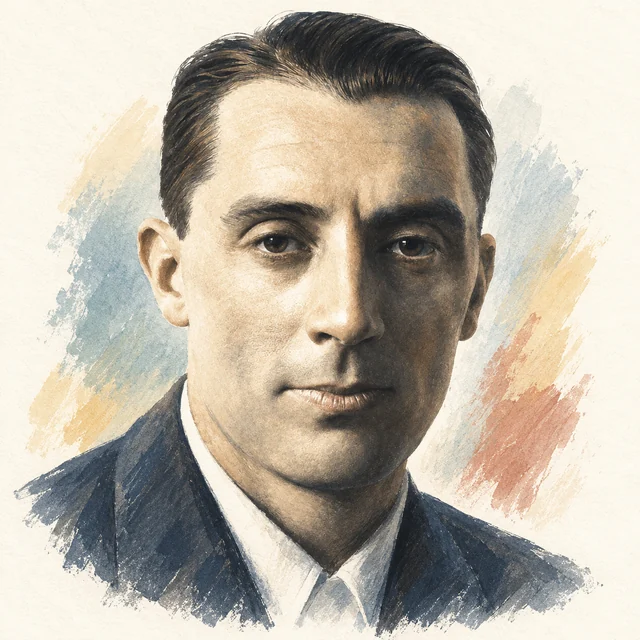
Illustrated portrait of Frédéric Joliot

Frédéric Joliot

Prize share · 1/2

Joliot received half the Chemistry Prize, shared equally with Irène Joliot-Curie, for the synthesis of new radioactive substances. Their experiments established radioactivity that persisted after the inducing bombardment stopped.

Read the biography ↗
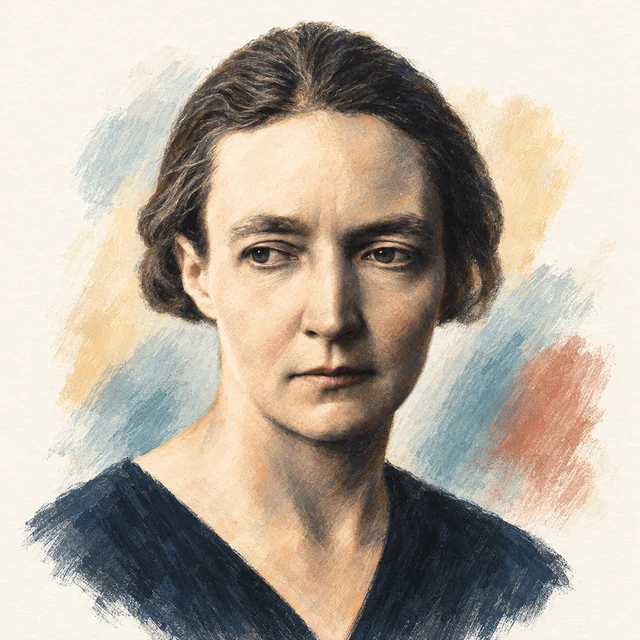
Illustrated portrait of Irène Joliot-Curie

Irène Joliot-Curie

Prize share · 1/2

Joliot-Curie received half the Chemistry Prize for the shared discovery of artificial radioactivity. Both laureates contributed to the experimental and chemical evidence that new radioactive isotopes could be produced.

Read the biography ↗

03 · Years in the making

The path here

  1. 1925

    Joliot joins the Radium Institute; Irène Curie completes her doctorate.

  2. 1926

    They marry and develop their scientific partnership.

  3. 1934

    They report persistent activity after irradiation and identify radioactive products.

  4. 1935

    The Chemistry Prize is divided equally between the two researchers.

04 · Read further

From the original sources

Original explanations by Curionode, based on the official records below. Biographical details and affiliations refer to the award year.

  1. Official award summary nobelprize.org
  2. Award ceremony speech nobelprize.org
  3. Original paper: Joliot and Curie, 1934 nature.com
  4. Official biography: Frédéric Joliot nobelprize.org
  5. Official biography: Irène Joliot-Curie nobelprize.org

More in Chemistry

Browse this subject ↗