c.curionodeThe Nobel Archive

1936 · Chemistry

Testing the shape of a molecule

A chemical formula lists atoms, but does not give a complete three-dimensional structure. Debye developed ways to test molecular models using electric response and diffraction.

Dipole momentGas diffractionMolecular structurePeter Debye
1936Chemistry

Visual guide

The prize, pictured

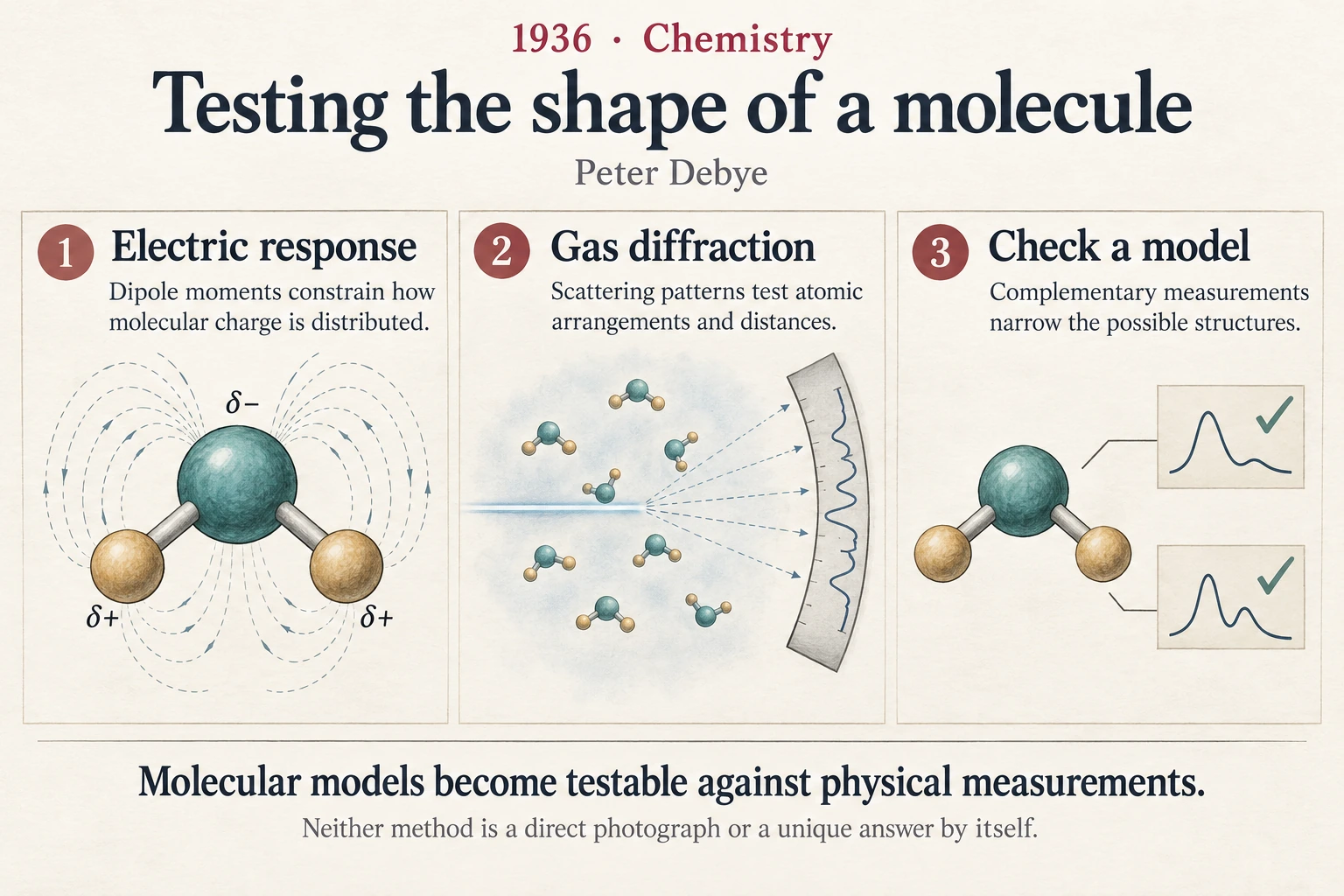
Infographic explaining Testing the shape of a molecule
Original AI-generated infographic. A conceptual overview; the explanations and sources below provide context.
Read the poster text

Molecular models become testable against physical measurements.

  1. Electric response

    Dipole moments constrain how molecular charge is distributed.

  2. Gas diffraction

    Scattering patterns test atomic arrangements and distances.

  3. Check a model

    Complementary measurements narrow the possible structures.

Neither method is a direct photograph or a unique answer by itself.

01 · The discovery

The idea, in everyday language

Two molecules can contain the same kinds and numbers of atoms yet arrange them differently. Debye helped turn structural proposals into models that could be checked against physical measurements. A molecule with an uneven distribution of electric charge has a permanent dipole moment. Its response to an electric field, considered together with thermal motion and induced polarisation, supplies information about charge asymmetry and therefore constrains possible molecular arrangements.

Diffraction supplies another kind of evidence. X-rays and electrons scattered by gas molecules form angular intensity patterns that depend on the relative arrangement of the atoms. Debye’s theoretical treatment connected those patterns with proposed structures and interatomic distances. Unlike a crystal measurement, a gas experiment does not require molecules to form one regular crystal lattice. Electric measurements and gas diffraction complement each other: agreement across different observations makes a structural model more convincing. His separate work on crystal and powder diffraction forms part of the wider context, but the 1936 citation specifically includes diffraction in gases.

Why it matters

These methods made molecular structure more accessible to quantitative tests and helped distinguish candidate arrangements, including isomers. Debye’s contribution linked physics and chemistry through useful theories and measurements; the prize did not recognise a universal instrument that directly pictures every molecule.

02 · The people

Who brought the idea to life?

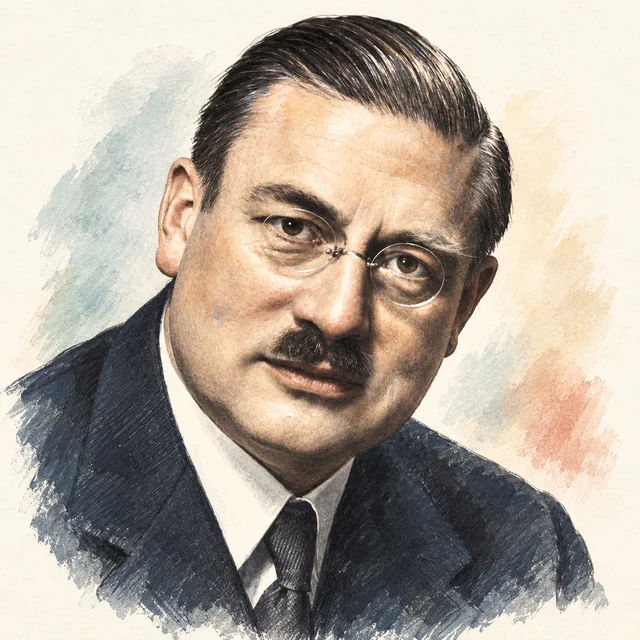
Illustrated portrait of Peter Debye

Peter Debye

Prize share · 1

Debye received the full Chemistry Prize for methods using dipole moments and X-ray and electron diffraction in gases to investigate molecular structure. These provided measurements against which proposed molecular models could be tested.

Read the biography ↗

03 · Years in the making

The path here

  1. 1908

    Debye receives his Munich doctorate.

  2. 1911

    He becomes professor of theoretical physics at Zurich.

  3. 1936

    The Chemistry Prize recognises dipole moments and X-ray and electron diffraction in gases.

  4. 1938

    As German Physical Society president, he issues a letter asking Jewish members to resign.

  5. 1940

    His later Cornell departmental chairmanship begins.

04 · Read further

From the original sources

Original explanations by Curionode, based on the official records below. Biographical details and affiliations refer to the award year.

  1. Official award summary nobelprize.org
  2. Award ceremony speech nobelprize.org
  3. Max Planck Society: Peter Debye nobel.mpg.de
  4. German Physical Society: historical chronology dpg-physik.de
  5. Cornell: department history chemistry.cornell.edu
  6. Official biography: Peter Debye nobelprize.org

More in Chemistry

Browse this subject ↗