c.curionodeThe Nobel Archive

1937 · Chemistry

Identify the structures behind sugars and vitamins

Haworth and Karrer clarified different families of natural molecules, connecting chemical arrangement with properties and biological activity.

CarbohydratesVitamin CCarotenoids and flavinsMolecular structure
1937Chemistry

Visual guide

The prize, pictured

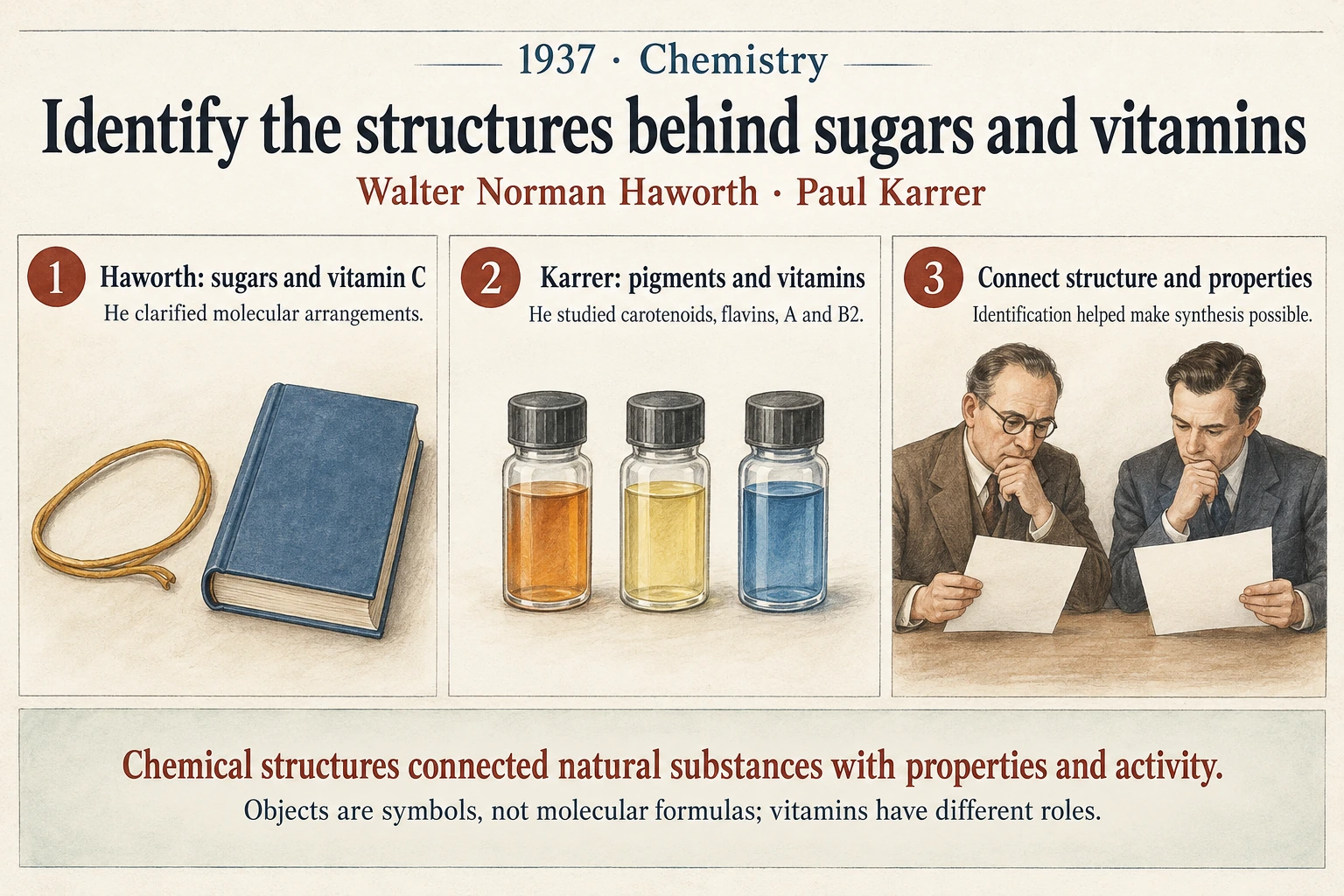
Infographic explaining Identify the structures behind sugars and vitamins
Original AI-generated infographic. A conceptual overview; the explanations and sources below provide context.
Read the poster text

Chemical structures connected natural substances with properties and activity.

  1. Haworth: sugars and vitamin C

    He clarified molecular arrangements.

  2. Karrer: pigments and vitamins

    He studied carotenoids, flavins, A and B2.

  3. Connect structure and properties

    Identification helped make synthesis possible.

Objects are symbols, not molecular formulas; vitamins have different roles.

01 · The discovery

The idea, in everyday language

Knowing which elements a substance contains is not enough to know how its atoms are arranged. Haworth’s work on carbohydrates clarified ring structures and relationships among sugars and larger carbohydrates. The same concern with arrangement informed his group’s work with Hirst on vitamin C, whose structure and synthesis were established in 1933.

Karrer’s programme approached natural pigments and vitamins through structural analysis. Work on carotenoids helped explain their relationship to vitamin A; investigations of flavins clarified vitamin B2. His cited subjects were carotenoids, flavins and vitamins A and B2, while Haworth’s were carbohydrates and vitamin C. Their equal shares recognised related but distinct achievements, not identical work on one vitamin.

Why it matters

Identifying particular molecules replaced some of the mystery of natural extracts with testable chemical relationships. Structural knowledge could support synthesis and more reliable study. Some carotenoids can become vitamin A in the body, but not every carotenoid has that role. Vitamins A, B2 and C are different substances, not interchangeable names for a coloured extract.
02 · The people

Who brought the idea to life?

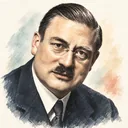
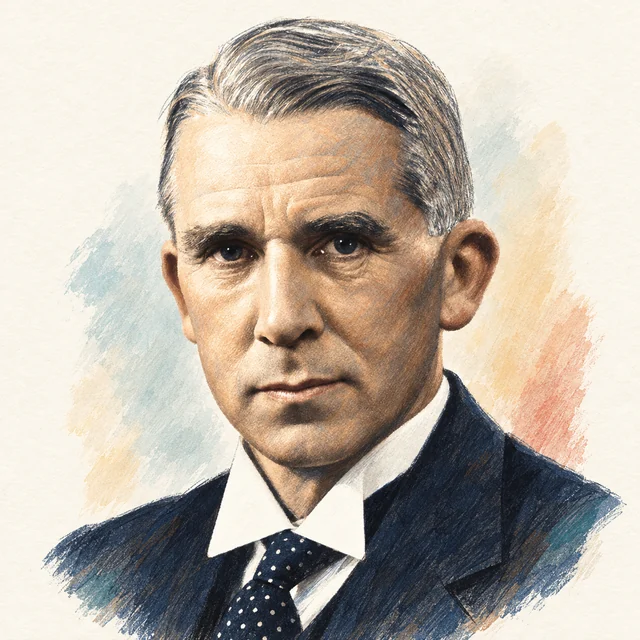
Illustrated portrait of Walter Norman Haworth

Walter Norman Haworth

Prize share · 1/2

Haworth received half the Chemistry Prize for carbohydrates and vitamin C: work on molecular arrangement, including sugars and ascorbic acid, that helped make chemical synthesis possible. It was not a prize for discovering every vitamin.

Read the biography ↗
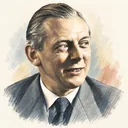
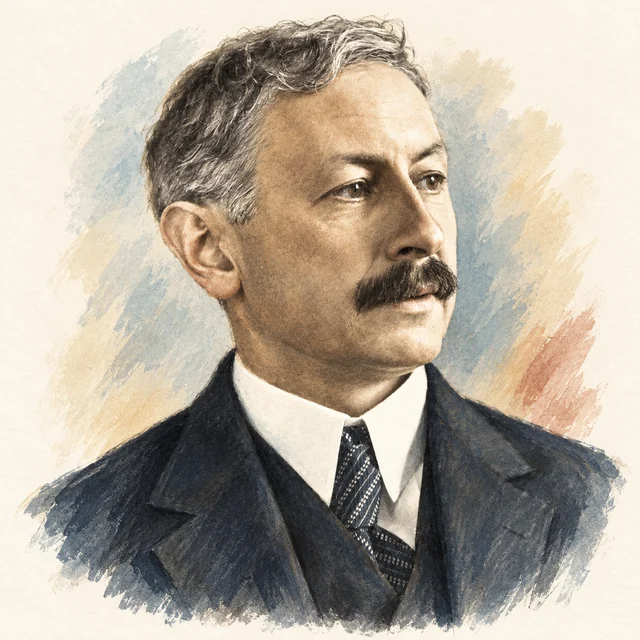
Illustrated portrait of Paul Karrer

Paul Karrer

Prize share · 1/2

Karrer received half the Chemistry Prize for carotenoids, flavins and vitamins A and B2. Structural analysis connected natural pigments and vitamin activity with particular molecules; his cited contribution differed from Haworth’s.

Read the biography ↗

03 · Years in the making

The path here

  1. 1910

    Haworth receives his Göttingen doctorate.

  2. 1919

    Karrer becomes professor and institute director at Zurich.

  3. 1925

    Haworth moves to Birmingham.

  4. 1930

    Karrer’s work establishes the structure of beta-carotene.

  5. 1931

    His group investigates the structure of vitamin A.

  6. 1933

    Haworth’s group connects vitamin C structure with synthesis; flavin research also advances.

  7. 1937

    Haworth and Karrer receive equal Chemistry shares for distinct contributions.

04 · Read further

From the original sources

Original explanations by Curionode, based on the official records below. Biographical details and affiliations refer to the award year.

  1. Official award summary nobelprize.org
  2. Award ceremony speech nobelprize.org
  3. Official biography: Walter Norman Haworth nobelprize.org
  4. Official biography: Paul Karrer nobelprize.org

More in Chemistry

Browse this subject ↗