A life in context
The person behind the prize
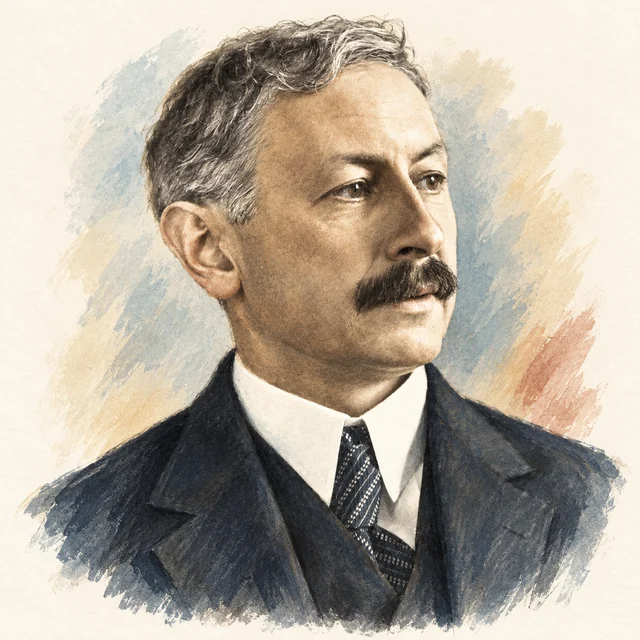
Karrer was born in Moscow to Swiss parents and grew up in Switzerland. He studied under Alfred Werner at Zurich, receiving his doctorate in 1911, then worked with Paul Ehrlich in Frankfurt from 1912. Returning to Zurich in 1918, he became professor and institute director in 1919. His research turned from metal compounds to natural pigments and vitamins. Work on beta-carotene established its structure in 1930 and helped clarify its relation to vitamin A, whose structure his group investigated in 1931. His later studies of flavins and vitamin B2 connected another biological activity with a defined chemical substance. Some carotenoids can be converted into vitamin A; carotene is not a component simply tucked inside a vitamin A molecule. Karrer received half the 1937 Chemistry Prize for carotenoids, flavins and vitamins A and B2. Research on other vitamins continued later.
The contribution
Karrer received half the Chemistry Prize for carotenoids, flavins and vitamins A and B2. Structural analysis connected natural pigments and vitamin activity with particular molecules; his cited contribution differed from Haworth’s.
The idea in plain language
Knowing which elements a substance contains is not enough to know how its atoms are arranged. Haworth’s work on carbohydrates clarified ring structures and relationships among sugars and larger carbohydrates. The same concern with arrangement informed his group’s work with Hirst on vitamin C, whose structure and synthesis were established in 1933.
Read the full award story ↗