A life in context
The person behind the prize
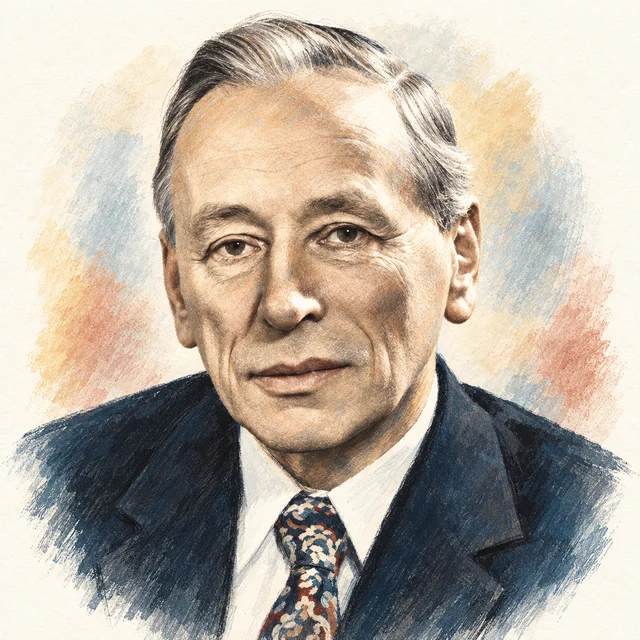
Zernike entered the University of Amsterdam in 1905, studying chemistry with physics and mathematics. His work on critical opalescence led to a doctorate in 1915. He had joined Groningen in 1913 as an assistant to astronomer Jacobus Kapteyn, became a lecturer in mathematical physics in 1915 and a professor in 1920. Optical research connected diffraction, interference and the visibility of transparent objects. In the 1930s he developed phase contrast, converting differences in light’s phase into visible intensity differences. Commercial instruments followed during the Second World War. The technique made many unstained living specimens easier to examine without relying on dyes that could alter or kill them. Groningen was his affiliation for the full 1953 Physics Prize. His honorary medical doctorate should not be confused with his earned doctorate or with medical training.
The contribution
Zernike invented the phase-contrast method, especially its application to microscopy, making otherwise weak phase differences visible as contrast. He received the full Physics Prize.
The idea in plain language
A transparent cell may absorb little light, yet its thickness and refractive index alter the phase of light passing through it. An ordinary brightfield image can therefore show little detail even though the light carries information about the specimen. More magnification alone does not recover that missing contrast.
Read the full award story ↗

