c.curionodeThe Nobel Archive

1953 · Physics

Turn invisible phase differences into visible contrast

Zernike’s phase-contrast method reveals structure in transparent specimens by converting differences in light’s phase into brightness differences.

Phase contrastOptical interferenceUnstained specimens
1953Physics

Visual guide

The prize, pictured

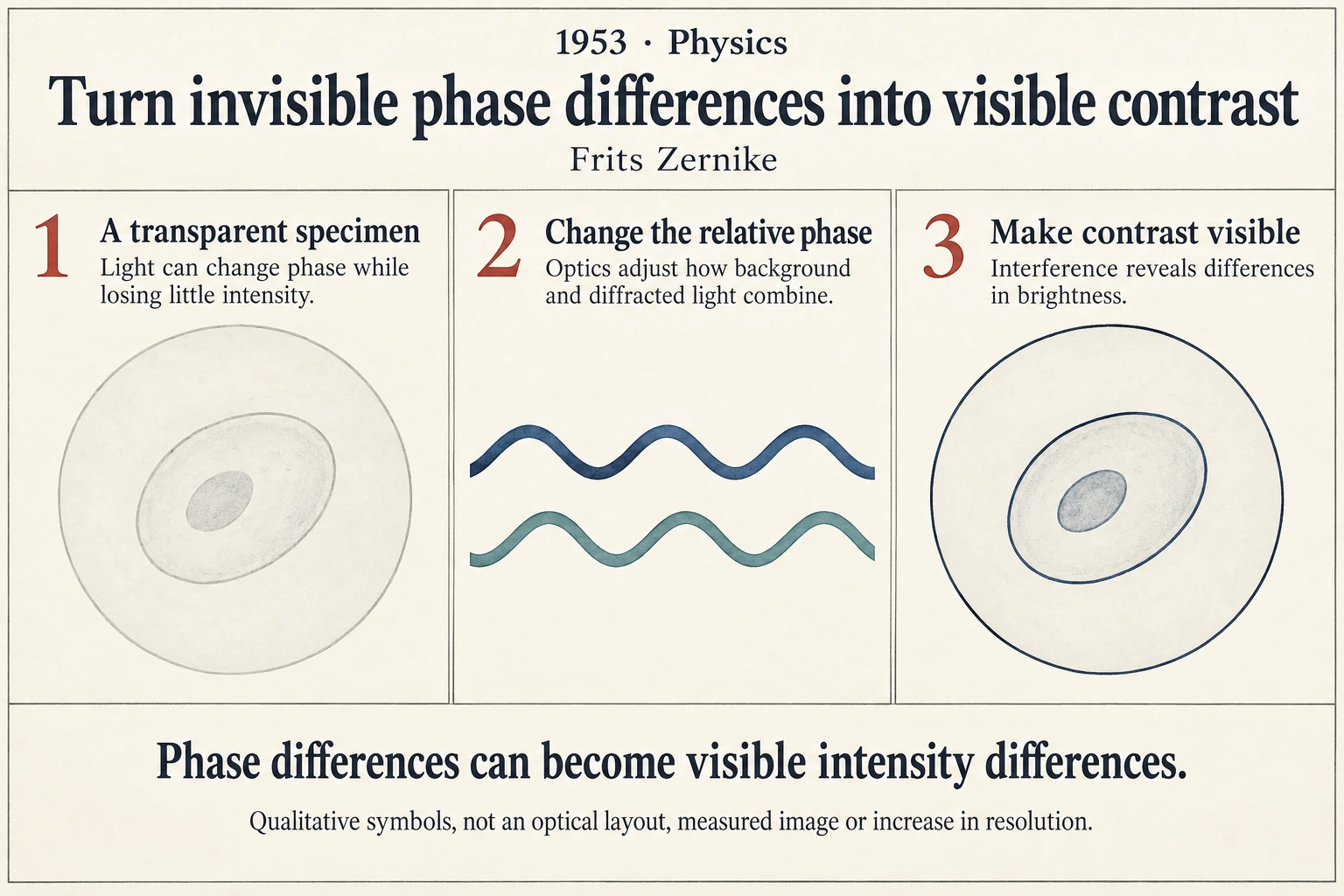
Infographic explaining Turn invisible phase differences into visible contrast
Original AI-generated infographic. A conceptual overview; the explanations and sources below provide context.
Read the poster text

Phase differences can become visible intensity differences.

  1. A transparent specimen

    Light can change phase while losing little intensity.

  2. Change the relative phase

    Optics adjust how background and diffracted light combine.

  3. Make contrast visible

    Interference reveals differences in brightness.

Qualitative symbols, not an optical layout, measured image or increase in resolution.

01 · The discovery

The idea, in everyday language

A transparent cell may absorb little light, yet its thickness and refractive index alter the phase of light passing through it. An ordinary brightfield image can therefore show little detail even though the light carries information about the specimen. More magnification alone does not recover that missing contrast.

Zernike developed an optical method that changes the relative phase of the undeviated background and specimen-diffracted light. Their interference then produces visible intensity differences. In a phase-contrast microscope, a condenser annulus and a phase plate near the objective’s rear focal plane have different roles and locations. The full 1953 prize recognised the invention, especially its microscopy application.

Why it matters

Phase contrast made many living, unstained specimens easier to observe. Researchers could follow structures and changes while avoiding some of the disturbance associated with fixation and staining. It complemented other imaging methods rather than replacing every one of them.

02 · The people

Who brought the idea to life?

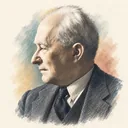
Illustrated portrait of Frits Zernike

Frits Zernike

Prize share · 1

Zernike invented the phase-contrast method, especially its application to microscopy, making otherwise weak phase differences visible as contrast. He received the full Physics Prize.

Read the biography ↗

03 · Years in the making

The path here

  1. 1888

    Zernike is born in Amsterdam.

  2. 1913

    He joins Groningen as Kapteyn’s assistant.

  3. 1915

    He completes his doctorate and becomes a mathematical-physics lecturer.

  4. 1920

    He becomes professor at Groningen.

  5. 1930s

    He develops phase contrast from optical interference research.

  6. 1940s

    Commercial phase-contrast microscopes become available.

  7. 1953

    He receives the full Physics Prize.

04 · Read further

From the original sources

Original explanations by Curionode, based on the official records below. Biographical details and affiliations refer to the award year.

  1. Official award summary nobelprize.org
  2. Award ceremony speech nobelprize.org
  3. Nikon: phase contrast and its optical limits microscopyu.com
  4. Nikon: phase-contrast optical components microscopyu.com
  5. Official biography: Frits Zernike nobelprize.org