A life in context
The person behind the prize
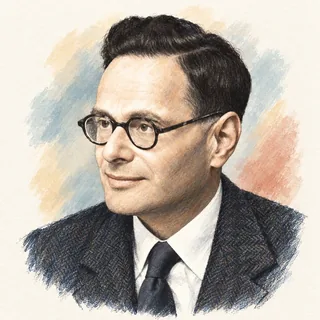
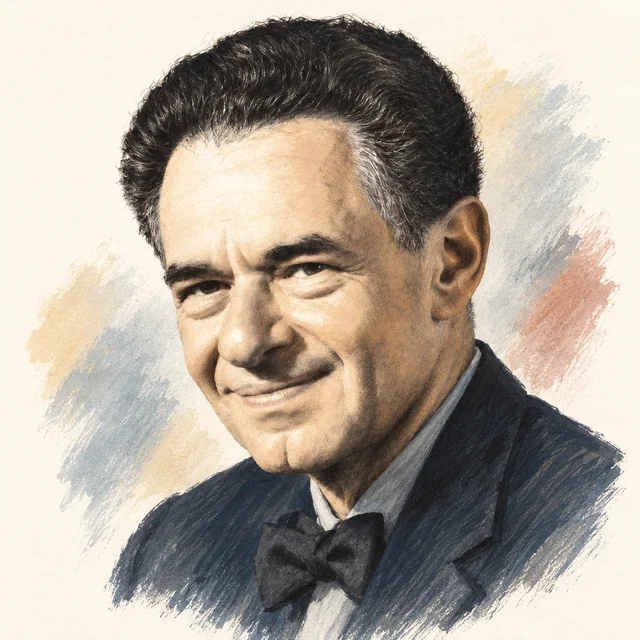
Lipmann studied medicine in Königsberg, Berlin and Munich, earning his Berlin medical doctorate in 1924. He also trained in biochemistry and chemistry, worked with Otto Meyerhof from 1926 and completed a Berlin research doctorate in 1927. Research took him through Heidelberg, Berlin and New York to Copenhagen’s Carlsberg Institute, where he worked from 1932 to 1939. He then moved to Cornell Medical College in New York and, in 1941, Massachusetts General Hospital in Boston. Harvard appointed him professor of biological chemistry in 1949. Studies of how cells connect energy transformations with chemical synthesis led to the discovery of coenzyme A and its role in acetyl transfer. His 1953 affiliation was Harvard and Massachusetts General, not the Rockefeller appointment he took in 1957. He received half the Medicine Prize for coenzyme A, while Krebs’s half recognised the citric acid cycle.
The contribution
Lipmann discovered coenzyme A and established its importance in intermediary metabolism, including the transfer of acetyl groups. He received one half of the Medicine Prize.
The idea in plain language
How do cells organise the many reactions that transform food-derived compounds? Krebs identified the citric acid cycle in 1937: a linked sequence regenerates its four-carbon acceptor after combining with a two-carbon acetyl input. The sequence releases carbon dioxide and transfers electrons to carriers that connect to further energy-converting reactions.
Read the full award story ↗