01 · The discovery
The idea, in everyday language
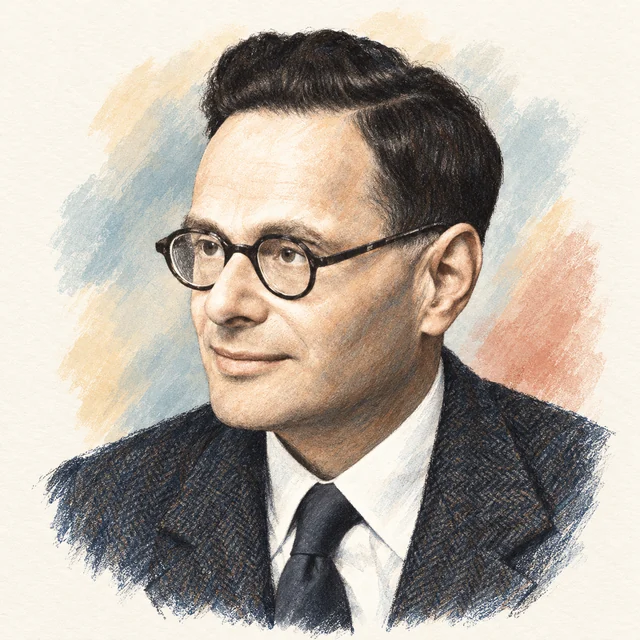
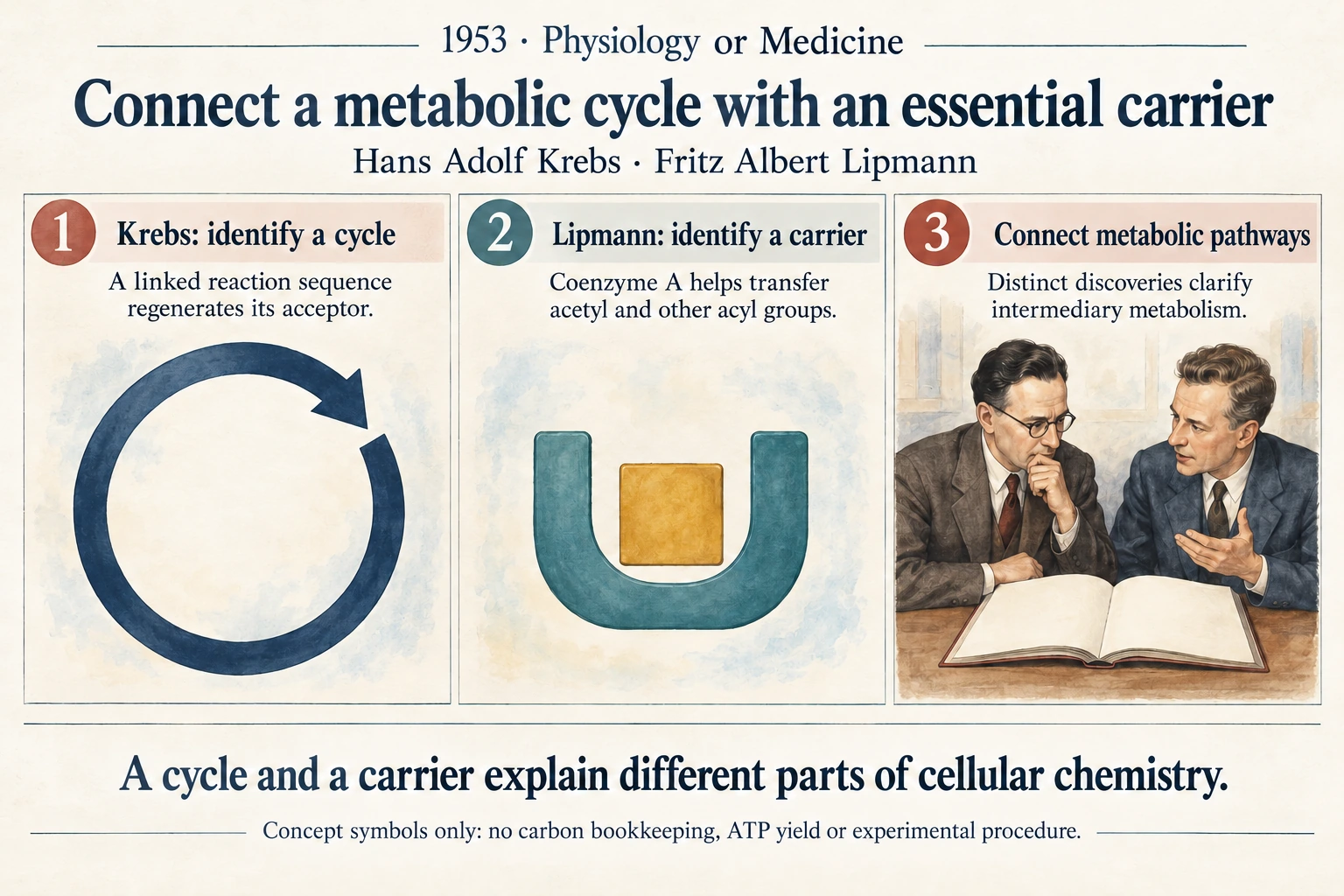
How do cells organise the many reactions that transform food-derived compounds? Krebs identified the citric acid cycle in 1937: a linked sequence regenerates its four-carbon acceptor after combining with a two-carbon acetyl input. The sequence releases carbon dioxide and transfers electrons to carriers that connect to further energy-converting reactions.
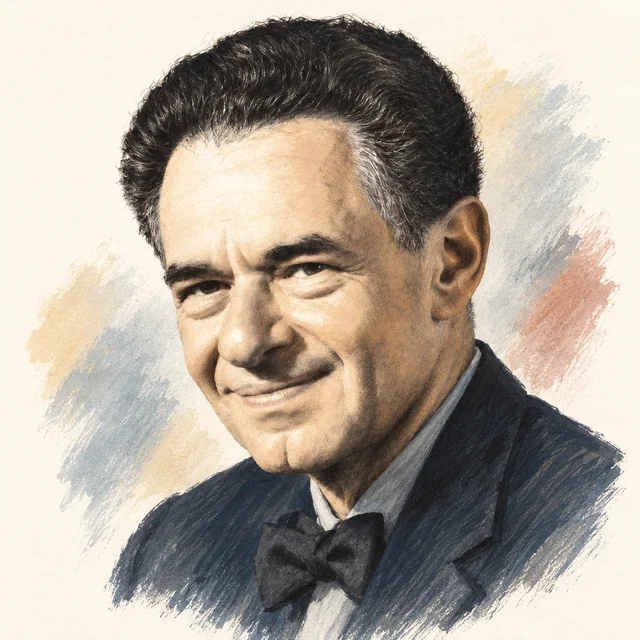
Lipmann’s discovery of coenzyme A supplied another essential part of metabolism. CoA carries acyl groups; acetyl-CoA provides the acetyl input to the cycle and also participates in other pathways. These were separate contributions recognised equally in 1953, rather than a claim that the two recipients jointly discovered one process or that CoA is the cycle itself.
Why it matters
Together the discoveries clarified relationships among metabolic reactions and the handling of carbon compounds and energy. The cycle is an important hub, connected to many other pathways. Its electron transfers support energy conversion beyond the cycle; it is not a complete account of how every organism makes ATP.