A life in context
The person behind the prize
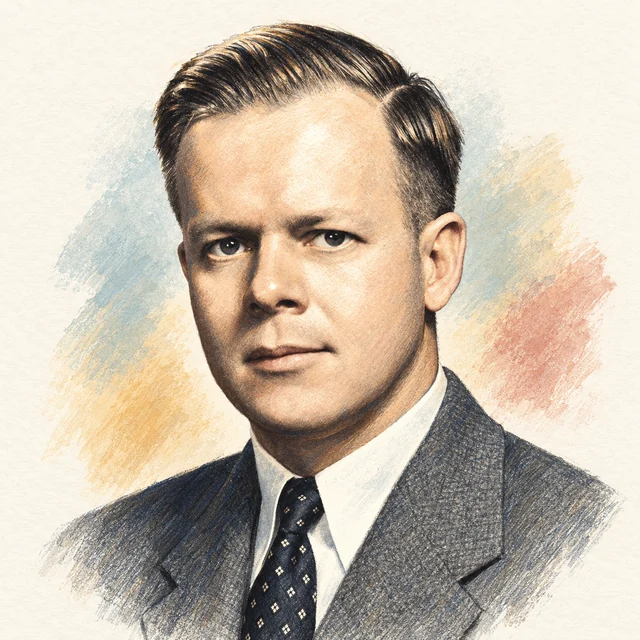
Weller studied at Michigan, receiving an arts bachelor’s degree in 1936 and a master’s degree in 1937 after work on fish parasites. He entered Harvard Medical School in 1936 and received his medical doctorate in 1940. Enders introduced him to virus research and tissue culture during a tutorial in 1939. Clinical work at Boston’s Children’s Hospital was interrupted by Army Medical Corps service in the Caribbean during the war. In 1947 he joined Enders in organising the new Research Division of Infectious Diseases. The 1949 poliovirus tissue-culture report with Enders and Robbins established growth beyond the neural tissues previously thought necessary. He became assistant director of the division in 1949. In July 1954, before the Nobel award, he became professor and head of Tropical Public Health at Harvard’s School of Public Health. He received one third of the prize. Later work on cytomegalovirus and rubella belongs to subsequent research, rather than the specific 1954 award.
The contribution
Weller developed tissue-culture research with Enders and Robbins and helped establish poliovirus growth in various tissue types. He received one third of the Medicine Prize.
The idea in plain language
Could poliovirus grow outside the nervous tissues with which the disease was associated? Earlier limited results had supported a restrictive view. In 1949 Enders, Weller and Robbins reported growth in cultures of different human tissues, including non-neural tissues. This overturned an important experimental barrier without implying that viruses can multiply in lifeless nutrient broth: they require living cells.
Read the full award story ↗