c.curionodeThe Nobel Archive

1954 · Physiology or Medicine

Grow poliovirus beyond nerve tissue

Enders, Weller and Robbins showed that poliovirus could multiply in cultures of several tissue types, opening practical ways to study it.

PoliovirusLiving cellsTissue culture
1954Physiology or Medicine

Visual guide

The prize, pictured

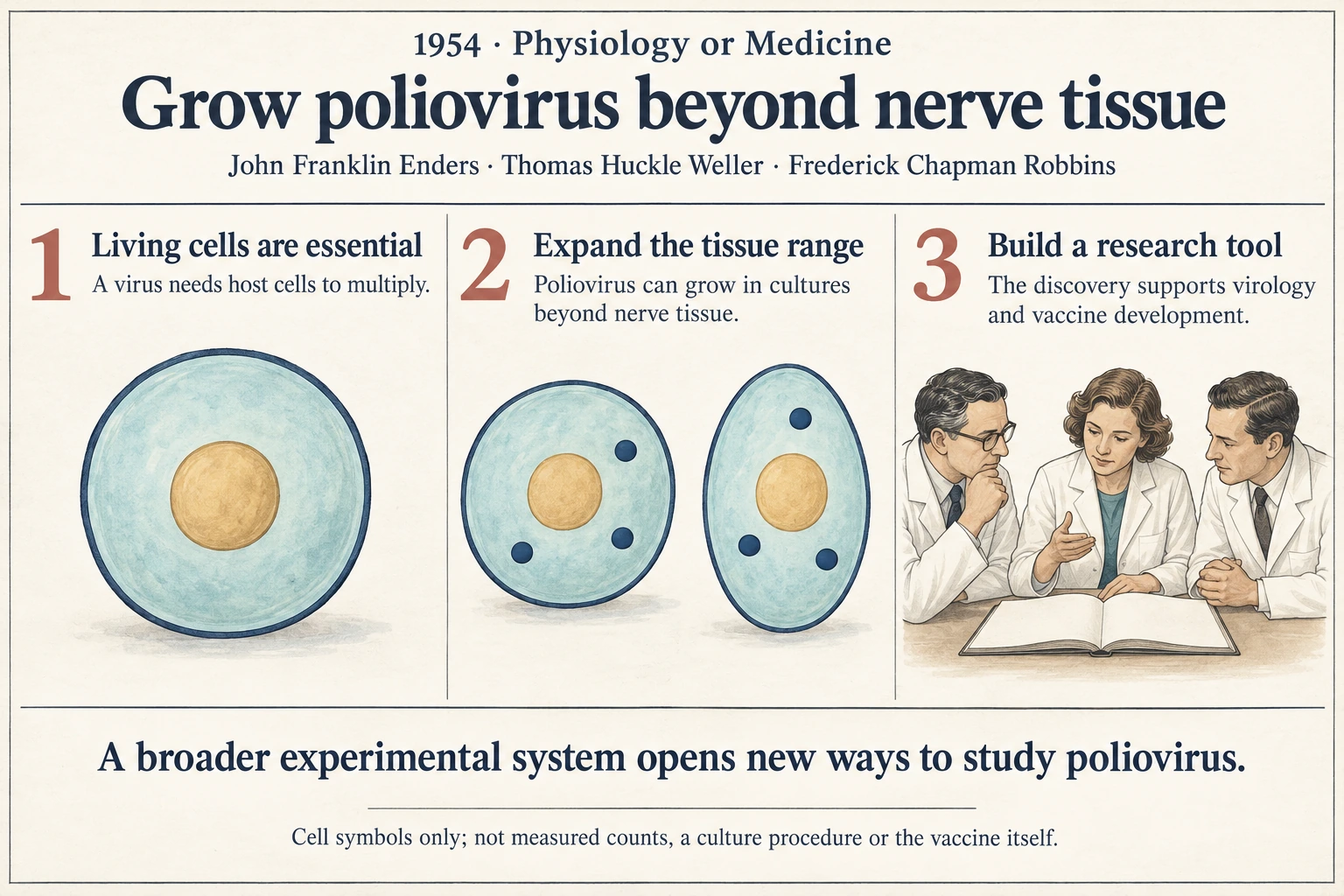
Infographic explaining Grow poliovirus beyond nerve tissue
Original AI-generated infographic. A conceptual overview; the explanations and sources below provide context.
Read the poster text

A broader experimental system opens new ways to study poliovirus.

  1. Living cells are essential

    A virus needs host cells to multiply.

  2. Expand the tissue range

    Poliovirus can grow in cultures beyond nerve tissue.

  3. Build a research tool

    The discovery supports virology and vaccine development.

Cell symbols only; not measured counts, a culture procedure or the vaccine itself.

01 · The discovery

The idea, in everyday language

Could poliovirus grow outside the nervous tissues with which the disease was associated? Earlier limited results had supported a restrictive view. In 1949 Enders, Weller and Robbins reported growth in cultures of different human tissues, including non-neural tissues. This overturned an important experimental barrier without implying that viruses can multiply in lifeless nutrient broth: they require living cells.

Changes in infected cells gave researchers a way to recognise viral activity, and comparisons using specific immune serum helped identify the virus. Tissue culture supported isolation, experimental investigation and immunity studies, reducing dependence on indirect observations in whole animals. The three collaborators each received one third of the 1954 prize for the discovery of poliovirus growth in cultures of various tissue types. Their work built on earlier tissue culture and cultivation of other viruses.

Why it matters

The discovery expanded practical virology and helped make poliovirus research and vaccine development possible on a wider scale. The culture work should be distinguished from Salk’s and Sabin’s vaccine programmes and from later testing, manufacture and public-health delivery. Research tools and a proven vaccine are different achievements.
02 · The people

Who brought the idea to life?

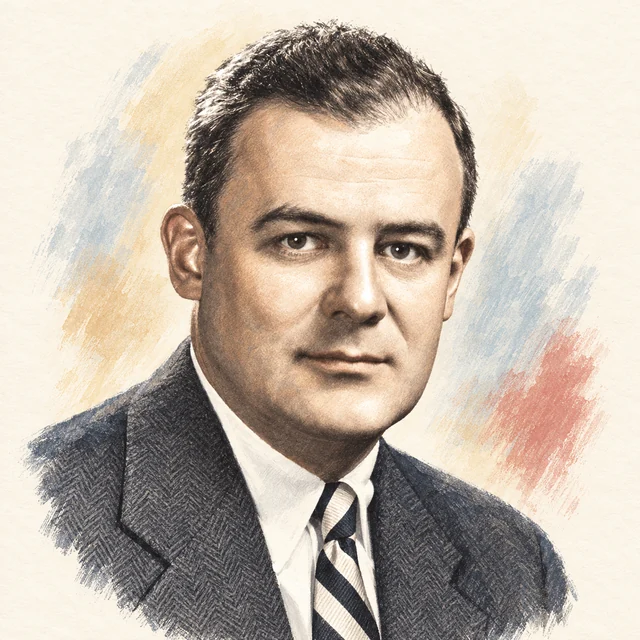
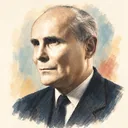
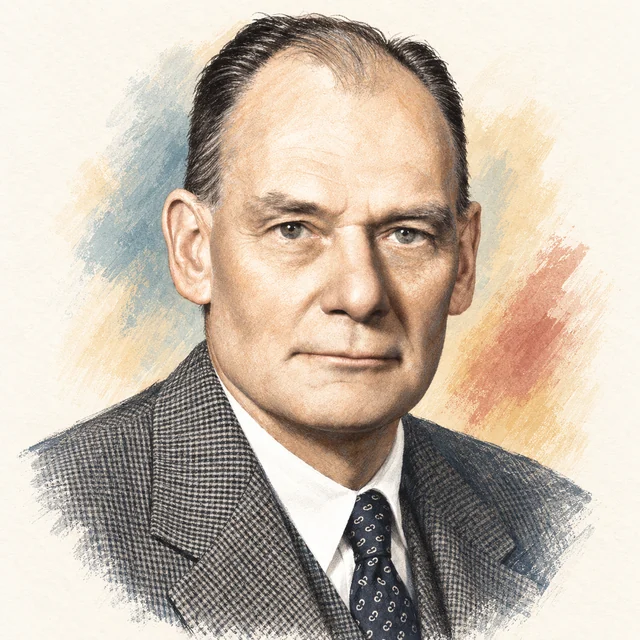
Illustrated portrait of John Franklin Enders

John Franklin Enders

Prize share · 1/3

Enders, Weller and Robbins demonstrated poliovirus growth in cultures of various tissue types, expanding methods for virological research. Enders received one third of the Medicine Prize.

Read the biography ↗
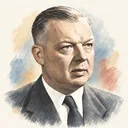
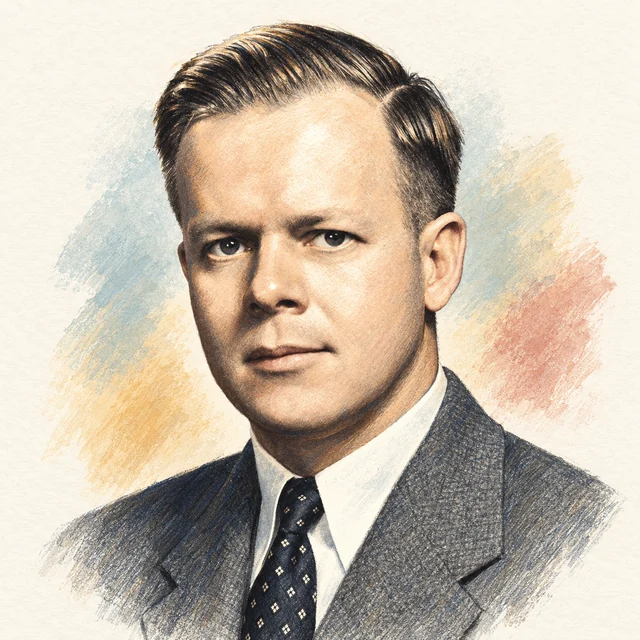
Illustrated portrait of Thomas Huckle Weller

Thomas Huckle Weller

Prize share · 1/3

Weller developed tissue-culture research with Enders and Robbins and helped establish poliovirus growth in various tissue types. He received one third of the Medicine Prize.

Read the biography ↗
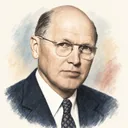
Illustrated portrait of Frederick Chapman Robbins

Frederick Chapman Robbins

Prize share · 1/3

Robbins investigated poliovirus cultivation and its applications with Enders and Weller, helping establish growth in various tissues. He received one third of the Medicine Prize.

Read the biography ↗

03 · Years in the making

The path here

  1. 1897

    Enders is born in West Hartford.

  2. 1915

    Weller is born in Ann Arbor.

  3. 1916

    Robbins is born in Auburn.

  4. 1930

    Enders completes his Harvard research doctorate.

  5. 1940

    Weller and Robbins complete their medical degrees.

  6. 1946

    Enders establishes the Boston infectious-diseases laboratory.

  7. 1949

    The team reports poliovirus growth in different tissue cultures.

  8. 1952

    Robbins moves to Western Reserve in Cleveland.

  9. 1954

    Weller becomes Harvard department head in July; all three receive the prize later that year.

04 · Read further

From the original sources

Original explanations by Curionode, based on the official records below. Biographical details and affiliations refer to the award year.

  1. Official award summary nobelprize.org
  2. Award ceremony speech nobelprize.org
  3. Official biography: John Franklin Enders nobelprize.org
  4. Official biography: Thomas Huckle Weller nobelprize.org
  5. Official biography: Frederick Chapman Robbins nobelprize.org

More in Physiology or Medicine

Browse this subject ↗