A life in context
The person behind the prize
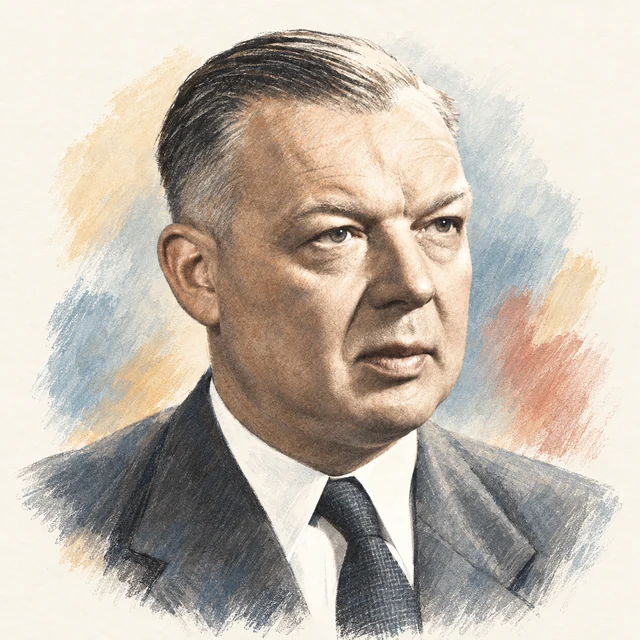
Forssmann studied medicine at Berlin after leaving secondary school in 1922 and completed his medical doctorate in 1929. During clinical training in Eberswalde that year, he demonstrated that a catheter could reach the right atrium in a person, using a hazardous experiment on himself documented by an X-ray. The demonstration opened a possibility for investigation, but it was not yet the sustained clinical measurement programme later developed by Cournand and Richards. He subsequently trained and practised in surgery and urology, was a Nazi Party member from 1932 to 1945, and served as a military physician during the war. He returned to civilian life after captivity in 1945. From 1950 he practised urology at Bad Kreuznach. In 1956, when he received one third of the Medicine Prize, he was appointed honorary professor of surgery and urology at Mainz. His leadership of the Düsseldorf hospital’s surgical division began in 1958. The historical self-experiment should not be read as an instruction or a demonstration of modern procedural safety.
The contribution
Forssmann’s 1929 demonstration established the possibility of reaching the human right atrium with a catheter. He received one third of the Medicine Prize, alongside the later clinical investigators.
The idea in plain language
Pressure and blood flow inside the circulation were difficult to study directly in people. Measurements available outside the heart could not answer every question about the right heart, pulmonary circulation or the oxygen content of blood returning from the body.
Read the full award story ↗