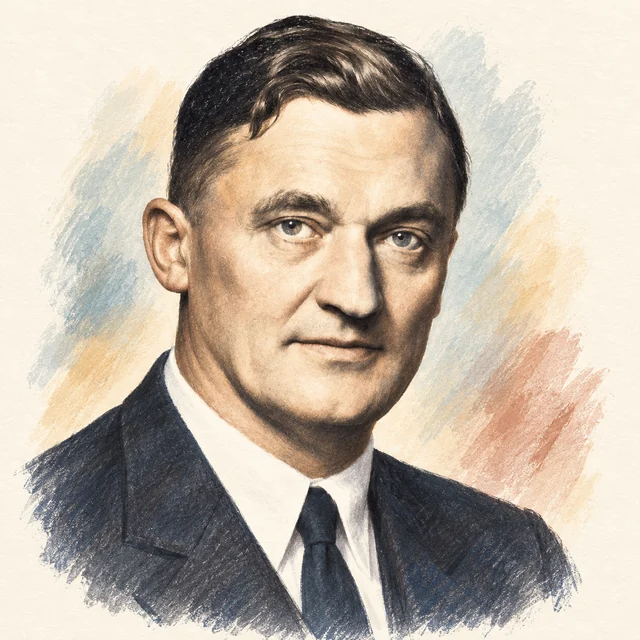
A life in context
The person behind the prize
Theorell began medical studies at Karolinska in 1921, received a Bachelor of Medicine in 1924 and completed his medical doctorate in 1930 with work on blood-plasma lipids. He studied bacteriology in Paris and investigated myoglobin at Uppsala, becoming associate professor there in 1932. During a Rockefeller fellowship with Otto Warburg in Berlin from 1933 to 1935, he separated the yellow enzyme into its protein component and a nonprotein flavin-mononucleotide component, then restored activity by recombining them. Returning to Sweden, he was appointed head of the Nobel Medical Institute’s biochemical department in 1936; it opened in 1937. This chronology differs from the facts page’s claim of an Uppsala appointment in 1937. Further work with collaborators investigated cytochromes, peroxidases, catalases, flavoproteins and alcohol dehydrogenases. He received the full 1955 prize for the nature and action of oxidation enzymes. The specific yellow-enzyme result did not establish that every enzyme contains the same two parts or works through the same mechanism.
The contribution
Theorell clarified the components and action of oxidation enzymes, including reversible separation and reconstitution of the yellow enzyme. He received the full Medicine Prize.
The idea in plain language
How do enzymes carry out biological oxidation, and which components are required? Theorell combined purification, separation and activity studies. During work with Otto Warburg in Berlin in 1933–1935, he separated the yellow enzyme into a protein component and a smaller flavin-mononucleotide component. Neither isolated component reproduced the complete enzyme’s activity; recombining them restored it.
Read the full award story ↗

