A life in context
The person behind the prize
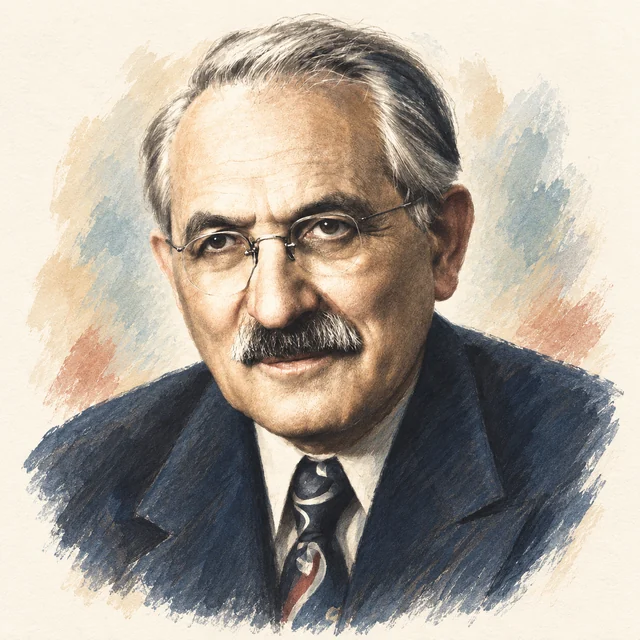
Waksman emigrated to the United States in 1910. At Rutgers he earned an agriculture degree in 1915 and a master’s degree in 1916; a biochemistry doctorate at California followed in 1918. Returning to Rutgers, he investigated soil microorganisms, decomposition and microbial antagonism. He became professor in 1930 and led a systematic search for antimicrobial substances with students and colleagues. In 1943 Albert Schatz isolated streptomycin in this programme; the 1944 report was authored by Schatz, Elizabeth Bugie and Waksman. Clinical evaluation by Feldman and Hinshaw and industrial production required further collaboration. Disputes over credit and royalties led to a 1950 settlement recognising Schatz as co-discoverer. Waksman remained the sole recipient of the 1952 Medicine Prize. Rutgers was his affiliation; the later opening of the Institute of Microbiology in 1954 should not be confused with the award-year setting. His doctorate was in biochemistry, and honorary medical degrees did not make him a physician.
The contribution
Waksman led the systematic soil-microbiology research programme that yielded streptomycin. The Nobel Prize was awarded to him alone; the discovery also involved Schatz, Bugie and other collaborators.
The idea in plain language
Could substances made by microorganisms inhibit disease-causing bacteria? Waksman’s group turned this question into a systematic research programme. Earlier compounds showed that antibacterial activity alone was insufficient: toxicity could prevent a promising substance from becoming a useful medicine.
Read the full award story ↗

