A life in context
The person behind the prize
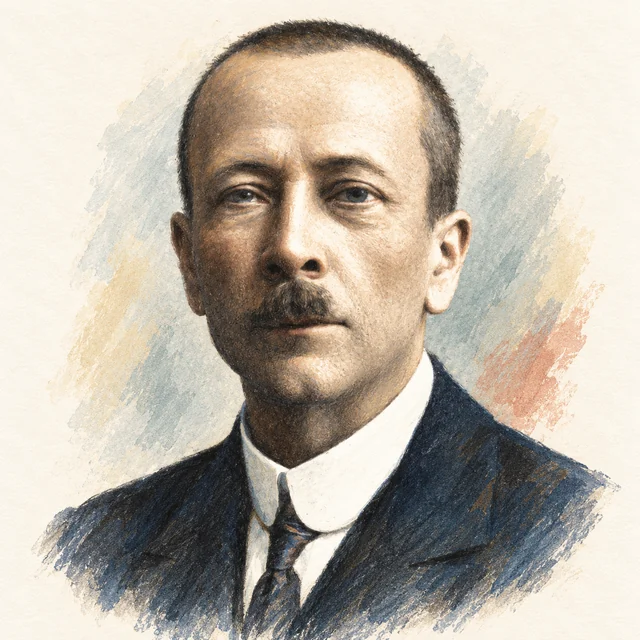
Pregl was born in Laibach, now Ljubljana, and trained in medicine at Graz, receiving his medical degree in 1894. Work in physiology and physiological chemistry drew him towards the composition of organic substances. He also studied chemistry and visited laboratories in Germany before returning to Graz. Research on substances available only in small quantities, including bile acids, exposed a practical obstacle: conventional analysis could consume more material than an investigator possessed. At Innsbruck from 1910 to 1913, and again at Graz from 1913, he redesigned apparatus and procedures to obtain quantitative elemental results from much smaller samples. This demanded control of many sources of error, rather than simply using less material in an unchanged experiment. He tested the methods beyond his own laboratory and published a major monograph in 1917. The full 1923 Chemistry Prize recognised his microanalysis of organic substances, an improvement of established analytical methods rather than the discovery of a new compound. Researchers came to Graz to learn the techniques. He died there in 1930, having also supported further microchemical research through a fund administered by the Vienna Academy.
The contribution
Pregl received the full Chemistry Prize for inventing methods of microanalysis of organic substances. His refinements made reliable quantitative analysis possible with scarce material that earlier methods would have consumed too quickly.
The idea in plain language
Knowing what an organic substance contains requires more than recognising its appearance. Chemists measure the amounts of constituent elements and use the results alongside other evidence. Earlier methods could demand so much material that a rare substance was exhausted before enough analyses could be completed.
Read the full award story ↗

