c.curionodeThe Nobel Archive

1923 · Chemistry

Tiny samples yield reliable chemical proportions

Pregl refined organic analysis so that much smaller samples could still give reliable elemental measurements. Scarce substances became more accessible to quantitative chemistry.

MicroanalysisScarce samplesElemental composition
1923Chemistry

Visual guide

The prize, pictured

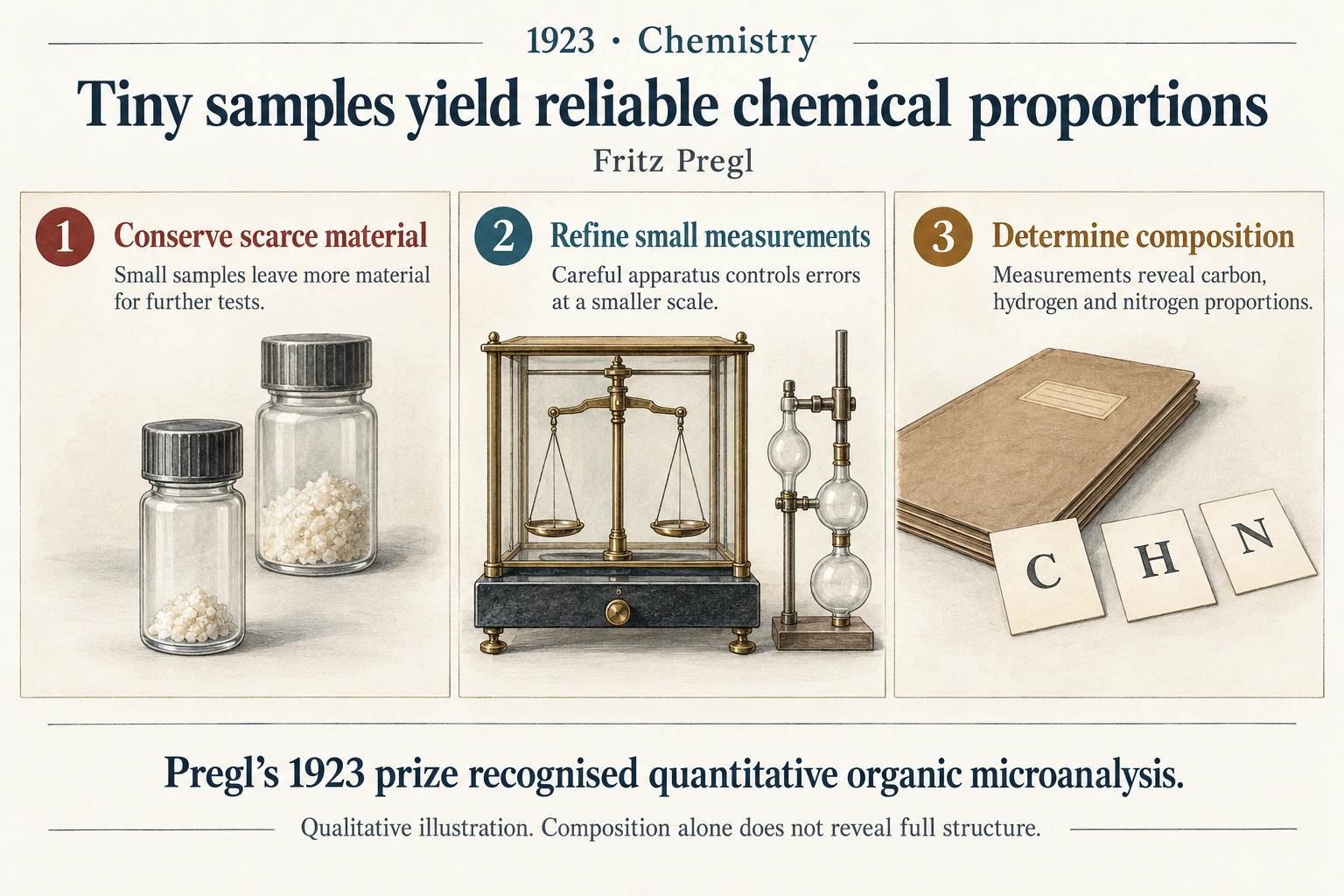
Infographic explaining Tiny samples yield reliable chemical proportions
Original AI-generated infographic. A conceptual overview; the explanations and sources below provide context.
Read the poster text

Pregl’s 1923 prize recognised quantitative organic microanalysis.

  1. Conserve scarce material

    Small samples leave more material for further tests.

  2. Refine small measurements

    Careful apparatus controls errors at a smaller scale.

  3. Determine composition

    Measurements reveal carbon, hydrogen and nitrogen proportions.

Qualitative illustration. Composition alone does not reveal full structure.

01 · The discovery

The idea, in everyday language

Knowing what an organic substance contains requires more than recognising its appearance. Chemists measure the amounts of constituent elements and use the results alongside other evidence. Earlier methods could demand so much material that a rare substance was exhausted before enough analyses could be completed.

Pregl reworked the apparatus and techniques for quantitative organic analysis, controlling errors that become especially troublesome with small samples. Instead of merely shrinking an unchanged experiment, he developed a dependable system of microanalysis. Small supplies could support repeated determinations and investigations that had previously been impractical.

Why it matters

The methods conserved difficult-to-obtain research material and widened the reach of organic and physiological chemistry. The prize recognised the value of improving experimental methods, as well as the discoveries those methods could make possible.
02 · The people

Who brought the idea to life?

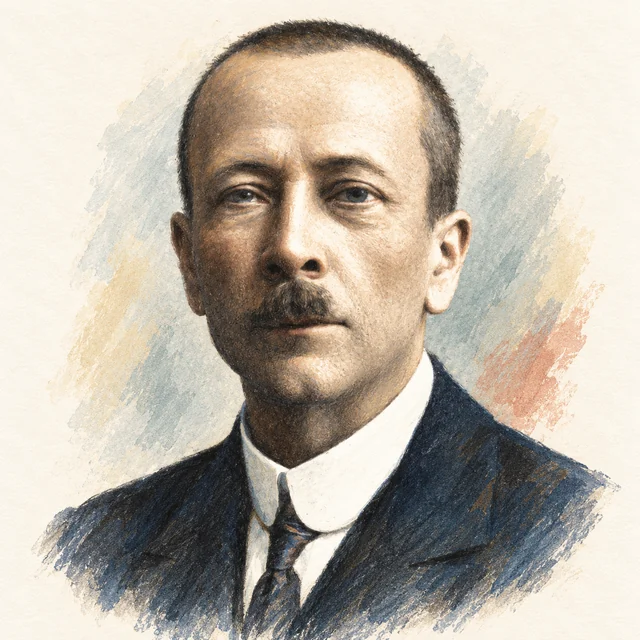
Illustrated portrait of Fritz Pregl

Fritz Pregl

Prize share · 1

Pregl received the full Chemistry Prize for inventing methods of microanalysis of organic substances. His refinements made reliable quantitative analysis possible with scarce material that earlier methods would have consumed too quickly.

Read the biography ↗

03 · Years in the making

The path here

  1. 1894

    Pregl completes his medical training at Graz before developing his chemical research.

  2. 1910–1913

    At Innsbruck he develops quantitative organic microanalysis.

  3. 1917

    A major monograph presents the methods for use beyond his own laboratory.

  4. 1923

    The Chemistry Prize recognises microanalysis of organic substances.

04 · Read further

From the original sources

Original explanations by Curionode, based on the official records below. Biographical details and affiliations refer to the award year.

  1. Official award summary nobelprize.org
  2. Award ceremony speech nobelprize.org

More in Chemistry

Browse this subject ↗