A life in context
The person behind the prize
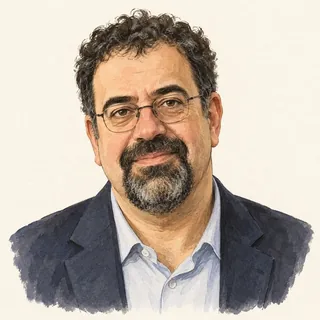
Becker grew up in Pennsylvania and Brooklyn, developing interests in mathematics and social questions. Study at Princeton led to graduate economics at Chicago and a doctorate in 1955. Work at Columbia and the National Bureau of Economic Research supported studies of human capital and the use of time. Returning to Chicago in 1970, he expanded research on households and families and later communicated economic arguments to a wider public.
The contribution
Becker extended microeconomic analysis to education, family decisions, discrimination, crime and other behaviour outside ordinary markets. Models made goals, constraints, incentives and opportunity costs explicit, creating hypotheses that could be examined with evidence. This broadened economic research without proving that people always calculate perfectly or that all relationships are financial transactions. Explaining discrimination or crime through a model does not justify it morally or settle policy by itself.
The idea in plain language
Economic analysis had often focused on prices, firms and market exchange. Becker extended it to choices about learning, the allocation of household time, discrimination and crime. His approach made goals and constraints explicit: pursuing one activity uses resources and means forgoing another. These opportunity costs can matter even when no money changes hands.
Read the full award story ↗