A life in context
The person behind the prize
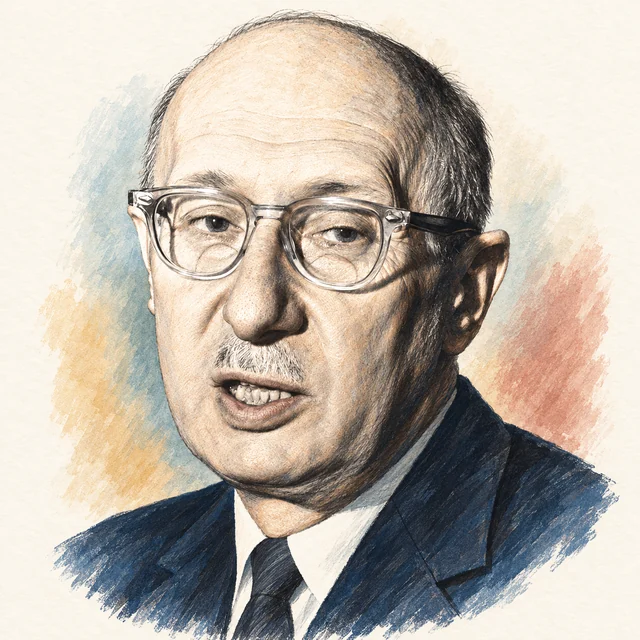
Békésy studied chemistry at Berne and received his physics doctorate in Budapest in 1923. Work for the Hungarian Post Office on telephone transmission gave him opportunities to investigate the ear, combining physical measurement, microscopy and mechanical models. He also taught experimental physics at Budapest during 1939–1946. Moving to Sweden in 1946, he worked with the Karolinska and Stockholm technical institutions and developed an audiometer. In 1947 he joined Harvard’s Psycho-Acoustic Laboratory, his award affiliation. His experiments established the travelling-wave pattern along the basilar membrane and the frequency-dependent location of its largest response. Studies connected cochlear mechanics with receptor stimulation. The prize concerned physical mechanisms in the inner ear, not a complete explanation of auditory perception or a cure for every hearing disorder.
The contribution
Békésy revealed physical mechanisms of cochlear stimulation, including travelling waves and frequency-dependent response locations. He received the full Medicine Prize.
The idea in plain language
Sound reaches the inner ear through vibrations transmitted by the eardrum and middle-ear bones. How the cochlea’s delicate structures responded, and how this response distinguished frequencies, required direct physical investigation.
Read the full award story ↗

